Kitchen Pantry Organization: Complete Guide
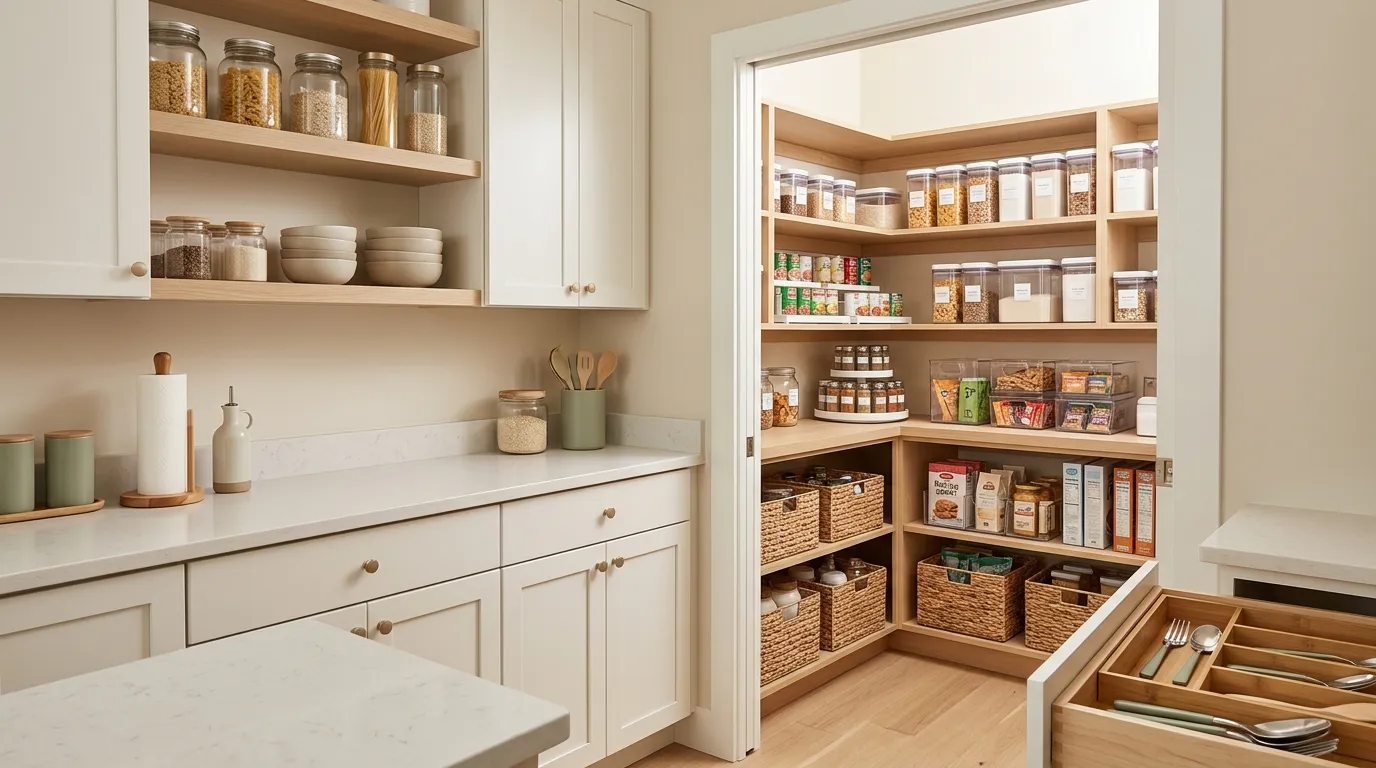
Table of Contents
- The Kitchen Zone System
- Zone 1: The Cooking Zone (Near the Stove)
- Zone 2: The Prep Zone (Near the Main Counter and Sink)
- Zone 3: The Pantry Zone
- Zone 4: The Coffee & Breakfast Zone
- Zone 5: The Cleanup Zone (Near the Sink)
- Pantry Organization: The Step-by-Step Method
- Step 1: Empty and Edit
- Step 2: Group by Strict Categories
- Step 3: Decant High-Use Dry Goods
- Step 4: Assign Shelves Strategically
- Tackling the Drawers
- Small Kitchen Strategy
- Maintaining the System
How do you start organizing a messy kitchen? Organize your kitchen by dividing it into functional zones: cooking, prep, pantry, breakfast, and cleanup. Store items exactly where you use them, not just by category. Use clear containers and labels in the pantry. Empty and edit every drawer before buying a single organizer. Done right, a kitchen organization overhaul takes one weekend and lasts for years.
The kitchen is the hardest room in the house to keep organized because it serves five different functions simultaneously: it is a bakery, a restaurant, a homework station, a charging hub, and a social gathering space. Without intentional zones, every function competes for the same counter space, and the result is endless clutter.
The solution is almost never "more storage." Most kitchens already have enough cabinets. The real issue is the incorrect assignment of what goes where.
Here is the complete, foolproof system to organize your kitchen and pantry for good.
The Kitchen Zone System
If you walk across the kitchen to grab a spatula while cooking eggs, your kitchen is broken. You must divide your kitchen into zones based on activity. Storing things where you use them—rather than where they visually "fit"—is the biggest functional improvement you can make.
Zone 1: The Cooking Zone (Near the Stove)
Everything needed for active cooking lives within arm's reach of the burners.
- Pots and Pans: Store in deep lower cabinets or on a hanging pot rack.
- Lids: Store vertically. Do not stack them. Use a door-mounted rack or read our guide on deep cabinet organization.
- Utensils: Keep spatulas, wooden spoons, and tongs in a drawer immediately adjacent to the stove, or in a heavy ceramic crock on the counter.
- Oils and Spices: Keep olive oil, salt, and your daily spices right next to the stove. (For a deep dive, see our spice storage guide).
Zone 2: The Prep Zone (Near the Main Counter and Sink)
This is where the chopping and mixing happen.
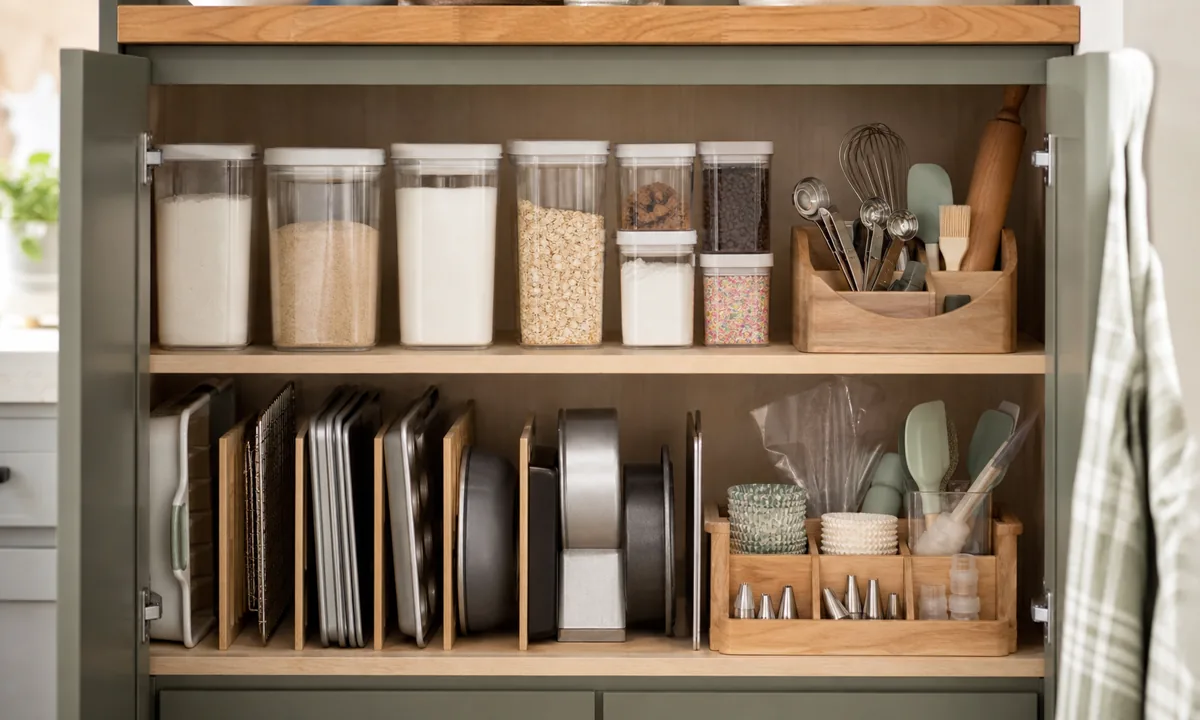
- Cutting Boards: Store them vertically like books, using a wire divider.
- Knives: Use a magnetic wall strip or an in-drawer knife block. Never leave loose knives in a drawer.
- Prep Tools: Measuring cups, mixing bowls, peelers, and can openers belong here.
Zone 3: The Pantry Zone
Everything dry, canned, and non-perishable. Organized by category, in clear containers where practical. (Full details below).
Zone 4: The Coffee & Breakfast Zone
- The Setup: Group your coffee maker, toaster, coffee beans, and mugs in one single area. This prevents family members from crossing the kitchen four times just to make breakfast.
Zone 5: The Cleanup Zone (Near the Sink)
- Supplies: Dish soap, scrub brushes, and sponges.
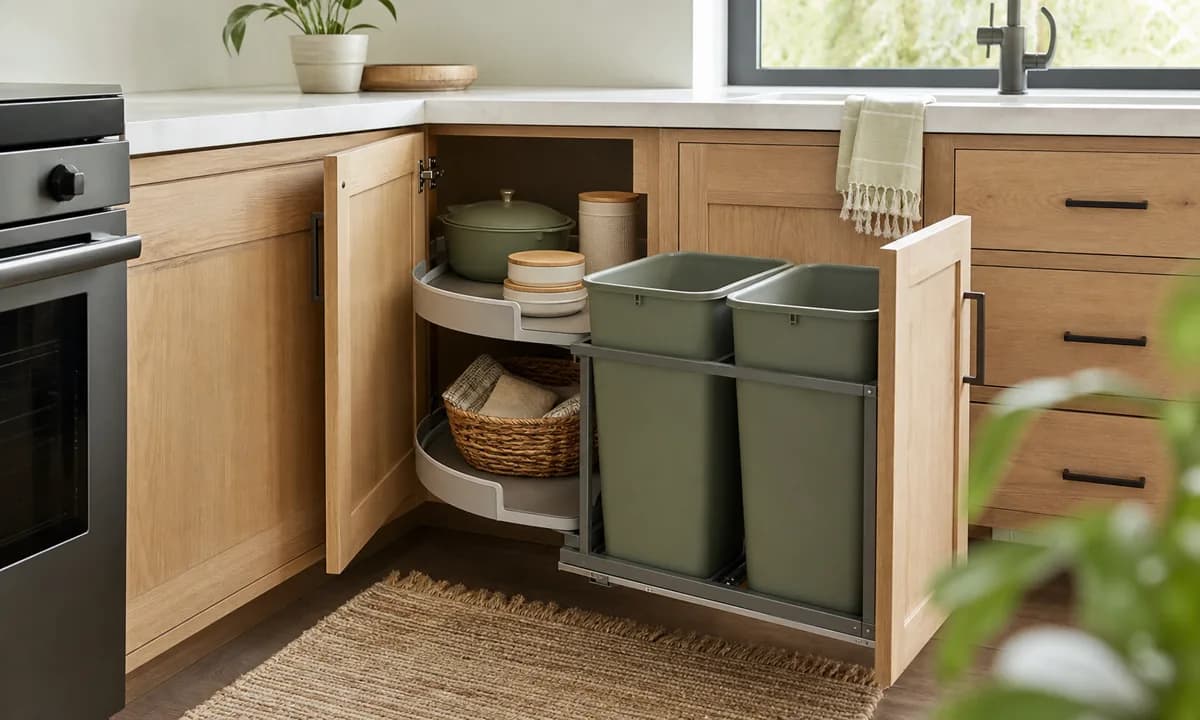
- Under the Sink: Keep garbage bags and cleaning sprays here. Install a tension rod to hang spray bottles by their triggers, freeing up the floor of the cabinet.
Pantry Organization: The Step-by-Step Method
The pantry dictates how easily you can cook a weeknight dinner. If you can't see your ingredients, you will buy duplicates and waste food. According to the EPA, the average household wastes significant money buying food they already have hidden in the back of cabinets.
Step 1: Empty and Edit
Take absolutely everything out of the pantry. Place it on the kitchen table. Check every expiration date and discard anything expired, stale, or that you know you will never eat.
Step 2: Group by Strict Categories
Group the remaining items into logical categories:
- Pasta and Grains
- Canned Goods (Broths, beans, tomatoes)
- Baking Supplies (Flour, sugar, chocolate chips)
- Snacks and Crackers
- Breakfast (Cereal, oats)
Step 3: Decant High-Use Dry Goods
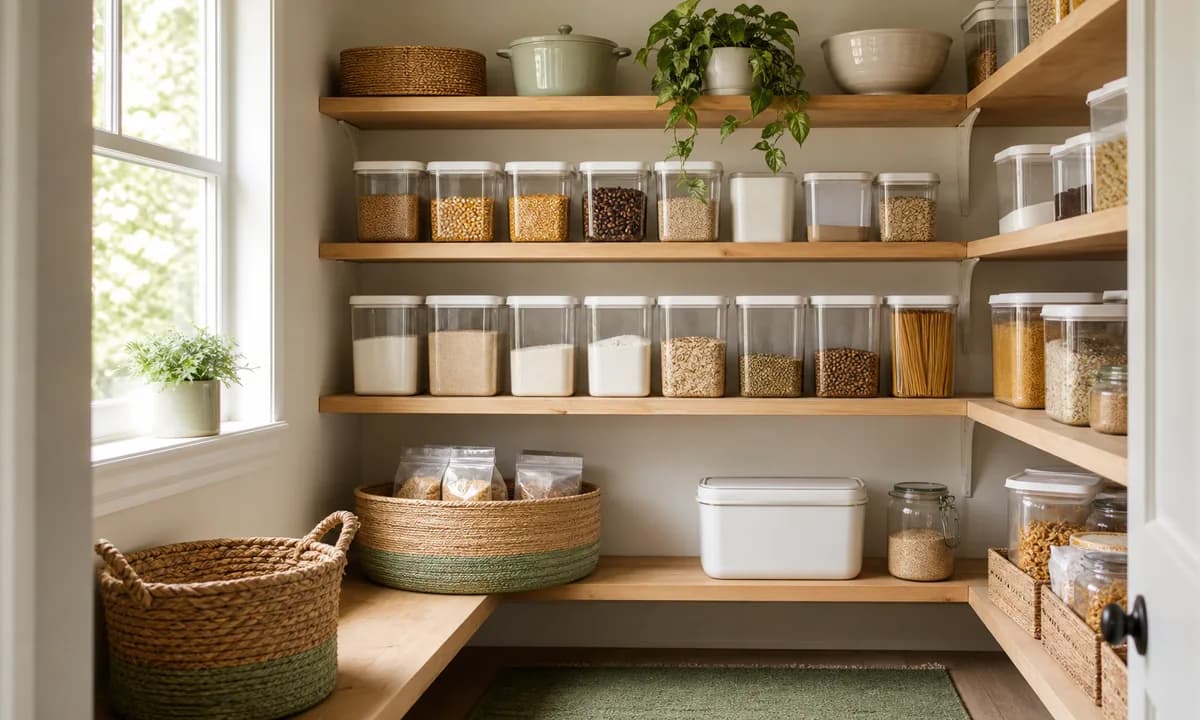
Decanting—transferring food from ugly cardboard boxes into clear, airtight containers—is the most impactful upgrade you can make.
You do not need to decant everything. Only decant the staples you buy constantly: flour, sugar, rice, pasta, and coffee. We highly recommend OXO POP Containers because of their reliable airtight seal and modular stacking ability. Write the expiration date on a piece of masking tape on the bottom of the container.
For a complete breakdown of what to buy, read our guide on choosing the best pantry bins and containers.
Step 4: Assign Shelves Strategically
- Eye Level: Snacks and daily staples.
- Low Shelves: Heavy canned goods, bulk water, and a dedicated low bin for kids' snacks so they can reach them without climbing.
- High Shelves: Rarely used baking supplies and backstock (unopened duplicates).
Tackling the Drawers
Most kitchen drawers are a jumble of overlapping categories. Apply the same zone thinking: each drawer must have one single, primary purpose.
Use adjustable, spring-loaded bamboo dividers in every drawer. Unlabeled, undivided drawers turn into junk drawers within two weeks. If you struggle with this, follow our specific kitchen drawer organization guide.
Small Kitchen Strategy
If your kitchen is tiny, every square inch matters.
- Go Vertical: Install wall-mounted magnetic knife strips, hanging pot racks, and floating shelves. Walls are free storage space.
- Clear the Counters: In a small kitchen, a clear counter is a functional workspace, not a luxury. Keep only the coffee maker and a knife block out. Put the toaster and blender away.
- Edit Aggressively: You only need two spatulas, not six. You need one good chef's knife, not a massive 15-piece block.
For more tight-space hacks, check out our small kitchen organization guide.
Maintaining the System
Organization is not a one-time event; it is a daily practice. Keep your kitchen perfect with this simple routine:
- The 5-Minute Nightly Reset: After dinner, clear the sink, wipe the counters, and put all stray items back in their designated zones. Never go to sleep with a dirty kitchen.
- The Morning Unload: Empty the dishwasher first thing in the morning. This ensures dirty dishes can go straight into the dishwasher all day long, rather than piling up in the sink.
Frequently Asked Questions
How long does it take to fully organize a kitchen?
Do I need matching containers for the pantry?
What is the most impactful kitchen organization change I can make today?
How do I organize a kitchen with very little storage?
Should I label everything in the kitchen?
Join Organized Haven
Get weekly home organization tips, DIY décor ideas, and exclusive printables delivered straight to your inbox. Join 10,000+ homeowners today!
We respect your privacy. Unsubscribe at any time.
Written by Danilo Souza
Danilo Souza is a Home Organization Expert and Interior Decor Specialist with over 8 years of experience in transforming cluttered, stressful rooms into functional, peaceful, and beautifully designed living spaces. His practical, step-by-step methodologies empower homeowners to create lasting organizational systems that fit their lifestyle and budget.