Spice Storage Organization: Every Method Compared
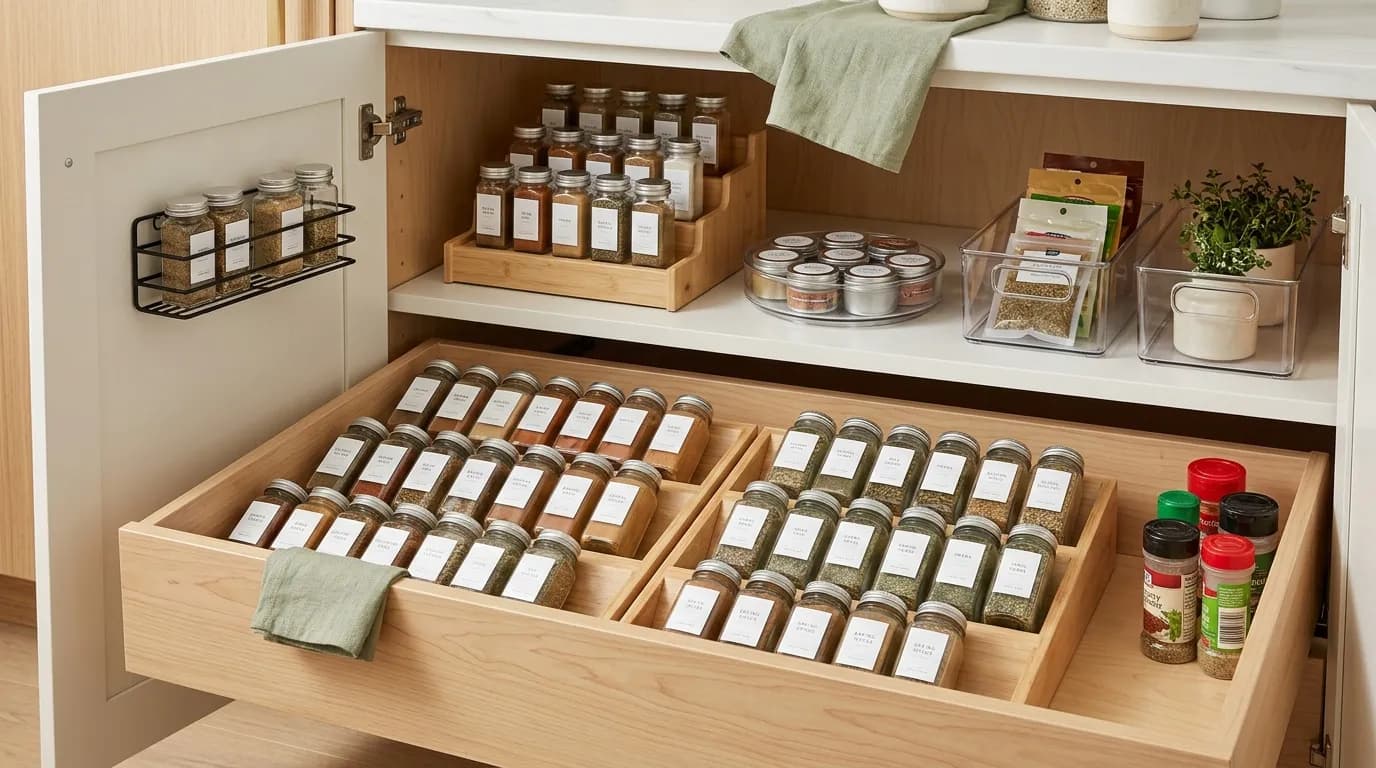
Table of Contents
What is the best way to store spices? The most functional spice storage method depends entirely on your kitchen layout: use an angled drawer insert if you have a top drawer near the stove, a wall-mounted magnetic strip if you have empty wall space, and a tiered acrylic riser if you only have upper cabinets. Regardless of the method, they must be stored away from direct heat and light.
Most home cooks store spices in one of two ways: shoved into a crowded upper cabinet where nothing is visible past the front row, or scattered across multiple random locations in the kitchen.
Both methods create the exact same problem—you cannot find the cumin when the oil is already hot, and you end up buying a fourth jar of garlic powder because you assumed you were out.
The fix is establishing a single, dedicated spice storage location where every single jar is visible from the front without moving anything else. Here are 8 expert-approved ways to do it.
1. The Spice Drawer Insert (The Gold Standard)
If you are lucky enough to have a shallow top drawer near your stove (but not directly underneath the oven), converting it to a dedicated spice drawer is the absolute best storage method.
You lay the spices flat, labels facing up. When you open the drawer, you see your entire collection instantly. To keep them from rolling around, use an angled spice drawer insert (available in bamboo or clear acrylic). These inserts angle each row slightly upward so the labels face you perfectly.
2. Magnetic Wall Strips
Magnetic spice jars mounted on a stainless steel wall strip use zero counter or cabinet space. They create a beautiful, modern visual display while keeping every jar within arm's reach.
The Limitation: You must use specialized magnetic tins with clear lids, which means you have to decant every single spice you buy. Additionally, do not mount this directly over the stove, as the rising steam will cause the spices to clump and degrade rapidly.
3. Tiered Cabinet Organizers
If you must use an upper cabinet, do not put the spices flat on the shelf. A tiered shelf riser (like a miniature set of bleachers) creates two or three elevated rows. This guarantees that the jars in the back row are visible over the jars in the front row. This works in any standard cabinet and requires zero permanent installation.
4. Pull-Out Cabinet Door Racks
A shallow wire rack mounted on the inside of a cabinet or pantry door can hold 20 to 30 spice jars, adding massive storage without using a single inch of actual shelf space. This pairs perfectly with a pantry setup—read our Pantry Bins Guide for more on maximizing pantry doors.
5. Alphabetical Order is Mandatory
Whether you use a drawer, a door rack, or a riser, alphabetical order is the only system that actually works long-term. You know exactly where the Paprika lives the moment you need it, rather than scanning 40 jars visually.
Alternative: Grouping by cuisine (Italian, Mexican, Indian) works, but only for advanced cooks who exclusively cook specific regional cuisines.
6. Uniform Jars (A Functional Aesthetic Upgrade)
Decanting spices into matching uniform jars is popular on social media for a reason—it is not just pretty; it is highly efficient. Standardized square jars tessellate perfectly, meaning they sit flush against each other and waste zero dead space.
7. Label the Lids
If you store your spices standing upright in a deep drawer (or in a pull-out wire basket), do not just label the front of the jar. You must put a circular label on the top lid. That way, when you look down into the drawer, you see exactly what you have without lifting a single jar.
8. The Annual Expiration Audit
According to the USDA Food Safety guidelines, dried ground spices do not "spoil" in a way that makes you sick, but they do lose their flavor completely.
Ground spices lose their essential oils rapidly after 6 to 12 months. Whole spices (like whole nutmeg or cinnamon sticks) can last up to 3 years. Perform an annual audit: open each jar and smell it. If the aroma is faint or smells like dusty cardboard, throw it in the compost. A small collection of fresh, potent spices will make your food taste significantly better than a massive collection of 5-year-old dust.
Frequently Asked Questions
How many spices does the average home cook actually need?
Should spices be stored near the stove?
What is the best spice organization method for a tiny kitchen?
Join Organized Haven
Get weekly home organization tips, DIY décor ideas, and exclusive printables delivered straight to your inbox. Join 10,000+ homeowners today!
We respect your privacy. Unsubscribe at any time.
Written by Danilo Souza
Danilo Souza is a Home Organization Expert and Interior Decor Specialist with over 8 years of experience in transforming cluttered, stressful rooms into functional, peaceful, and beautifully designed living spaces. His practical, step-by-step methodologies empower homeowners to create lasting organizational systems that fit their lifestyle and budget.