Small Kitchen Organization: Maximize Every Inch
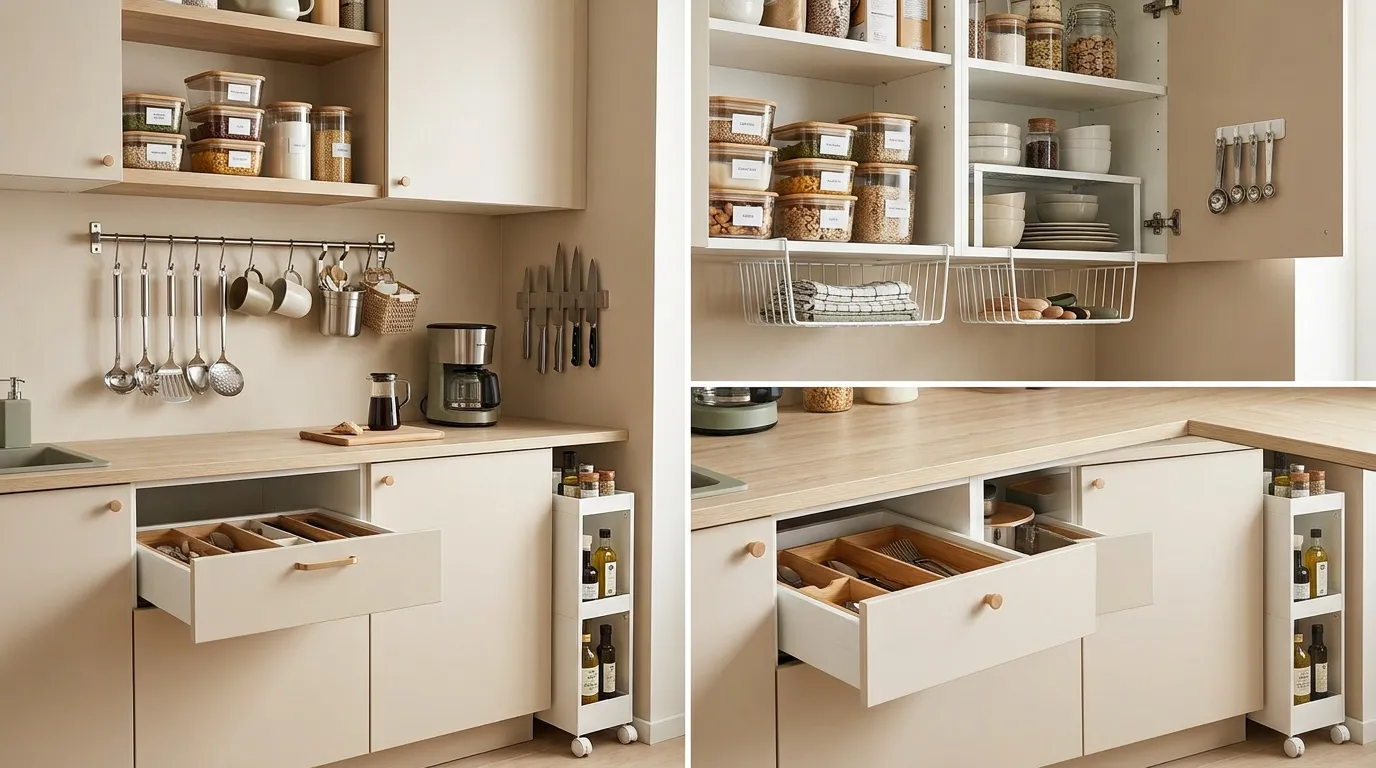
Table of Contents
Where do you put everything in a kitchen with no storage? Small kitchen organization works by forcing everything vertical. Use open wall shelves, magnetic knife strips, and hanging pot racks from the ceiling. Crucially, you must clear the counters completely—only daily-use items are allowed to stay out. Everything else must go inside a cabinet or be donated.
A small kitchen forces you to be honest about how you actually cook. You do not have the luxury of storing a massive stand mixer you use twice a year, or keeping three different sizes of colanders.
In a compact kitchen, space is a premium currency, and clutter is bankruptcy. Here are the most effective, non-permanent strategies to double the functional space of a tiny kitchen without a single renovation.
1. The "Clear Counter" Mandate
In a large kitchen, a clear counter is a nice aesthetic. In a small kitchen, a clear counter is a functional necessity. Counter space is your primary workspace; every decorative item, utensil crock, and appliance that lives on the counter permanently is stealing your ability to chop an onion comfortably.
The Rule: Only items used every single day are allowed to live on the counter (e.g., the coffee maker).
- Move the knife block to a magnetic wall strip.
- Move the paper towel holder to the inside of a lower cabinet door.
- Store the toaster in an upper cabinet and only take it down when making breakfast.
2. Go Vertical With Floating Shelves
If your cabinets do not reach the ceiling, you are wasting the most valuable real estate in the room. Installing heavy-duty floating shelves on empty walls adds massive storage capacity without consuming a single inch of floor space.
- What to store here: Your most frequently used heavy plates, drinking glasses, and aesthetically pleasing items.
- Warning: Open shelving requires maintenance. Because they are exposed to the air, items will collect dust and grease from cooking. Do not store rarely used items here, or you will be constantly washing them before use.
3. Magnetic Knife Strips
A traditional wooden knife block takes up a massive 8x12 inch footprint on your counter. A stainless steel magnetic strip holds the exact same knives vertically on the backsplash. It looks professional, keeps the blades sharper (because they aren't dragging in wooden slots), and reclaims counter space instantly.
4. Hanging Pot Racks
Pots and pans are the bulkiest items in any kitchen. If you do not have deep cabinets, move them to the ceiling. A ceiling-mounted or heavy-duty wall-mounted pot rack frees up one to two entire lower cabinets.
5. Exploit the Inside of Every Door
The inside of your cabinet doors is completely unused space. By installing simple wire racks (or using heavy-duty Command hooks if you rent), you can store flat items perfectly.
- Pot Lids: Keep them from rattling around in drawers.
- Spices: See our Spice Storage Guide.
- Cleaning Supplies: Hang spray bottles on a tension rod under the sink, and put sponges in a small door caddy.
6. Under-Shelf Baskets
If you cannot adjust your cabinet shelves and have a large gap of "dead air" above your short coffee mugs, slide a wire under-shelf basket onto the shelf. This creates a hanging storage tier below the solid shelf, effectively doubling the capacity of that specific cabinet.
7. The Rolling Cart Island
If you have zero prep space, a slim rolling utility cart with a butcher-block top acts as a mobile kitchen island. You can chop vegetables on it, store heavy pantry items on the lower shelves, and physically roll it out of the kitchen into a hallway or dining area when you need floor space.
8. Aggressive Editing (The Hard Truth)
You cannot organize your way out of simply having too much stuff. Most small kitchens are paralyzed by duplicates. You do not need four wooden spoons; you need one good one. You do not need 30 plastic tupperware containers with missing lids.
Empty your kitchen drawers (read our Drawer Organization Guide) and keep strictly one of each tool you use regularly. Donate the rest. The space you reclaim is worth far more than the duplicate tool.
Frequently Asked Questions
How do I create storage in a kitchen with literally no pantry?
How do you organize appliances in a small kitchen?
How do I keep a small kitchen clean daily?
Join Organized Haven
Get weekly home organization tips, DIY décor ideas, and exclusive printables delivered straight to your inbox. Join 10,000+ homeowners today!
We respect your privacy. Unsubscribe at any time.
Written by Danilo Souza
Danilo Souza is a Home Organization Expert and Interior Decor Specialist with over 8 years of experience in transforming cluttered, stressful rooms into functional, peaceful, and beautifully designed living spaces. His practical, step-by-step methodologies empower homeowners to create lasting organizational systems that fit their lifestyle and budget.