Under-Sink Kitchen Organization Guide
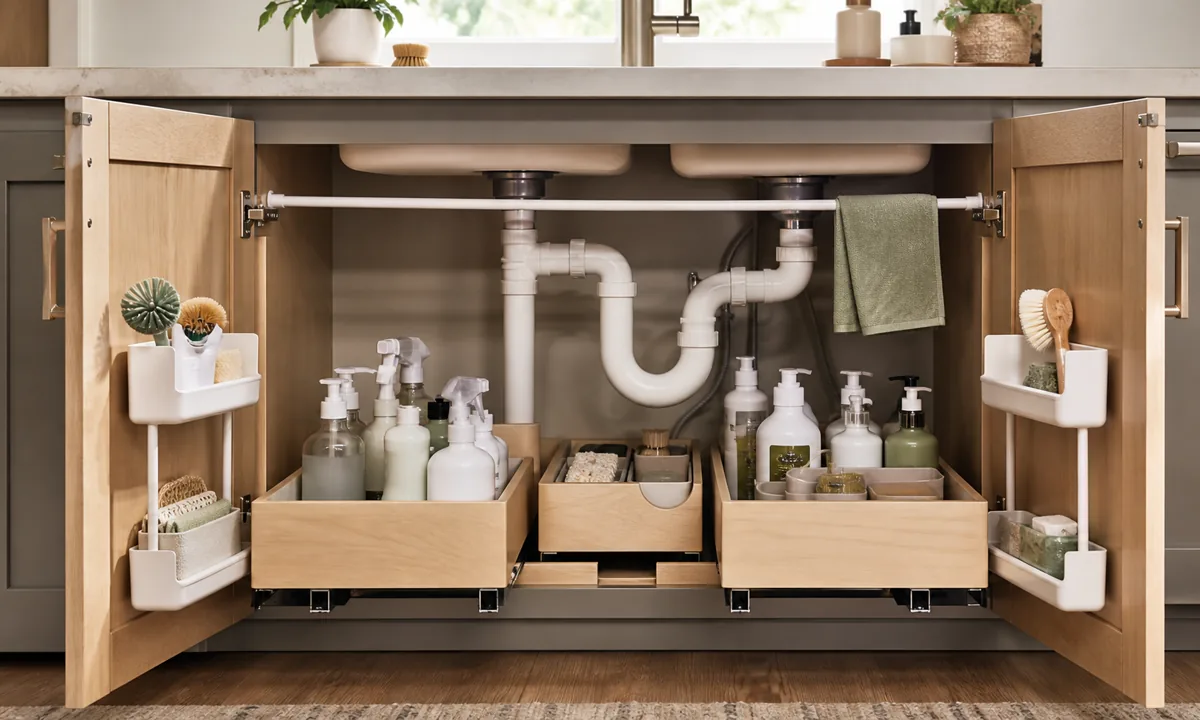
Table of Contents
Why is the under-sink kitchen cabinet always the most chaotic in the kitchen? Because standard shelving and containers do not fit around plumbing. The garbage disposal hangs from above, supply lines and drain pipes run through the cabinet vertically, and the irregular obstacle layout prevents standard rectangular organizers from fitting. The solution requires products specifically designed to work around pipes: U-shaped or L-shaped pull-out drawers, a tension rod for spray bottles, and door-mounted caddies for small items.
The under-sink cabinet is one of the most frequently accessed storage areas in a kitchen—cleaning supplies, dish soap, sponges, and often trash bags all live here. It is also consistently one of the most disorganized, because its internal architecture makes standard organization impossible.
The garbage disposal takes a large chunk of central floor space. PVC drain pipes and water supply lines cut the remaining area into awkward sections. You cannot line the back wall with a standard shelf. The solutions have to work around the obstacles.
1. U-Shaped Pull-Out Drawers
The core problem in a deep under-sink cabinet is that items stored at the back become essentially invisible and inaccessible without removing everything in front. In the dark, behind the garbage disposal, supplies become "forgotten" and duplicates get purchased.
A U-shaped or L-shaped pull-out drawer designed for under-sink use solves this. The U-shape fits around the garbage disposal—the two side panels clear the disposal's housing, while the wider bottom panel uses the open floor space below the drain pipes. When you need dishwasher detergent stored in the back section, you pull the drawer out and the back comes to you.
Look specifically for: under-sink organizers marketed as "U-shaped," "two-tier under sink drawer," or "pull-out with cutout." Flat rectangular organizers without cutouts will not clear the garbage disposal.
2. Tension Rod for Spray Bottles
Spray bottles are the dominant floor-space consumer in most under-sink cabinets. They are tall, require floor space when standing upright, and tip over when space is tight.
The fix uses an $8 tension rod. Install it horizontally across the front upper section of the cabinet, completely in front of all the plumbing. Each spray bottle hangs from its trigger hooked over the rod.
All spray bottles—glass cleaner, all-purpose, granite polish, degreaser—hang in a row at upper cabinet height, completely suspended. The entire floor of the cabinet opens up for the pull-out drawer, dish soap bottles, and other items. The tension rod requires no hardware, no drilling, and takes about 90 seconds to install.
This technique is equally effective in the under-sink bathroom cabinet and is covered in our Under-Sink Bathroom Organization guide.
3. Door-Mounted Caddies for Small Items
The small items that get lost in under-sink cabinets—replacement sponges, scrub brushes, steel wool pads, rubber gloves, extra trash bag rolls—are best stored on the cabinet door rather than on the floor or shelf where they slide under the pipes and disappear.
Adhesive caddies: Clear plastic adhesive organizers mounted to the inside of the cabinet door hold small items without any hardware. Check the weight rating before using—most hold 2 to 5 pounds comfortably.
Over-the-door rail with hooks: A small over-the-door organizer (designed for the under-kitchen-sink cabinet specifically) holds rubber gloves, a dish brush, and small caddy bags. The gloves hang to dry after use rather than sitting damp on the cabinet floor where they mildew.
4. Protect the Cabinet Floor with a Drip Tray
Cleaning supplies leak. The under-sink area is also the location of every water supply connection and the drain assembly—failures happen. Cardboard or any absorbent material placed directly on the wooden cabinet floor will absorb moisture and rot.
Before placing any organizer in the cabinet, line the entire floor with a flexible silicone mat with raised edges (sold as an "under-sink drip tray"). The silicone is fully waterproof and catches any leaking liquid—cleaning spray, water supply drips, or an occasional P-trap failure—before it reaches the wood. When the mat has a spill on it, pull it out, rinse it in the sink, and slide it back. The cabinet floor remains dry and clean.
Also relevant:
- Under-Sink Bathroom Organization — same principles, different context
- Organize Pots, Pans, and Baking Sheets — kitchen cabinet organization overall
Frequently Asked Questions
How do you organize under a kitchen sink with garbage disposal and pipes in the way?
How do I prevent the under-sink cabinet from water damage?
Where is the best place to store dish soap and sponges?
Join Organized Haven
Get weekly home organization tips, DIY décor ideas, and exclusive printables delivered straight to your inbox. Join 10,000+ homeowners today!
We respect your privacy. Unsubscribe at any time.
Written by Danilo Souza
Danilo Souza is a Home Organization Expert and Interior Decor Specialist with over 8 years of experience in transforming cluttered, stressful rooms into functional, peaceful, and beautifully designed living spaces. His practical, step-by-step methodologies empower homeowners to create lasting organizational systems that fit their lifestyle and budget.