15 Kitchen Pantry Organization Ideas
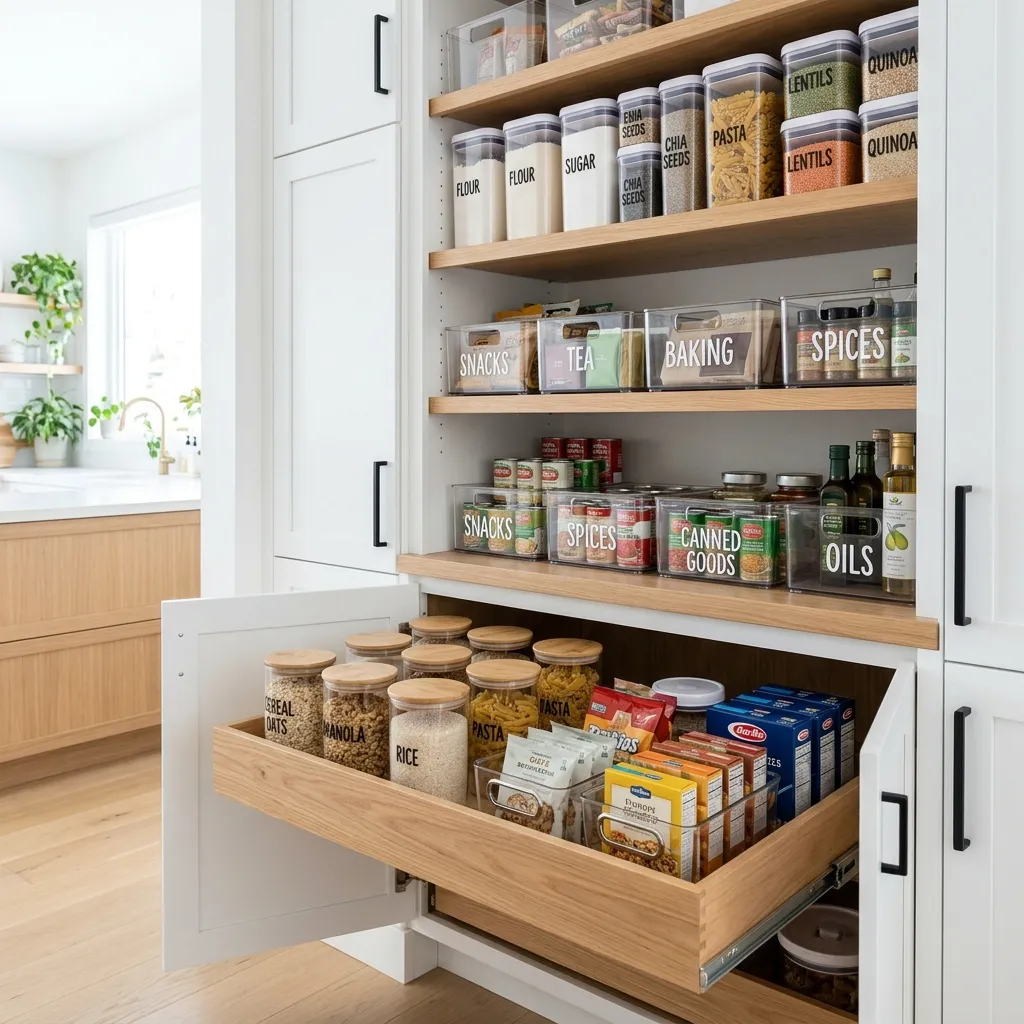
Table of Contents
- 1. Install Pull-Out Drawer Organizers
- 2. Use Clear Bins (Not Pretty Wicker Baskets)
- Storage Bin Comparison
- 3. The Zone Method
- 4. Label Everything (Even the Obvious)
- 5. Add a Lazy Susan for Corner Shelves
- 6. Decant Dry Goods Into Airtight Containers
- 7. Use Door-Mounted Racks
- 8. Create an "Expiring Soon" Bin
- 9. Adjust Your Shelf Heights
- 10. Add Under-Shelf Baskets
- 11. Store Heavy Appliances on the Floor
- 12. Use Tiered Risers for Canned Goods
- 13. Dedicate a Low Bin for Kids' Snacks
- 14. Keep a Small Step Stool Inside
- 15. The 10-Minute Monthly Reset
What Makes a Pantry Actually Stay Organized? The secret to a pantry that stays neat is creating intuitive zones using clear containers for everyday items and opaque bins for heavy backstock. When every single item has a specific, clearly labeled home, you and your family will naturally put things back where they belong.
A disorganized pantry doesn't just look messy; it drains your wallet. When you can't see the cans of black beans shoved in the dark back corner of a deep shelf, you buy more.
Organizing a pantry requires more than just buying a set of matching baskets. You need a highly functional system that gives you visual control over your inventory. Here are 15 actionable, expert-approved pantry organization ideas that will transform how you cook and shop.
1. Install Pull-Out Drawer Organizers
Deep pantry shelves are where food goes to die. If you have deep shelves, your first investment should be installing sliding wire or wooden pull-out drawers. This brings the entire back of the shelf out into the light, instantly doubling your usable space and preventing items from expiring out of sight.
2. Use Clear Bins (Not Pretty Wicker Baskets)
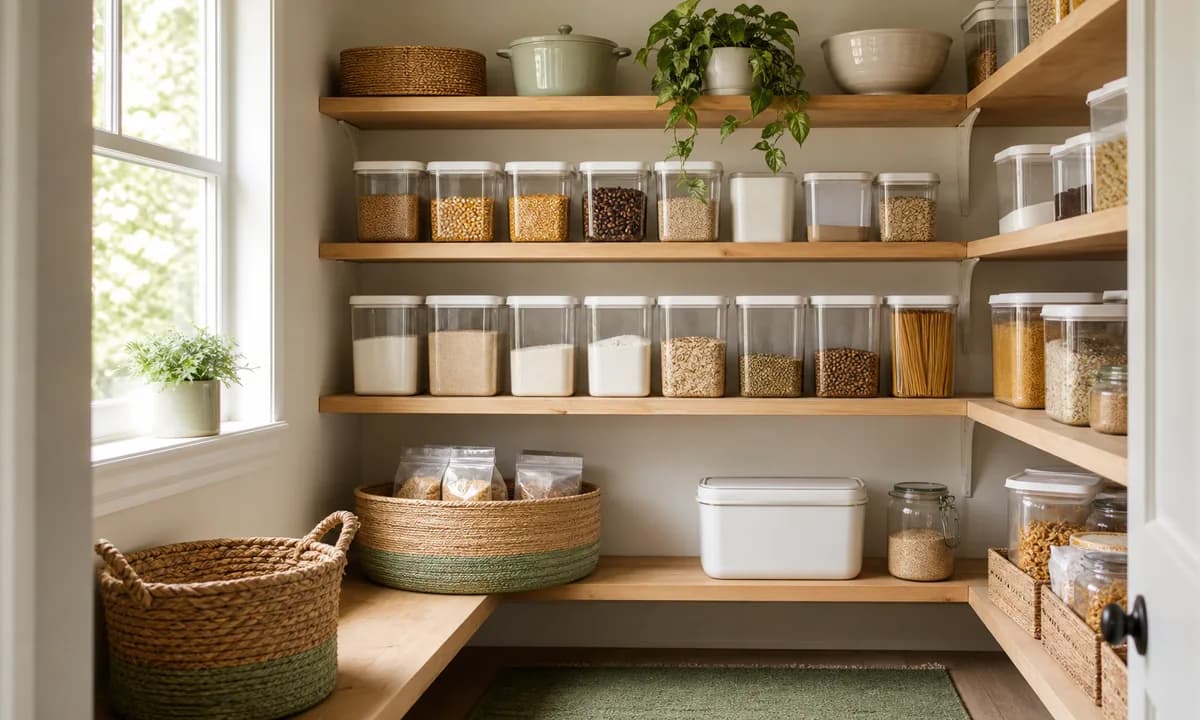
While woven wicker baskets look incredibly beautiful on social media, they fail in practical food storage. They hide what you have. Using clear acrylic bins for your dry goods allows you to see your inventory at a glance, preventing over-purchasing and saving money on grocery trips. Save the wicker baskets for holding heavy, ugly backstock items on the very top or bottom shelves.
Storage Bin Comparison
| Bin Type | Best For | Pros | Cons |
|---|---|---|---|
| Clear Acrylic | Snacks, pastas, everyday staples | Maximum visibility, easy to clean | Can show scratches over time |
| Woven/Rattan | Backstock, paper towels | Beautiful aesthetic, hides visual clutter | Hard to clean, opaque |
| Wire Baskets | Potatoes, onions, bulky bags | Great ventilation, highly durable | Small packets fall through the gaps |
3. The Zone Method
Creating zones is the backbone of any organized pantry. Group strictly by category: baking supplies in one bin, breakfast items in another, and salty snacks in a third. This method dramatically speeds up meal prep because you aren't hunting for baking soda next to the canned soup. For a deeper dive, read our complete kitchen zone guide.
4. Label Everything (Even the Obvious)
Labels are not just for aesthetic appeal; they are the instruction manual for your family. When a bin is clearly labeled "Salty Snacks," anyone unloading the groceries knows exactly where the pretzels go. Use a simple label maker or chalk markers with bold, readable fonts.
5. Add a Lazy Susan for Corner Shelves
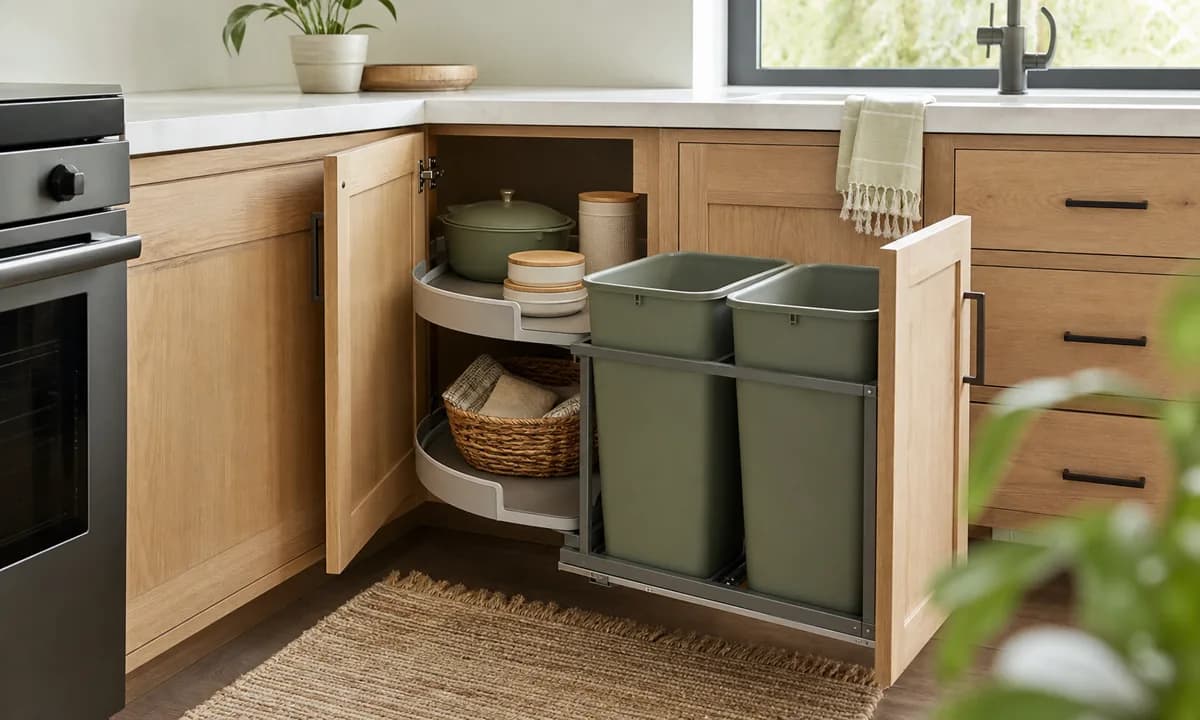
Corner shelves are notoriously difficult to utilize effectively because items get wedged in the back. A clear acrylic turntable (lazy susan) transforms this dead space into highly accessible storage. They are perfect for grouping heavy oils, vinegars, and tall sauce bottles.
6. Decant Dry Goods Into Airtight Containers
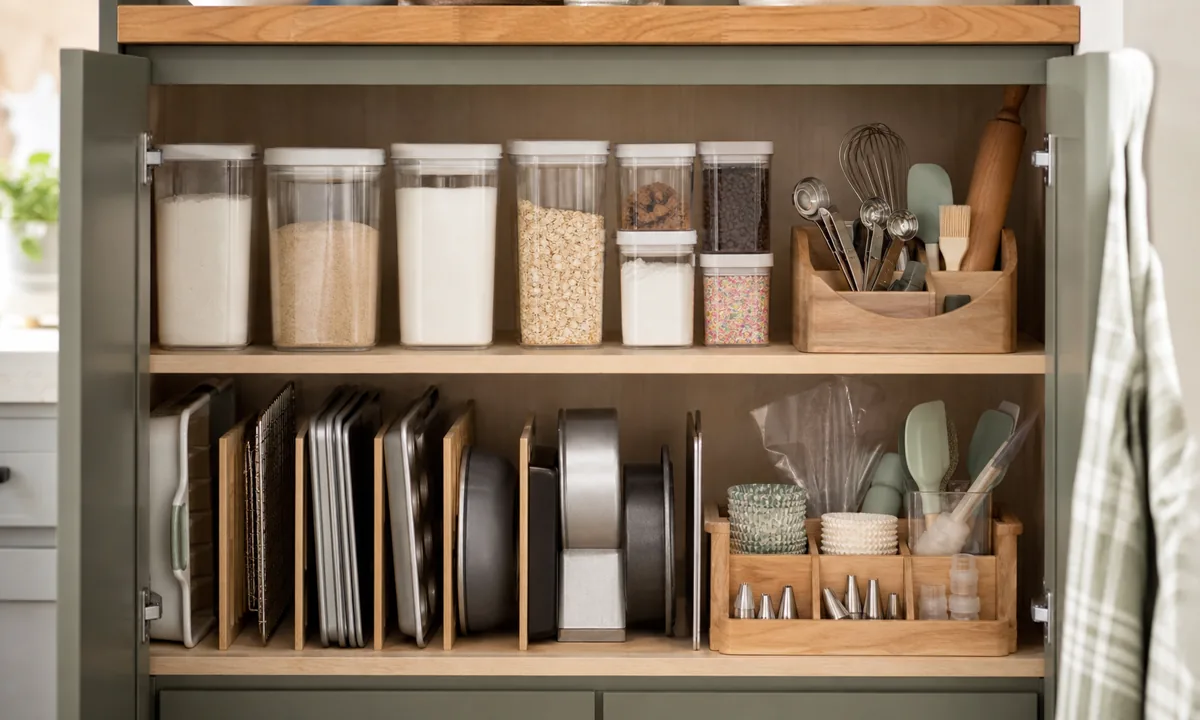
Cardboard boxes are bulky, rip easily, and invite pests. Transferring staples like flour, sugar, and rice into modular, airtight containers extends their shelf life drastically. Products like OXO POP containers or glass jars create a visually cohesive look while keeping food fresh. (See our buying guide for pantry bins).
7. Use Door-Mounted Racks
Don't waste valuable shelf depth on tiny, shallow items. An over-the-door wire rack is the perfect storage solution for small spice jars, aluminum foil, and boxes of ziplock bags. This frees up your primary shelves for large bins and heavy appliances.
8. Create an "Expiring Soon" Bin
According to the USDA, nearly 30% of the food supply is wasted at the consumer level. Combat this by designating a clear bin right at eye level for items nearing their expiration date. This simple visual cue ensures you prioritize using these ingredients for your next meal.
9. Adjust Your Shelf Heights
Most people never adjust their factory-installed shelves, resulting in massive amounts of wasted vertical space above short cans. Take 15 minutes to measure your tallest cereal boxes and your shortest canned goods, then physically move your shelf pegs to fit your exact inventory.
10. Add Under-Shelf Baskets
If you have tall shelves that cannot be adjusted, slip wire under-shelf baskets onto them. These utilize the dead air space below a shelf and are ideal for storing light, flat items like tortillas, bread bags, or cloth napkins without crushing them.
11. Store Heavy Appliances on the Floor
Safety and convenience dictate that heavy items stay low. Keep your heavy stand mixers, slow cookers, and bulk cases of sparkling water on the floor or the absolute lowest shelf to prevent back strain and protect your shelving from warping.
12. Use Tiered Risers for Canned Goods
A three-tier shelf riser (like a miniature set of bleachers) ensures you can see the labels of the cans in the back row. This prevents the classic problem of accidentally buying five cans of diced tomatoes because you couldn't see the ones hiding behind the chicken broth.
13. Dedicate a Low Bin for Kids' Snacks
If you have children, create an accessible, pre-approved snack bin on a lower shelf. This empowers kids to grab their own snacks safely without climbing on the counters or creating a mess on higher, fragile shelves.
14. Keep a Small Step Stool Inside
Make the very top shelf of your pantry fully functional by storing a slim, foldable step stool right inside the pantry door. You will be much more likely to utilize high storage for off-season appliances if the tool to reach it is always within arm's reach.
15. The 10-Minute Monthly Reset
No organizational system maintains itself perfectly forever. Schedule a 10-minute recurring appointment on your calendar once a month to wipe down shelves, check expiration dates, and reset any stray items. Consistency is the ultimate key to a tidy home.
Frequently Asked Questions
How do I keep my pantry organized long-term?
What are the best bins for pantry organization?
How much does it cost to organize a pantry?
Should I decant all my dry goods?
What is the best pantry organization system for small spaces?
Join Organized Haven
Get weekly home organization tips, DIY décor ideas, and exclusive printables delivered straight to your inbox. Join 10,000+ homeowners today!
We respect your privacy. Unsubscribe at any time.
Written by Danilo Souza
Danilo Souza is a Home Organization Expert and Interior Decor Specialist with over 8 years of experience in transforming cluttered, stressful rooms into functional, peaceful, and beautifully designed living spaces. His practical, step-by-step methodologies empower homeowners to create lasting organizational systems that fit their lifestyle and budget.