Rental Kitchen Organization Without Drilling or Renovating
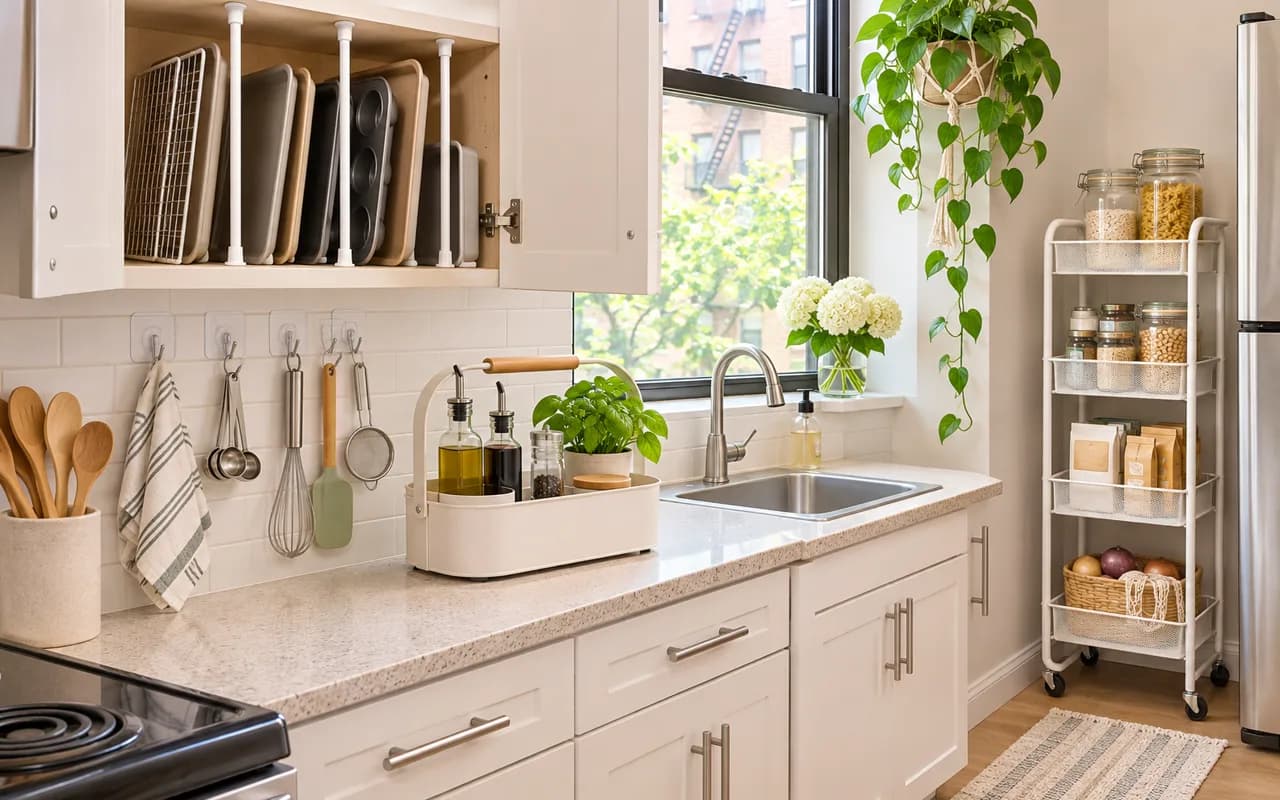
Table of Contents
- Map the Kitchen by Task Before Buying Storage
- Get More From Cabinets You Already Have
- Use vertical space for flat cookware
- Treat cabinet doors carefully
- Make the under-sink cabinet a lift-out zone
- Create Portable Stations Instead of Permanent Counter Clutter
- Add Freestanding Storage Only After Measuring the Walking Space
- A No-Drill Rental Kitchen Reset
- Avoid These Rental-Kitchen Mistakes
How can you organize a rental kitchen without drilling or renovating? Start inside cabinets and drawers, use removable or freestanding storage only for light, appropriate items, and create portable work zones for cooking. Measure first, keep vents and appliance clearances unobstructed, and follow your lease plus each product's installation instructions before attaching anything to a wall or cabinet.
A rental kitchen can be hard to organize because the most tempting fixes—new shelving, wall rails, custom cabinets—may be off limits. The answer is not to settle for a counter full of appliances. It is to use the storage that already exists more deliberately, then add only portable or removable pieces that solve a specific workflow problem.
This guide targets rental kitchen organization without drilling or renovating. It builds on our broader renter-friendly organization ideas and goes deeper into food prep, cooking, cleanup, and move-out-friendly choices.
Map the Kitchen by Task Before Buying Storage
Take ten minutes to notice where each task begins and ends. Most small kitchens need four simple zones:
| Zone | Keep here | Useful rental-friendly approach |
|---|---|---|
| Prep | Knives, boards, mixing bowls, everyday tools | One drawer organizer or portable caddy near clear counter space |
| Cook | Pans, utensils, oils, heat-safe tools | Cabinet dividers and a small turntable where stable |
| Clean | Dish soap, towels, dishwasher items | Under-sink caddy that can lift out for cleaning |
| Store | Food containers, pantry staples, wraps | Drawer bins, shelf risers, and a slim freestanding cart if needed |
This map reveals the real problem. If measuring spoons live near the table while spices live beside the refrigerator, no organizer will make dinner feel easy. Move useful items closer to the point of use before adding a product.
Get More From Cabinets You Already Have
Use vertical space for flat cookware
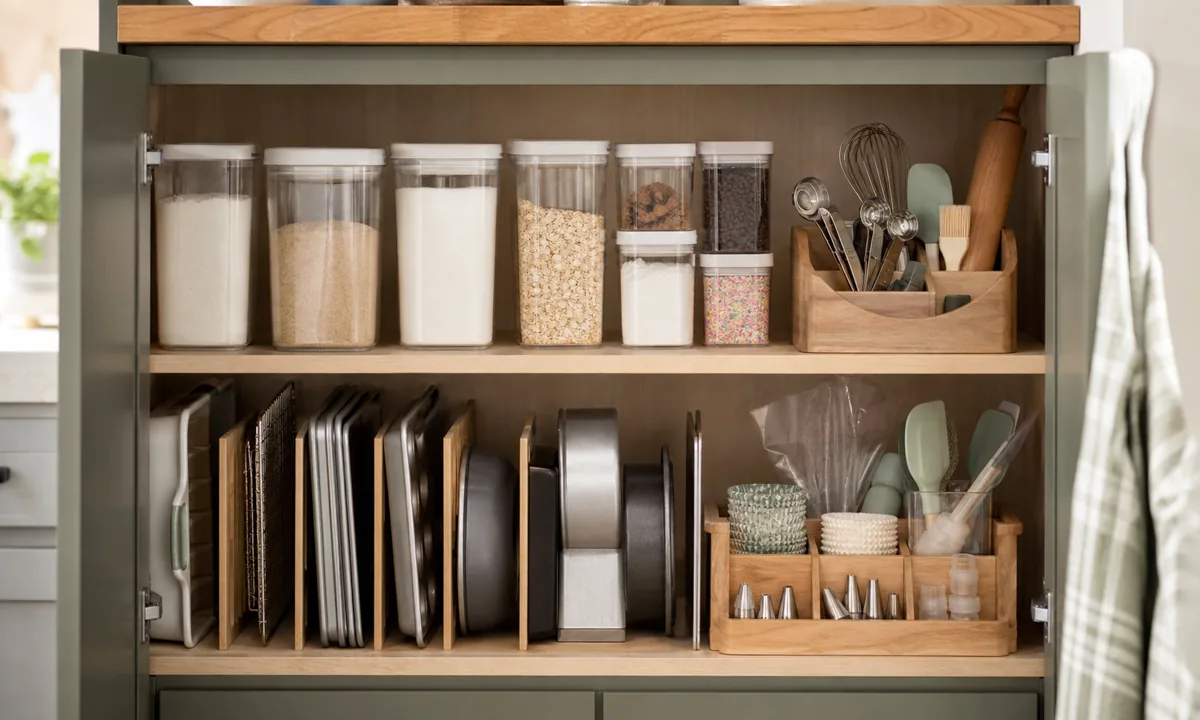
Baking sheets, cutting boards, and pan lids create the familiar cabinet avalanche when stacked flat. A tension rod or freestanding divider can separate them vertically inside a cabinet, provided the fit is stable and does not interfere with hinges. Our detailed guide to organizing pots, pans, and baking sheets can help you decide which pieces deserve daily access.
Treat cabinet doors carefully
Lightweight removable hooks or shallow door-mounted organizers can hold items only when the cabinet still closes fully and the manufacturer's weight limit is respected. Do not attach anything that stresses the hinge, obstructs a child-safety latch, or requires guessing whether the adhesive suits the cabinet finish. Test one discreet area first and check your lease.
Make the under-sink cabinet a lift-out zone
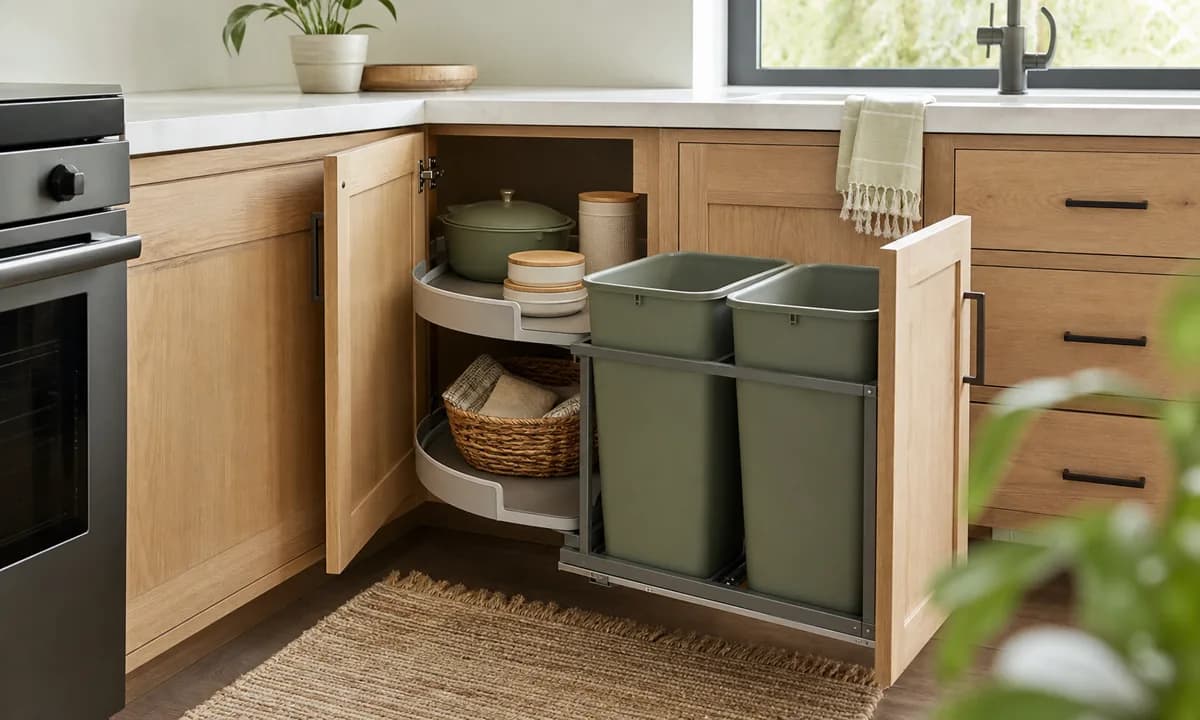
Instead of loose bottles around pipes, use one handled caddy for daily cleaning items and a separate shallow bin for backup sponges or trash bags. Leave pipe access clear. For more detail on moisture and cleaning-product placement, see under-sink kitchen organization.
Create Portable Stations Instead of Permanent Counter Clutter
Small rental kitchens benefit from items that can appear for a task and disappear afterward. A coffee tray can hold mugs, filters, and a small canister; a baking caddy can carry measuring tools and extracts to a table; a dishwashing caddy keeps the sink edge clear. These are not decorative trays—they are transportable task kits.
Choose one station that solves the most repeated frustration. If breakfast supplies spread across three cabinets every morning, a coffee station makes sense. If the counter is the only prep surface, do not sacrifice it to a permanent display. For a compact routine, use the principles in our DIY coffee station organization guide.
Add Freestanding Storage Only After Measuring the Walking Space
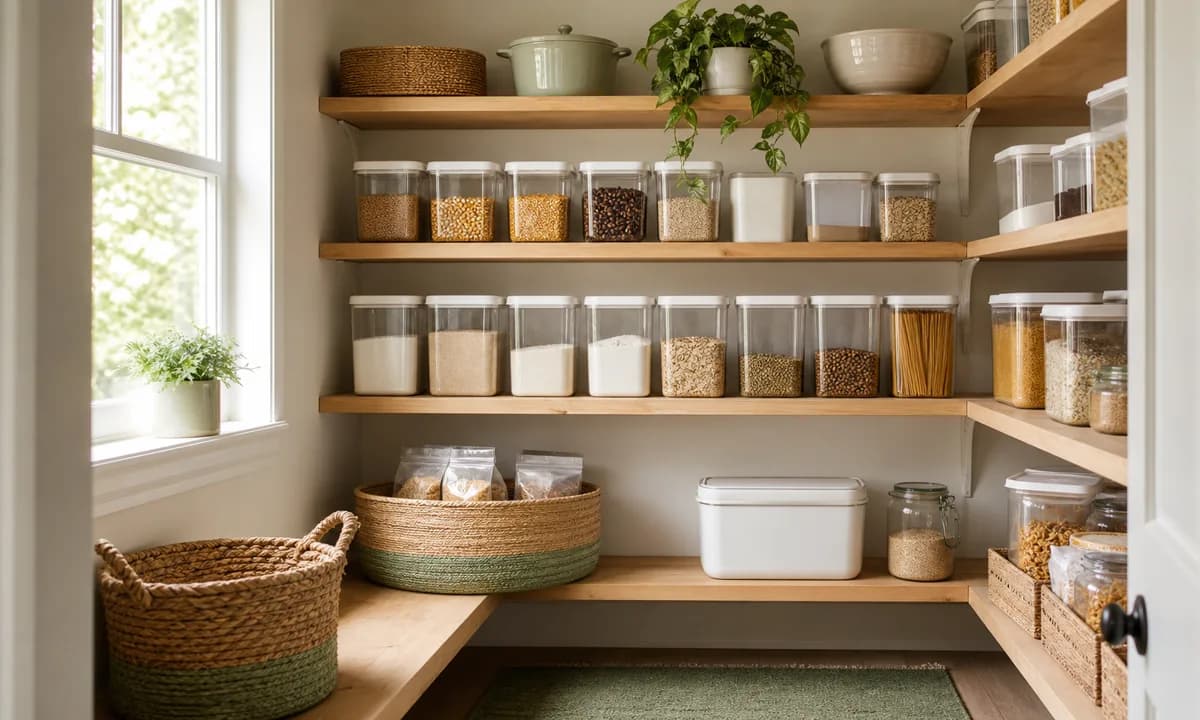
A narrow rolling cart or freestanding pantry shelf can be valuable in a rental, but it must not create a collision course between the refrigerator, oven, and doorway. Measure with appliance doors open, not closed. Leave access to outlets, vents, shutoff valves, and required appliance clearances exactly as the manufacturer specifies.
Use the cart for stable, light-to-medium pantry items or a portable prep station—not for an overloaded collection of appliances. If it makes the room harder to pass through, it is storage in name only. In very tight rooms, the small kitchen organization guide offers alternatives that keep the floor clear.
Keep the area around the range deliberately sparse. The CPSC's safer-cooking guidance advises keeping towels, pot holders, and other flammable items away from hot surfaces. A clear cooking zone is therefore both a storage decision and a safety decision.
A No-Drill Rental Kitchen Reset
Follow this sequence when your kitchen feels crowded:
- Empty one cabinet completely and clean the shelf.
- Return only the items used for that cabinet's assigned task.
- Stand flat items vertically where possible.
- Move backstock away from daily-use items.
- Put one portable caddy together for the task that spreads most often.
- Review any adhesive, tension, or over-door product for fit, weight, and safe clearance.
The last step is what makes the system renter-friendly. A removable product is not automatically safe for every surface or every load. Follow product directions, test cautiously, and prioritize freestanding storage when the weight is uncertain.
Avoid These Rental-Kitchen Mistakes
Using every open wall as storage. Visual clutter rises quickly, and adhesives can create removal risk. Improve drawers and cabinets first.
Buying bins before measuring. A bin that wastes two inches of cabinet width can reduce usable space more than it creates.
Putting heavy items on removable systems. Store cast iron, stand mixers, and dense pantry goods on low, stable surfaces.
Treating the counter as a storage shelf. Keep one clear prep area. If an item is not used daily, give it a cabinet or portable home.
Rental kitchen organization is successful when the kitchen supports cooking today and leaves you free to move tomorrow. Start with workflow, use existing cabinets fully, add only justified portable storage, and keep every change reversible and safe.
Frequently Asked Questions
What can renters use instead of drilling kitchen shelves?
How do I add pantry storage to a rental kitchen?
Are adhesive hooks safe in kitchen cabinets?
Join Organized Haven
Get weekly home organization tips, DIY décor ideas, and exclusive printables delivered straight to your inbox. Join 10,000+ homeowners today!
We respect your privacy. Unsubscribe at any time.
Written by Danilo Souza
Danilo Souza is the publisher and editor of Organized Haven. Articles are written to be useful in real homes, updated when guidance changes, and linked to primary sources when a topic involves safety, health, or regulations.