Refrigerator Organization Ideas That Reduce Waste
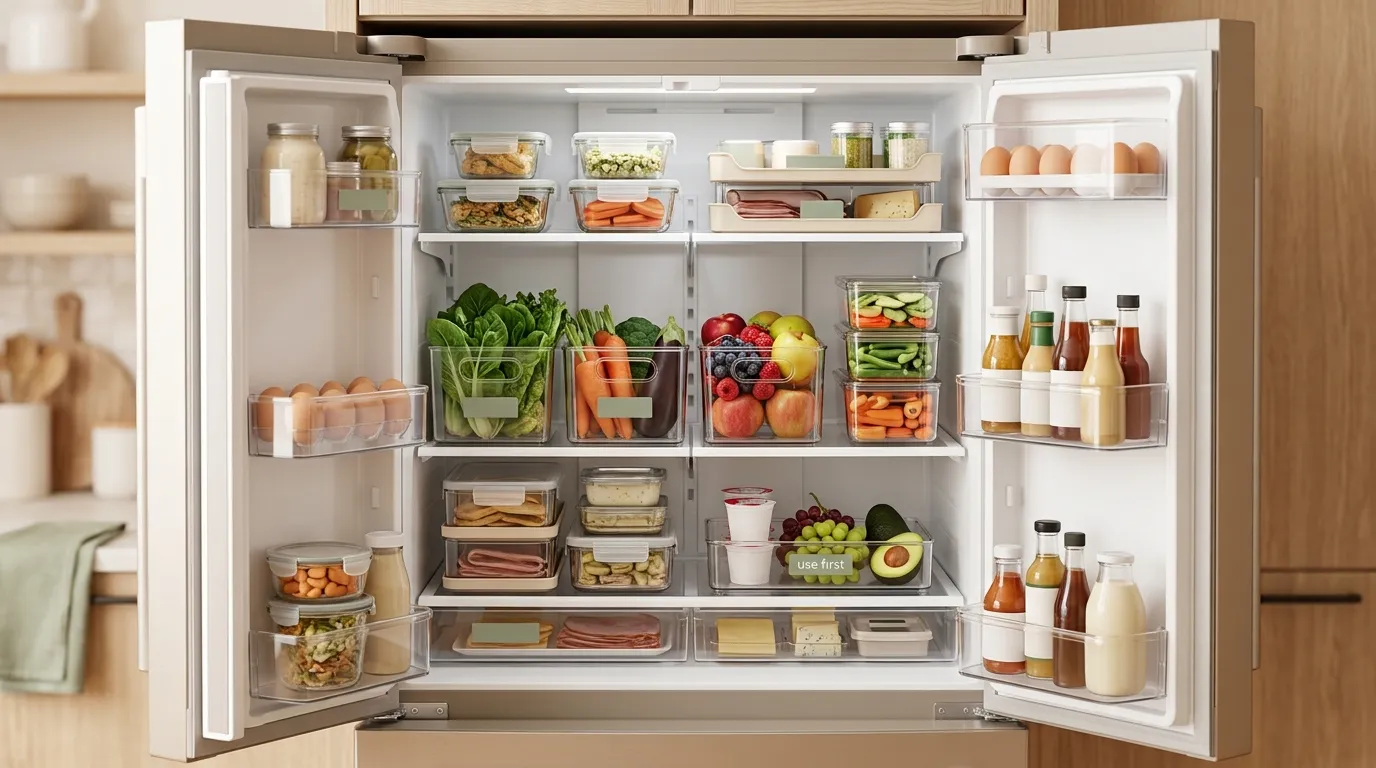
Table of Contents
What is the proper way to organize a refrigerator? Organize your fridge strictly by temperature zones: ready-to-eat food and leftovers on the top shelf, dairy and eggs in the middle, and raw meat on the bottom shelf to prevent dripping. Use the crisper drawers for produce (separated by humidity) and the door shelves (the warmest zone) exclusively for condiments and drinks, never milk.
The average household throws away roughly $1,500 worth of food per year. A massive percentage of that waste happens simply because the food was pushed to the dark back corner of the refrigerator and forgotten until it turned into a science experiment.
A disorganized fridge isn't just visually messy; it is actively costing you money. Organizing your refrigerator is not about buying aesthetic matching bins—it is about understanding food safety, temperature zones, and visual inventory management.
Here is the exact zone-by-zone system you need to implement.
The Refrigerator Zone System
Your refrigerator is not a uniform temperature. According to the FDA, the temperature fluctuates heavily depending on the shelf location. You must store food based on its safety requirements.
1. Top Shelf: Ready-to-Eat and Leftovers
The top shelf is the most visible and accessible zone. This is exactly where you want to place items that require zero cooking.
- What goes here: Leftovers, pre-cut fruit, deli meats, and grab-and-go snacks.
- The "Eat First" Strategy: Place a clear plastic bin on the top shelf labeled "Eat First." Put all leftovers and rapidly expiring items here. When you open the fridge hungry, this is the first thing you see.
2. Middle Shelf: Dairy and Eggs
The middle shelves maintain the most consistent, stable temperature in the entire appliance.
- What goes here: Eggs (in their original carton, not the built-in door tray), milk, yogurt, sour cream, and cheese.
- Warning: Never store milk in the refrigerator door. The temperature drops every time the door opens, which accelerates spoilage.
3. Bottom Shelf: Raw Meat
The bottom shelf is the coldest part of the main compartment, but more importantly, it is the safest place for raw meat.
- The Rule: Raw meat must always go on the absolute lowest shelf in a sealed plastic or glass container. If a package of chicken leaks, it will drip onto the glass shelf, not onto your fresh lettuce below.
4. Crisper Drawers: Produce by Humidity
Produce drawers are not just extra storage bins; they allow you to control humidity. Mixing the wrong fruits and vegetables will cause them to rot rapidly.
- High-Humidity Drawer (Closed vent): Vegetables that wilt easily and need moisture. Leafy greens, spinach, broccoli, carrots, and peppers.
- Low-Humidity Drawer (Open vent): Fruits that emit ethylene gas as they ripen. Apples, pears, grapes, and stone fruits. If you trap ethylene gas in a high-humidity drawer, it will rot everything inside.
5. Door Shelves: Condiments and Drinks
The door is the warmest zone in the refrigerator because it is constantly exposed to room temperature air.
- What goes here: Highly preserved items only. Ketchup, mustard, salad dressings, jams, juice, and water.
The "FIFO" Rule (First In, First Out)
Grocery stores use the FIFO method to prevent waste, and you should too. When you buy a new tub of yogurt, physically move the older yogurt to the front of the shelf and place the new one behind it. This forces you to consume the older items before they expire.
The Strategic Use of Clear Bins
While you do not need to bin every single item (like you might in a pantry setup), utilizing two or three clear acrylic bins in a fridge acts like a pull-out drawer.
If your family eats a lot of string cheese and yogurt cups, placing them loosely on a shelf means they will get knocked over and pushed to the back. Dropping them all into one clear "Dairy Snacks" bin means you can pull the entire bin out, grab what you need, and slide it back seamlessly.
The 5-Minute Weekly Reset
Do not wait until the fridge smells to clean it. The day before your primary grocery shopping trip, spend exactly 5 minutes doing this reset:
- Scan the "Eat First" bin and toss anything fuzzy.
- Wipe down any sticky rings on the glass shelves with warm soapy water.
- Check your staple levels (milk, eggs, butter) so you know exactly what to write on your grocery list.
Frequently Asked Questions
How do I keep produce from going bad so quickly?
Should I use matching bins in my fridge?
How should you store fresh herbs in the fridge?
Join Organized Haven
Get weekly home organization tips, DIY décor ideas, and exclusive printables delivered straight to your inbox. Join 10,000+ homeowners today!
We respect your privacy. Unsubscribe at any time.
Written by Danilo Souza
Danilo Souza is a Home Organization Expert and Interior Decor Specialist with over 8 years of experience in transforming cluttered, stressful rooms into functional, peaceful, and beautifully designed living spaces. His practical, step-by-step methodologies empower homeowners to create lasting organizational systems that fit their lifestyle and budget.