Ultimate Home Organization Guide
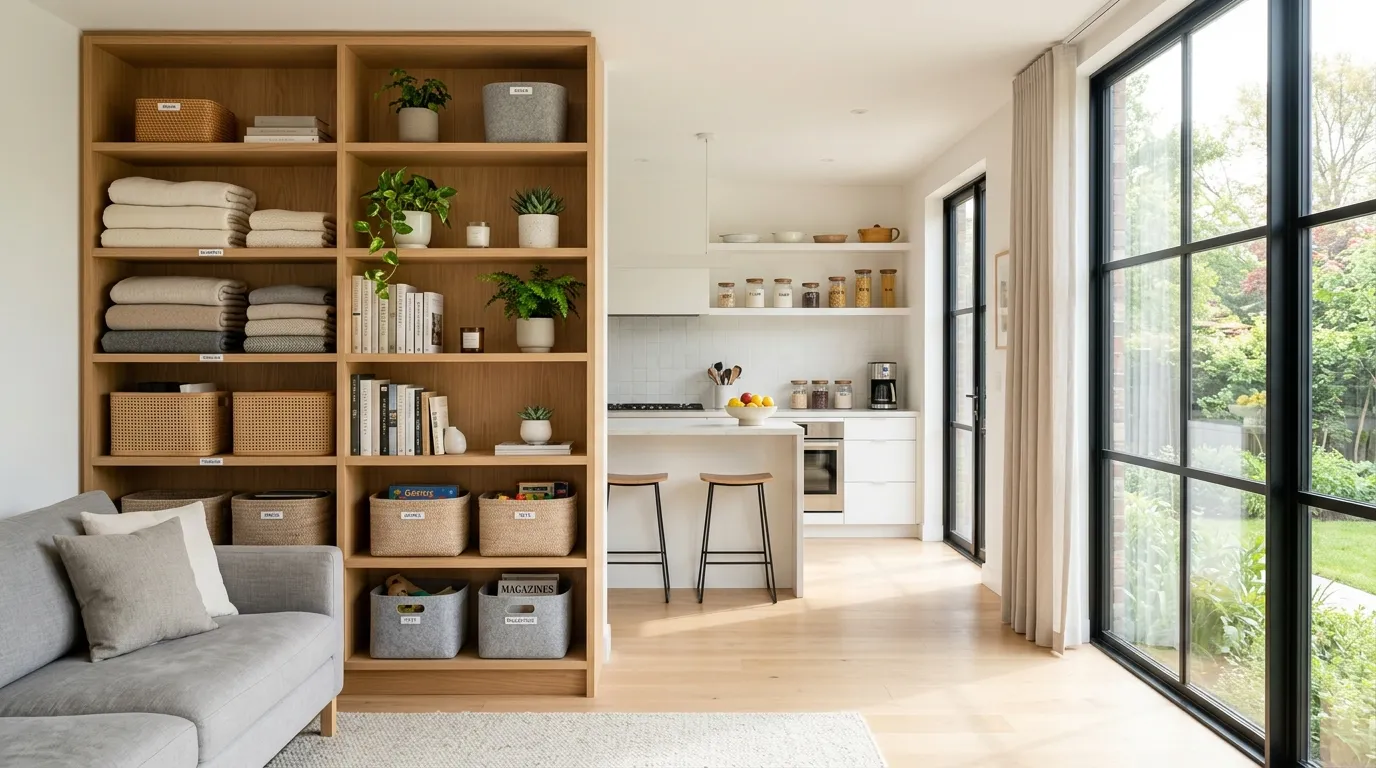
Table of Contents
- The 5 Core Principles
- 1. Everything Needs a Home
- 2. Store Items Where You Actually Use Them
- 3. Containers Contain—They Don't Create Space
- 4. Visible Categories Prevent Re-Clutter
- 5. Maintenance Beats One-Time Perfection
- The Room-by-Room Order
- Kitchen: The Heart of the Home
- Bedroom and Closet
- Living Room
- The Maintenance Plan
- Products Actually Worth Buying
How do you start organizing your home? Start by decluttering room by room using the Keep / Donate / Trash method, then assign every single item a permanent home based on where you use it—not where it visually fits. Use labeled containers to reinforce categories, and commit to a 10-minute daily reset so clutter never has a chance to rebuild.
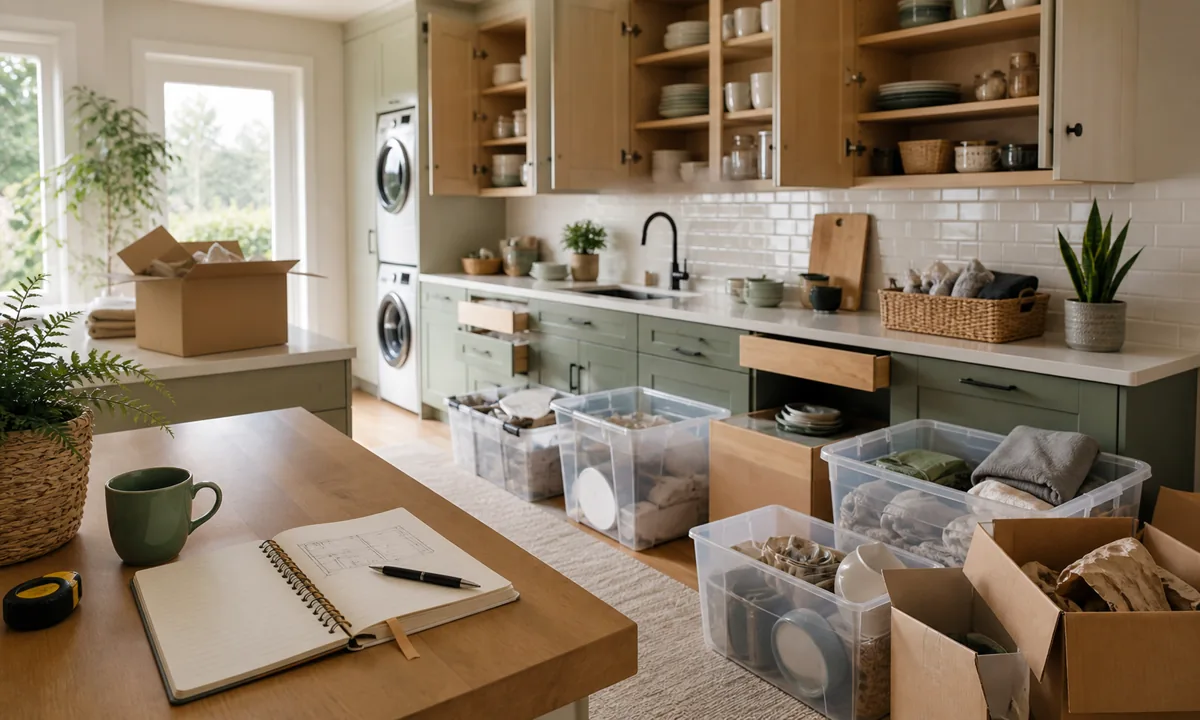
Most people organize their homes the wrong way. They buy bins and baskets before they have decided what to keep—which is like arranging furniture before laying the floor. The result is a beautiful-looking space that falls apart within two weeks because the storage system doesn't match how the household actually lives.
The correct sequence is always: declutter first, assign homes second, buy containers last. This guide walks you through that exact order, room by room, with the specific systems that make it permanent.
The 5 Core Principles
Before touching a single drawer, you need these five rules. Every organizing decision you make should run through this filter.
1. Everything Needs a Home
If an item doesn't have a designated spot, it will end up on a counter, a chair, or the floor. There are no exceptions. Assign every single object in your home a permanent address—and return it there after every use.
2. Store Items Where You Actually Use Them
Scissors belong in the room where you most often need them. The TV remote belongs next to the sofa, not in a kitchen drawer. Storage should be intuitive and close to the point of use, not organized by what looks good.
3. Containers Contain—They Don't Create Space
A bin doesn't give you more room. It defines and maintains a category. Buying 40 bins before you know what you're storing is the single most expensive organizational mistake you can make.
4. Visible Categories Prevent Re-Clutter
When items are grouped and clearly labeled, you know immediately when something is out of place. Labels aren't obsessive—they're the backbone of any system that lasts beyond the first week.
5. Maintenance Beats One-Time Perfection
A 10-minute nightly reset is worth more than one massive yearly purge. Systems that are regularly corrected stay organized. Systems that require perfection collapse when real life intervenes.
The Room-by-Room Order
Trying to organize your whole home in a single weekend is a reliable recipe for burnout. Tackle one room—or even one zone within a room—at a time and finish it completely before moving on.
The most effective sequence:
- Entryway — The daily entry point and the source of most surface clutter
- Kitchen — The most complex area with the highest daily traffic
- Bedroom & Closet — Where mornings are won or lost
- Bathroom — Small space, large and fast impact
- Living Room — Shared space requiring whole-family systems
- Garage / Laundry — Last, because it typically becomes the dumping ground during earlier stages
For each room, follow this four-step process:
- Empty the space completely
- Sort everything into Keep / Donate / Trash
- Assign permanent homes for everything you keep
- Contain with appropriate, correctly-sized storage
Kitchen: The Heart of the Home
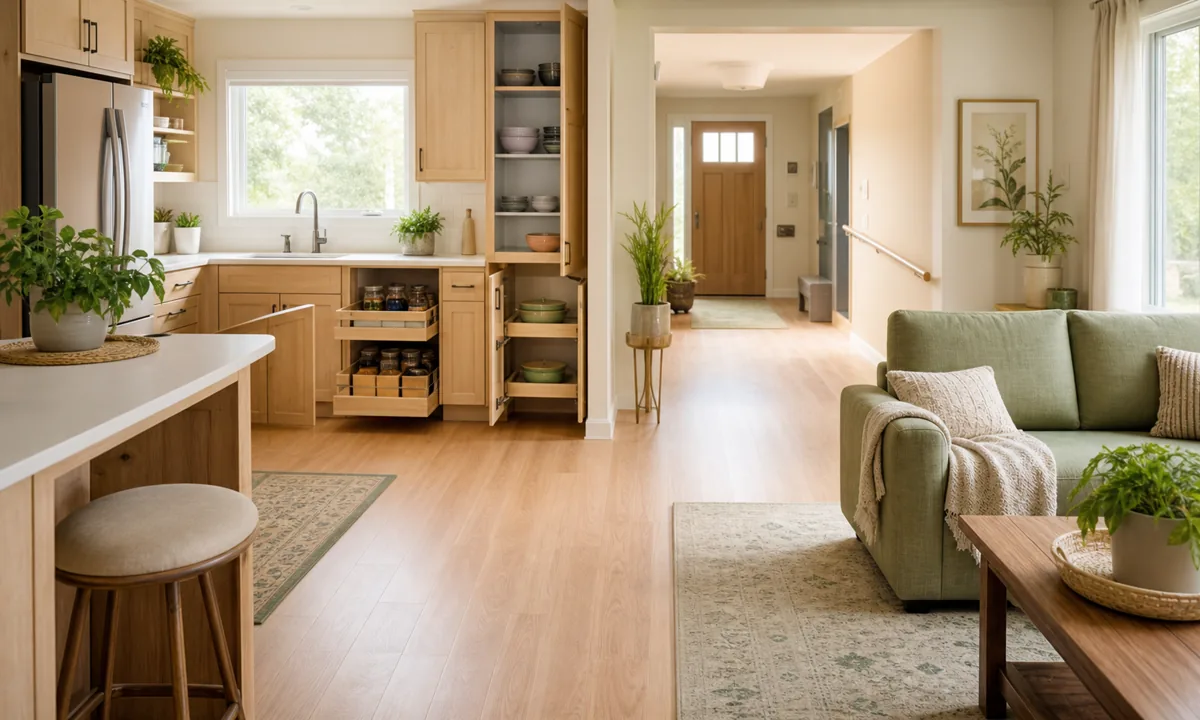
The kitchen is the hardest room to organize because it serves multiple simultaneous functions—cooking, eating, homework, charging devices, and socializing. Without intentional zones, every function competes for the same counter space.
Zone your kitchen by activity:
- Cooking Zone: Pots, pans, oils, and utensils within arm's reach of the stove.
- Prep Zone: Cutting boards, mixing bowls, and sharp knives near your main counter.
- Pantry Zone: Dry goods in clear, labeled bins grouped by category.
- Breakfast Zone: Coffee maker, mugs, and toaster grouped together to prevent the morning cross-kitchen shuffle.
The pantry deserves dedicated attention. Clear acrylic bins—not pretty wicker baskets—are the gold standard for a pantry that stays organized. For the full system, read our complete Kitchen & Pantry Organization Guide.
Bedroom and Closet
A chaotic bedroom disrupts sleep quality and makes every morning harder than it needs to be. The closet is almost always the primary culprit.
Start with a clothing edit: remove everything from your closet, try on anything you're unsure about, and donate anything that does not fit or has not been worn in 12 months. Organize by category first (work, casual, athletic, formal), then by color within each category. Switching to slim velvet hangers alone can double your hanging space immediately.
For more detail, see our Bedroom & Closet Organization Guide.
Living Room
The living room is a shared space, which means it needs systems that every member of the household can actually use—not just the person who created them. The simpler the system, the longer it lasts.
An ottoman with internal storage doubles as a coffee table and a home for blankets, remotes, and kids' toys. One decorative basket per surface is the maximum—anything beyond that reads as visual noise and makes the room feel permanently messy.
The Maintenance Plan
Organization is a daily practice, not a one-time achievement. Build these three routines:
| Frequency | Time | What to Do |
|---|---|---|
| Daily | 10 min | Walk-through; return every stray item to its home |
| Weekly | 20 min | Check problem hotspots (kitchen counter, entryway, bathroom) |
| Monthly | 60 min | Audit pantry expirations, reassess any systems that are breaking down |
Products Actually Worth Buying
The products below appear in virtually every professionally organized home:
- Clear stackable bins — for pantry, closet, and bathroom
- Slim velvet hangers — instantly doubles closet hanging capacity
- Label maker (Brother P-Touch) — makes every system 10x more maintainable
- Lazy Susans — essential for corner cabinets and deep pantry shelves
- Over-door organizers — adds storage without a single drilled hole
- Adjustable drawer dividers — transforms any drawer from chaotic to functional
For specific product picks and prices, read our 10 Home Organization Products Every Home Needs.
Frequently Asked Questions
How long does it take to organize an entire home?
Where do I start when my whole home feels overwhelming?
How do I get my family to actually maintain the system?
Do I need expensive organization products?
How do I permanently stop clutter from coming back?
Join Organized Haven
Get weekly home organization tips, DIY décor ideas, and exclusive printables delivered straight to your inbox. Join 10,000+ homeowners today!
We respect your privacy. Unsubscribe at any time.
Written by Danilo Souza
Danilo Souza is a Home Organization Expert and Interior Decor Specialist with over 8 years of experience in transforming cluttered, stressful rooms into functional, peaceful, and beautifully designed living spaces. His practical, step-by-step methodologies empower homeowners to create lasting organizational systems that fit their lifestyle and budget.