How to Store Seasonal Clothes & Decorations
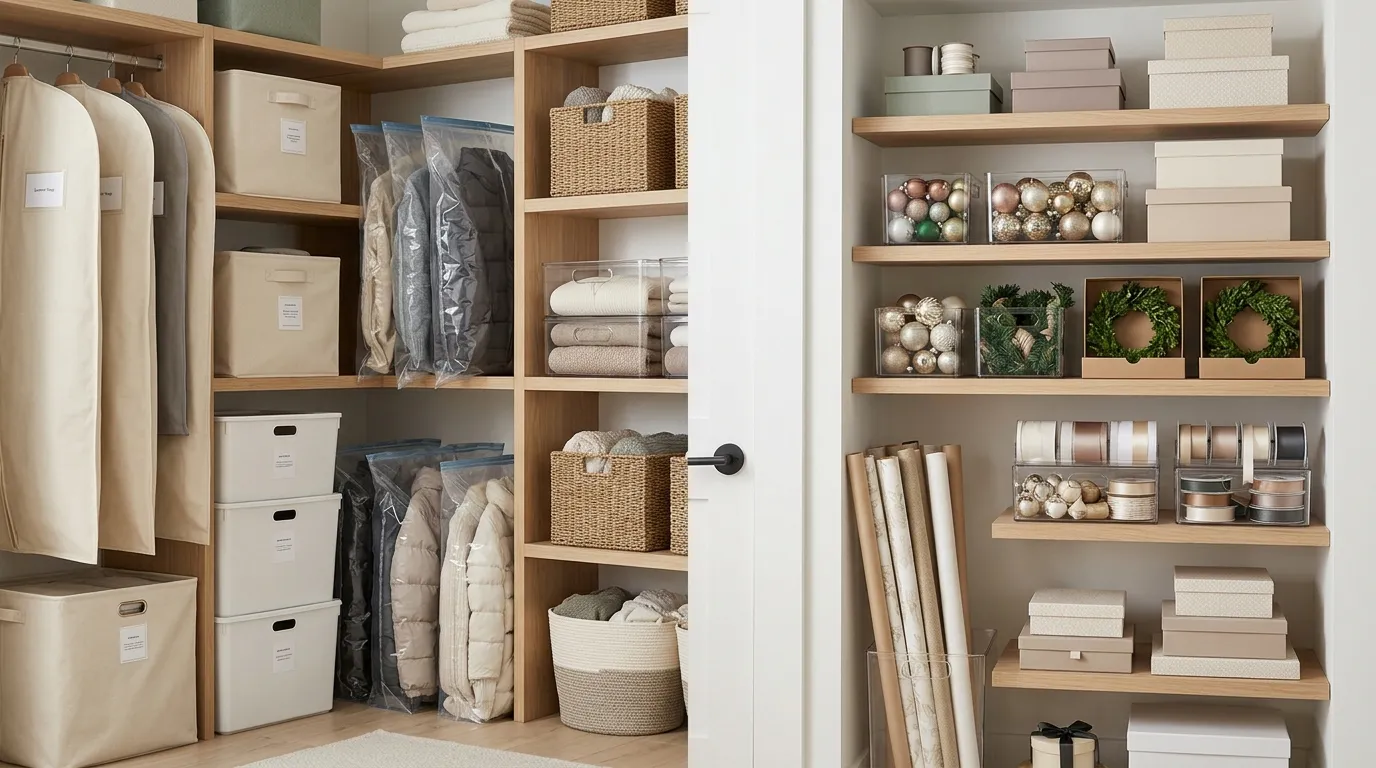
Table of Contents
What containers should you use for seasonal clothes storage? It depends on the fabric. Bulky items like down coats and ski gear compress dramatically in vacuum-sealed bags—a four-parka pile becomes a flat pancake. Natural fibers like cashmere, wool, and silk need to breathe and must go into breathable cotton canvas bins (not plastic) with cedar blocks inside. Never use cardboard boxes for anything in a garage or attic—they attract moisture, insects, and mold.
Twice a year, the seasonal swap happens: heavy coats fight for space with swimsuits, Halloween decorations arrive while Thanksgiving tablecloths are still out. Done correctly, this transition takes one afternoon and preserves everything you store. Done incorrectly, you pull last year's cashmere out of the attic riddled with moth holes.
The difference comes down to three factors: what you store items in, where you store them, and whether you actually declutter before packing.
Part 1: Storing Seasonal Clothing
Before a single item goes into storage, there is one rule without exceptions: never store dirty clothes. Even garments that look clean carry invisible body oils and microscopic food residue that attract moths and silverfish. Every item gets washed or dry-cleaned first.
The Right Container for Each Fabric Type
| Fabric Type | Recommended Container | Why |
|---|---|---|
| Down coats, ski gear, heavy blankets | Vacuum-sealed storage bags | Compresses dramatically; fully waterproof and bug-proof |
| Cashmere, wool, silk | Breathable cotton canvas bins with zipper lids | Natural fibers need airflow; plastic traps moisture |
| Everyday cotton, synthetics | Heavy-duty plastic totes with latching lids | Durable, dust-proof, stackable |
| Leather jackets, structured blazers | Breathable garment bags | Maintains shape; prevents creasing |
What not to use:
- Cardboard boxes: They absorb humidity, collapse under weight, and are highly attractive to pests
- Dry cleaner plastic bags: They emit gases over time that can yellow light-colored fabrics
Adding Pest Protection
Cedar blocks and lavender sachets repel moths naturally—but they lose potency. Sand cedar blocks lightly with fine-grit sandpaper each year to expose fresh wood and reactivate the oils. Lavender sachets should be replaced annually.
Where to Store Clothing
Off-season clothing needs a climate-controlled environment. The top shelf of an interior closet or under the bed with flat rolling bins are the best options. Avoid:
- Uninsulated attics: Summer temperatures above 100°F deteriorate elastic and synthetic fibers
- Damp basements: Anything above 60% humidity invites mildew within weeks
Part 2: Storing Holiday Decorations
Holiday decor is oddly shaped, often fragile, glitter-covered, and you access it only once or twice a year. The right system makes the annual retrieval feel effortless.
The Color-Code System
Clear bins for everything creates a guessing game. Color-coded bins by holiday mean you grab the right group of boxes without reading a single label:
| Bin Color | Holiday |
|---|---|
| Red and green | Christmas |
| Orange and black | Halloween |
| Yellow and brown | Thanksgiving / Fall |
| Blue and white | Hanukkah / Winter general |
These colors are visible from across the garage floor. The right group of bins is obvious at a glance.
Christmas: The Hard Cases
String lights: The most time-wasting part of holiday setup is untangling lights. Wrap each strand around a thick piece of cardboard, a spare paper towel roll, or a plastic cord-wrap spool before storing. Fifteen seconds of wrapping prevents an hour of untangling.
Fragile ornaments: Move away from newspaper. An ornament storage box with adjustable cardboard grid dividers isolates each ornament individually, preventing them from knocking together during the year in storage. The foam cup trick also works—slide each ornament into a plastic cup before stacking.
Artificial trees: The original cardboard box rarely survives two storage cycles. A heavy-duty canvas tree bag with wheels holds the disassembled tree securely and rolls easily—no lifting required.
Wrapping paper: Tall, narrow wrapping paper rolls are easily crushed under heavier items. A dedicated vertical gift wrap bin, or a long under-bed organizer designed specifically for wrapping supplies, keeps rolls intact alongside ribbons, tape, and scissors.
Part 3: The Seasonal Declutter
The moment you pack away a season is the best time to audit it. When closing up winter in spring, ask whether you actually wore that coat. If not, donate it instead of packing it away for another year.
The same logic applies to holiday decor: if broken string lights sat at the bottom of the bin all season, throw them out now rather than rediscovering them next December.
Read next:
- How to Organize a Cluttered Garage in One Weekend
- Capsule Wardrobe: Building a Closet You Actually Use
- 15 Best Home Organization Products That Actually Work
Frequently Asked Questions
How do I remove a musty smell from clothes that have been in storage?
Do cedar blocks actually prevent moths?
Where is the best place in the house to store holiday decorations?
Join Organized Haven
Get weekly home organization tips, DIY décor ideas, and exclusive printables delivered straight to your inbox. Join 10,000+ homeowners today!
We respect your privacy. Unsubscribe at any time.
Written by Danilo Souza
Danilo Souza is a Home Organization Expert and Interior Decor Specialist with over 8 years of experience in transforming cluttered, stressful rooms into functional, peaceful, and beautifully designed living spaces. His practical, step-by-step methodologies empower homeowners to create lasting organizational systems that fit their lifestyle and budget.