Bedroom Closet Organization Guide
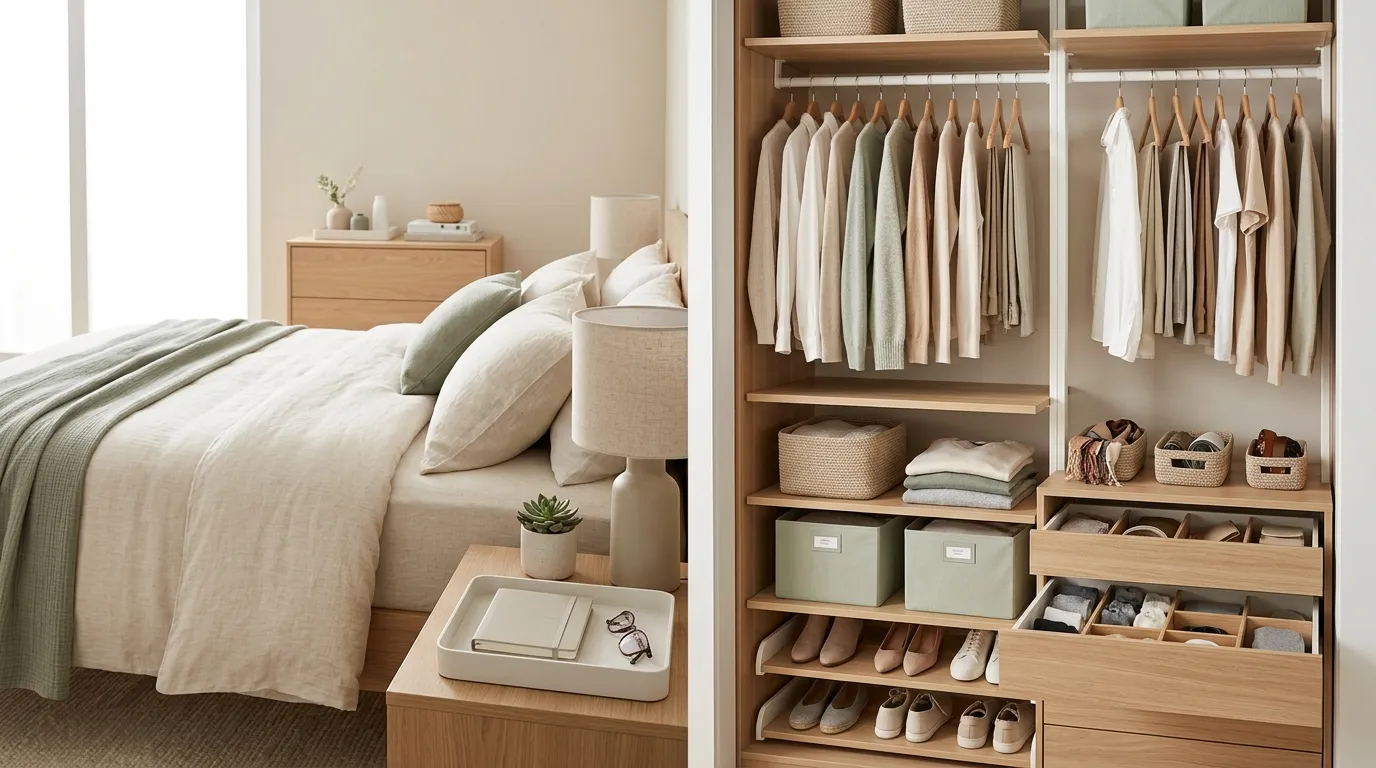
Table of Contents
What does an organized bedroom actually require? Four things: a closet system that makes getting dressed effortless, nightstand surfaces with only daily-use items, a designated home for everything that enters the room (clothes, bags, shoes), and a morning routine setup that operates on autopilot. This guide covers all four with specific, step-by-step actions.
The bedroom is the first thing you experience in the morning and the last thing you see at night. A chaotic bedroom—with clothes on the chair, a cluttered nightstand, and a closet you have to wrestle open—adds friction to every single day before it starts. An organized bedroom reduces that friction to zero.
This guide covers the complete bedroom system: the closet, the dresser, under-bed storage, the nightstand, and the linen closet.
Part 1: The Closet
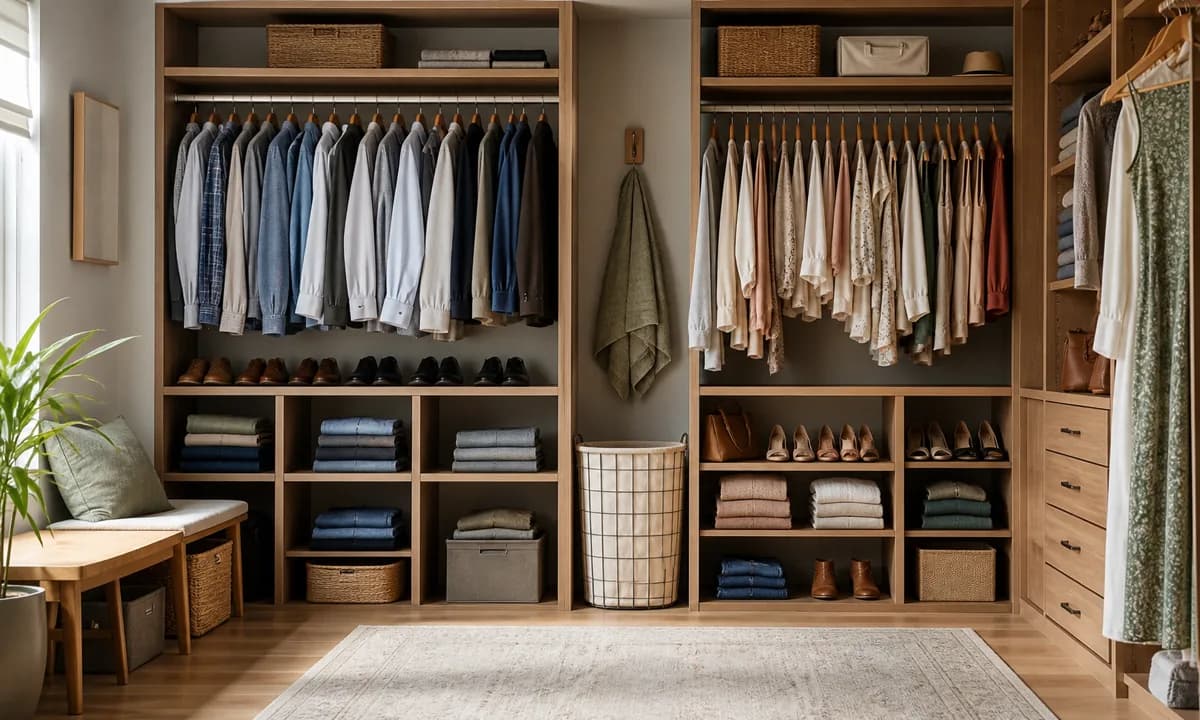
The closet has a greater impact on daily life than any other storage area in the bedroom. A poorly organized closet costs you 10 to 15 minutes every morning in searching, second-guessing, and frustration.
Step 1: The Clothing Edit
Before buying a single hanger or bin, edit. Remove everything from the closet completely and sort into four groups:
- Keep: Worn in the last 12 months, fits well right now, and you feel good wearing it
- Donate: Good condition but genuinely not worn—someone else can use it now
- Tailor: Worth keeping but needs a specific repair (put it in a bag and take it to a tailor within 2 weeks, or donate it)
- Trash: Stained, torn beyond repair, or truly at the end of its life
The 12-month rule is the most objective guide you have. For seasonal items, apply it to the last full season you had access to the piece.
Step 2: Organize by Category, Then by Color
Once you know what you are keeping, hang by category:
- Work / office clothing
- Casual / weekend clothing
- Athletic / workout clothing
- Formal / occasion wear
- Denim
- Outerwear
Within each category, arrange by color from light to dark. This makes finding a specific item immediate—you know it is in the "casual" section, and it is one of the blue shirts.
Step 3: Add a Second Hang Rod
This is the highest-impact closet upgrade that costs under $30 and requires no tools. Most closet rods are set at one height, leaving the bottom half of the closet empty beneath short items like shirts and blazers. A second tension rod beneath the existing one fills that space and effectively doubles your hanging capacity in one afternoon.
Step 4: Switch to Slim Velvet Hangers
Standard plastic hangers are 0.5 to 0.75 inches thick. Slim velvet hangers are under 0.2 inches. Replacing a rod of 20 standard hangers with velvet gives you space for 40 to 50 garments. Clothes also stop sliding off and falling. Buy 50 at a time and re-hang everything in a single session.
For a detailed, step-by-step closet methodology, read our Small Closet Organization Guide.
Part 2: The Dresser
The dresser holds what the closet doesn't: folded everyday essentials.
The most efficient drawer assignment:
- Top drawer: Underwear and socks (your most-reached items should require the least effort)
- Second drawer: T-shirts and casual tops, folded vertically (file-folding style)
- Third drawer: Pajamas and lounge wear
- Bottom drawer: Athletic wear, or folded jeans if not in the closet
File Folding: Stand folded items upright in the drawer rather than stacking them flat horizontally. You see every item at once and removing one doesn't create a cascading mess of everything next to it.
Part 3: Under-Bed Storage
Most bedrooms waste an enormous amount of potential storage space that is just sitting under the bed frame.
Best items for under-bed storage:
- Off-season clothing (swap out twice a year in spring and fall)
- Extra sets of bed linens
- Shoes in clear individual shoe boxes
- Luggage (the largest suitcase stores flat under most beds)
Use flat, lidded storage containers designed specifically for low-clearance spaces (typically 4 to 6 inches tall). Always use clear containers so you know what is inside without pulling everything out. Label each container with a strip of masking tape.
For more on maximizing this specific space, read our Under-Bed Storage Ideas Guide.
Part 4: Nightstand Organization
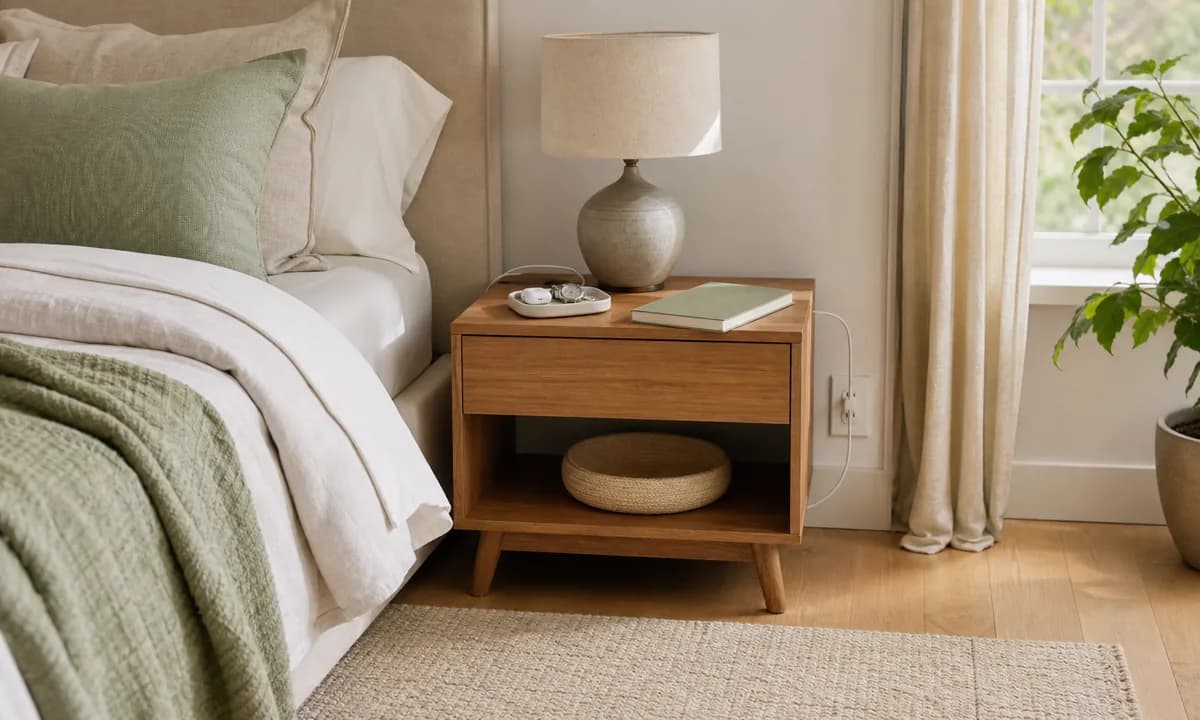
The nightstand is one of the fastest-accumulating surfaces in the entire house. Without daily intentional management, it becomes a pile of charging cables, old receipts, water glasses, allergy pills, and whatever lands there after midnight.
What belongs on top of the nightstand:
- Lamp
- One phone charger (managed with a cable clip, not tangled)
- The book you are currently reading
- A single water glass
What belongs inside the nightstand drawer:
- Sleep accessories (eye mask, earplugs)
- Daily medications
- A small notepad and a pen
Everything else finds a home elsewhere in the room.
Part 5: Linen Closet
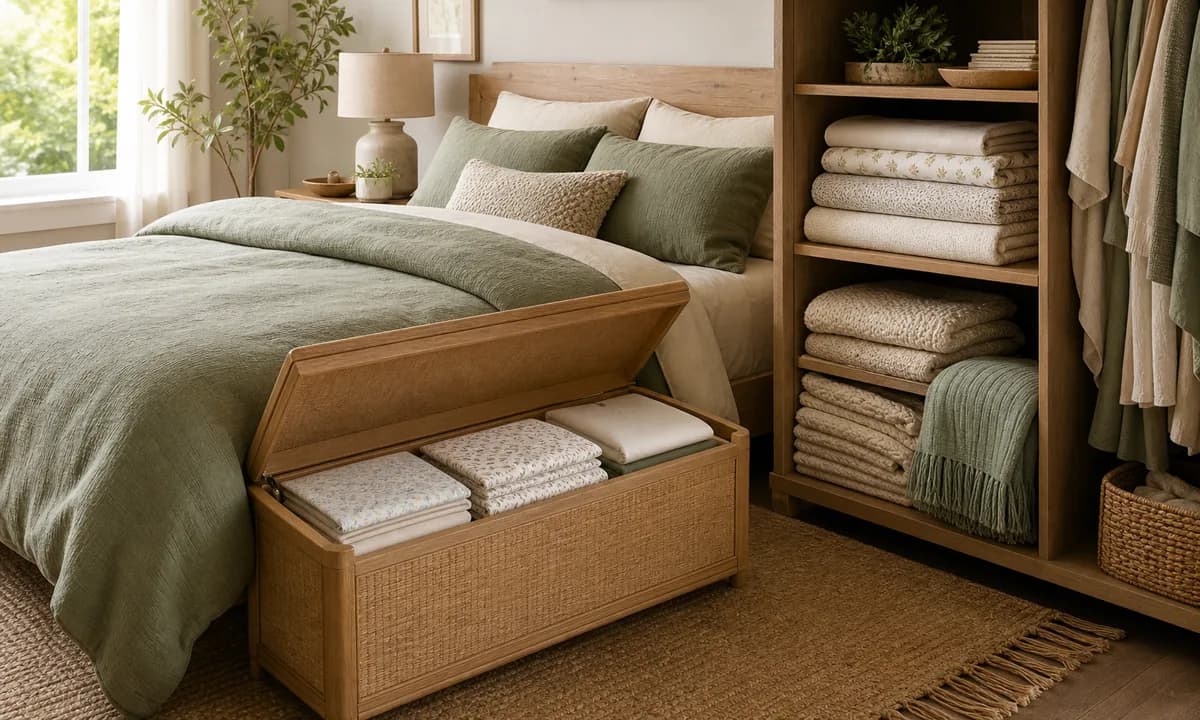
A well-organized linen closet means you always know what bedding you have, where it is, and when to replace it.
Zone assignment from top to bottom:
- Top shelf: Least-used items — extra pillows, holiday-specific bedding
- Middle shelf (eye level): Daily-use bedding sets, organized by bedroom (master set, guest set, kids' set)
- Lower shelves: Towels, folded in thirds and stored standing upright
- Bottom or floor: Heavy blankets in flat storage bags
The Sheet Set Rule: Store each complete sheet set inside one of its own pillowcases. This keeps the set together in one compact bundle and takes up half the space of a loose pile of flat and fitted sheets.
For the complete linen system, see our Linen Closet Organization Guide.
Part 6: The Morning Routine Setup
An organized bedroom enables a significantly faster morning routine because all the decisions were made the night before.
Choose tomorrow's outfit tonight. Install a small hook or retractable valet rod inside your closet for your pre-selected outfit. This eliminates the most time-consuming morning decision completely.
Pack your bag the night before. Your work or school bag goes in the exact same spot every single evening—ideally near the front door, not in the bedroom. You walk out in the morning without hunting for anything.
A morning tray on the dresser. A small ceramic tray holds the four daily-use items you always search for: watch, jewelry, keys, wallet. They live on this tray and nowhere else.
Frequently Asked Questions
How long does it take to fully organize a bedroom?
What is the first thing to tackle in an overwhelmed bedroom?
How do I keep the bedroom organized when I'm always exhausted at the end of the day?
Should I do a seasonal closet swap?
Join Organized Haven
Get weekly home organization tips, DIY décor ideas, and exclusive printables delivered straight to your inbox. Join 10,000+ homeowners today!
We respect your privacy. Unsubscribe at any time.
Written by Danilo Souza
Danilo Souza is a Home Organization Expert and Interior Decor Specialist with over 8 years of experience in transforming cluttered, stressful rooms into functional, peaceful, and beautifully designed living spaces. His practical, step-by-step methodologies empower homeowners to create lasting organizational systems that fit their lifestyle and budget.