Mudroom Organization Without a Mudroom
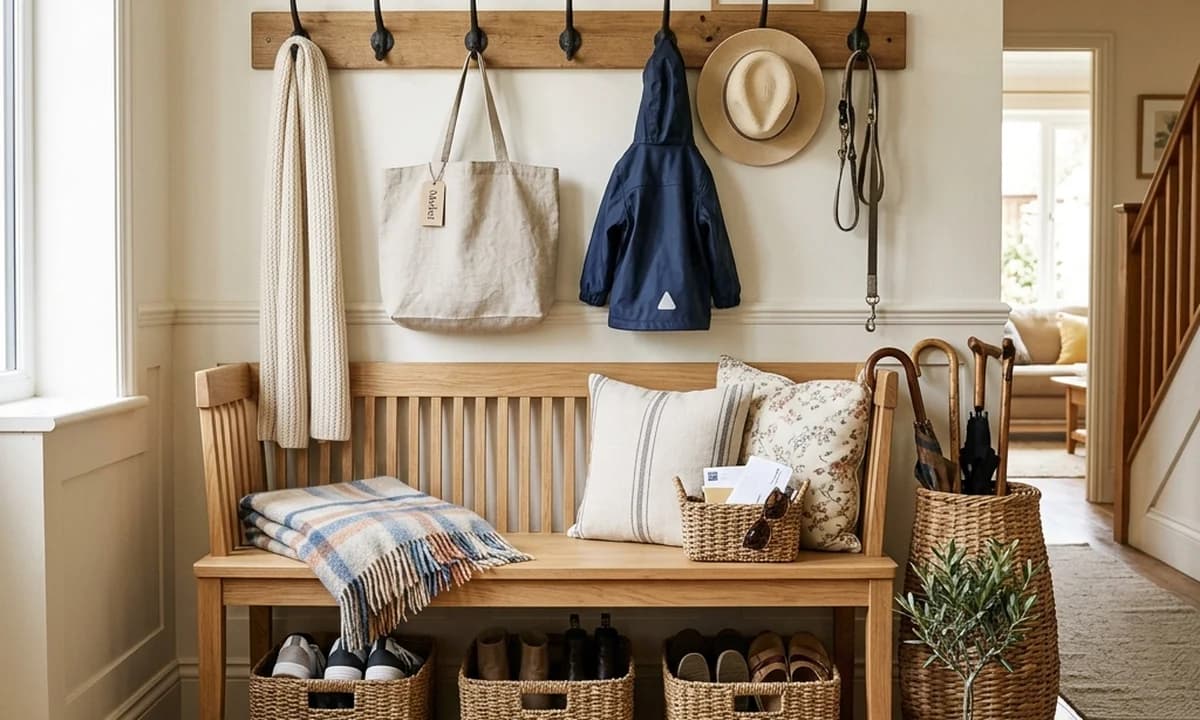
Table of Contents
How do you create mudroom function without a mudroom? With three feet of wall space near the entry door. The minimum mudroom is: hooks at adult height for coats and bags, seating of any kind directly below for shoe management, and a small surface or key hook for daily carry items (keys, wallet, phone). These three elements—hang, sit, deposit—cover 90% of what a full mudroom provides, from a very small footprint.
A mudroom solves a specific problem: the transition from outdoors to indoors generates a predictable accumulation of items (coats, shoes, bags, mail, keys) that need temporary homes close to the door. When no room exists for this function, those items end up on the living room floor, the kitchen counter, and dining chairs.
Creating a drop zone is not a remodeling project. It is a furniture and hardware project that can be completed in an afternoon.
1. The Bench and Hook Combination
The foundation of any drop zone is two things: a place to hang and a place to sit. Both should be immediately inside (or beside) the entry door.
Hooks: Install a row of 4 to 6 heavy-duty coat hooks directly into the wall studs, about 60 inches from the floor for adults, with an optional second row at 36 to 40 inches if you have children. These hooks handle winter coats, damp umbrellas, heavy backpacks, and reusable shopping bags. They need to be in wall studs—a winter coat with a wet scarf weighs 8 to 10 pounds.
Bench: A storage bench placed directly below the hooks creates a visual boundary that defines the drop zone and serves as seating for removing shoes. This is important: without seating, shoes come off in whatever spot is convenient—usually the living room rug. With seating at the door, shoes come off at the door.
For detailed entryway organization ideas beyond the drop zone basics, see our Entryway Organization Ideas guide.
2. Shoe Containment Below the Bench
Loose shoes visible from the entry are one of the main sources of entryway clutter. The bench provides the structure; what goes underneath it determines whether shoes are contained or scattered.
Wicker or canvas baskets: One basket per family member, placed under the bench with each person's name or a label attached. Children understand "your shoes go in your basket" more readily than any abstract organizational concept. The basket hides the shoes from direct view.
Slim tilting shoe cabinets: For entries without space for a bench, a cabinet like the IKEA Hemnes shoe cabinet stands nearly flush against the wall and holds 12 to 16 pairs in tilting internal drawers. The closed front keeps the entry looking clean regardless of what is inside.
Capacity rule: The storage should hold the maximum shoes any family member would realistically leave near the door—typically 2 pairs per person. Overflow shoes belong in bedroom closets, not at the entry.
3. The Command Center Wall
A mudroom functions as an administrative hub in addition to a clothing transition zone. Keys, mail, and outgoing items need assigned spots that are visible and immediately accessible.
Key hooks and a small shelf: A floating shelf with 2 to 3 hooks underneath, mounted beside the coat hooks, provides a landing spot for keys, sunglasses, and a small tray for daily carry items. When keys have a permanent physical location at the door, they are always there. The 10-minute key search becomes impossible.
Mail inbox: A wall-mounted wire file holder beside the key shelf creates an inbox for mail that needs attention. This prevents mail from traveling to the kitchen counter or dining table. For the full paper processing system, see our Paper Clutter Organization Guide.
Communication board: A small whiteboard or corkboard above the drop zone handles household communication—grocery list reminders, school schedules, outgoing package notes.
4. Floor Protection
Without a mudroom to contain dirt, the interior flooring takes the full force of whatever comes in on the bottom of shoes.
Two-mat system: A heavy coir mat outside the door scrapes heavy mud, grass, and gravel from shoe soles before entry. A highly absorbent, washable runner rug inside the door catches remaining moisture and fine grit. The inside mat should be machine-washable—anything that is tedious to clean does not get cleaned.
Boot tray: During winter or wet seasons, a rubber or silicone boot tray placed beside the bench catches melt water from wet boots. Fill it with river pebbles and boots sit above the water level while it drains—no puddle, no water damage to the floor or bench.
Frequently Asked Questions
How do you create a mudroom in a very narrow hallway?
How high should mudroom hooks be placed?
What is the best way to contain shoes in a small entryway?
Join Organized Haven
Get weekly home organization tips, DIY décor ideas, and exclusive printables delivered straight to your inbox. Join 10,000+ homeowners today!
We respect your privacy. Unsubscribe at any time.
Written by Danilo Souza
Danilo Souza is a Home Organization Expert and Interior Decor Specialist with over 8 years of experience in transforming cluttered, stressful rooms into functional, peaceful, and beautifully designed living spaces. His practical, step-by-step methodologies empower homeowners to create lasting organizational systems that fit their lifestyle and budget.