Apartment Entryway Drop Zone: A Small-Space System That Stays Clear
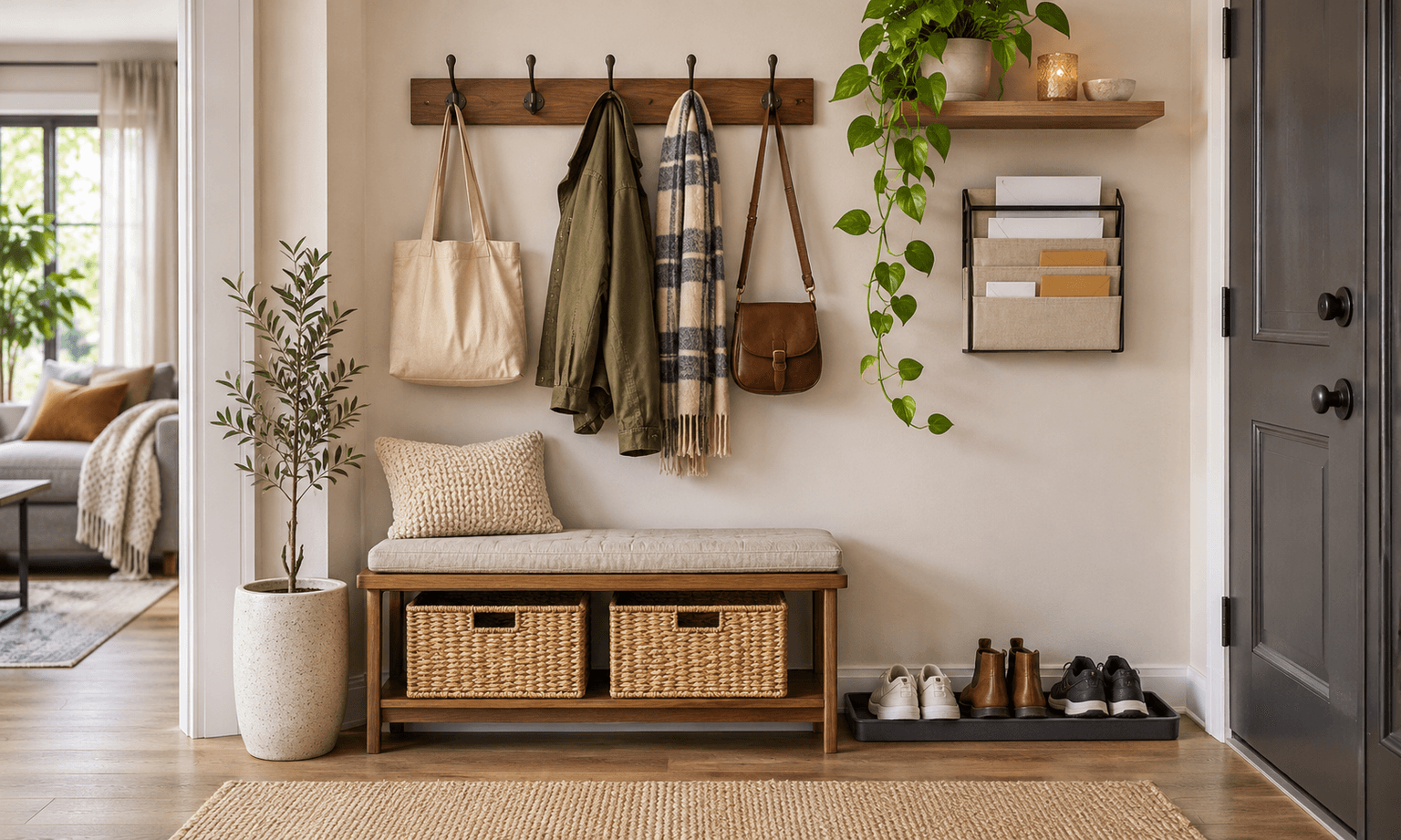
Table of Contents
What belongs in an apartment entryway drop zone? Keep only the things that help you leave or arrive: current keys, one daily bag, shoes in rotation, mail awaiting action, and pet-walking supplies. Everything else needs another home.
An apartment entryway drop zone is not a miniature mudroom. It is a short landing strip that stops the same handful of belongings from migrating to the kitchen counter, sofa, and floor. The best version is small on purpose: it follows the path you actually take through the door, uses the wall before it uses the floor, and leaves enough empty space that putting things away does not become a project.
Start with the arrival sequence
Stand at your door with the bag, coat, shoes, mail, and keys you normally carry. Put each item down where you would naturally reach for it. That is your first draft. If the key hook requires crossing the room or the mail tray is behind a cabinet door, the system will lose to habit.
Keep daily items visible but limited. A good starting list is:
- one hook per regular household member;
- a shallow tray for keys and sunglasses;
- a narrow basket for one bag or umbrella;
- a shoe tray sized for the pairs used this week; and
- one inbox for mail that needs a decision.
This approach works with a wall rail, a slim console, or even a tray on a nearby shelf. For more layouts, see our entryway organization guide and apartment organization framework.
Choose furniture by depth, not by appearance
Before ordering a bench or cabinet, measure the clear walkway with the door open. In a tight entry, a deep piece can create the clutter problem it was meant to solve. Tape the proposed depth on the floor for a day and walk through with groceries. If it catches a bag or forces someone to turn sideways, choose wall hooks and a shallow ledge instead.
Closed storage is helpful for visual calm, but only if it is easy to open one-handed. Open baskets are usually better for shoes, dog-walking gear, and reusable bags because they show when the category is full. Use a lidded box only for items that are occasional or visually distracting.
Give mail a deadline
Mail is where many entryways fail. Create two outcomes: action this week or recycle. Keep a small bin for envelopes, coupons, and packaging that can leave immediately. Bills and documents should go to a secure paper system, not live permanently by the door. The FTC's guidance on important papers is a useful reference for records that need more protection than an entry tray.
Make the reset part of leaving home
The daily reset should take less than two minutes. As you leave, return shoes to the tray, hang the bag, and take any mail that has an action. Once a week, empty the tray, return stray items, and decide whether a full shoe category is a capacity problem or a shopping problem.
Avoid making the drop zone a general storage shelf. If a charger, toy, or unopened package sits there for three days, move it to its actual category. This is especially useful in shared homes: each person can have one hook and one bin without claiming the entire entrance.
Common mistakes
Buying a large cabinet before testing the routine. A tray and hooks reveal what you actually carry; furniture can come later.
Storing every pair of shoes at the door. Keep a weekly rotation here and put seasonal or special-occasion pairs elsewhere. Our small-space shoe storage ideas can help with the next layer.
Using the drop zone for important documents. It is convenient, but an exposed entry is not a secure archive.
Frequently Asked Questions
Frequently Asked Questions
How big should an apartment entryway drop zone be?
What if I have no separate entryway?
How do I keep an entryway from becoming a dumping ground?
The bottom line
An effective drop zone reduces decisions at the busiest transition of the day. Start with the smallest setup that matches your arrival routine, protect the walkway, and adjust after a week of real use.
Join Organized Haven
Get weekly home organization tips, DIY décor ideas, and exclusive printables delivered straight to your inbox. Join 10,000+ homeowners today!
We respect your privacy. Unsubscribe at any time.
Written by Danilo Souza
Danilo Souza is the publisher and editor of Organized Haven. Articles are written to be useful in real homes, updated when guidance changes, and linked to primary sources when a topic involves safety, health, or regulations.