Handbag and Purse Storage That Protects Shape and Finish
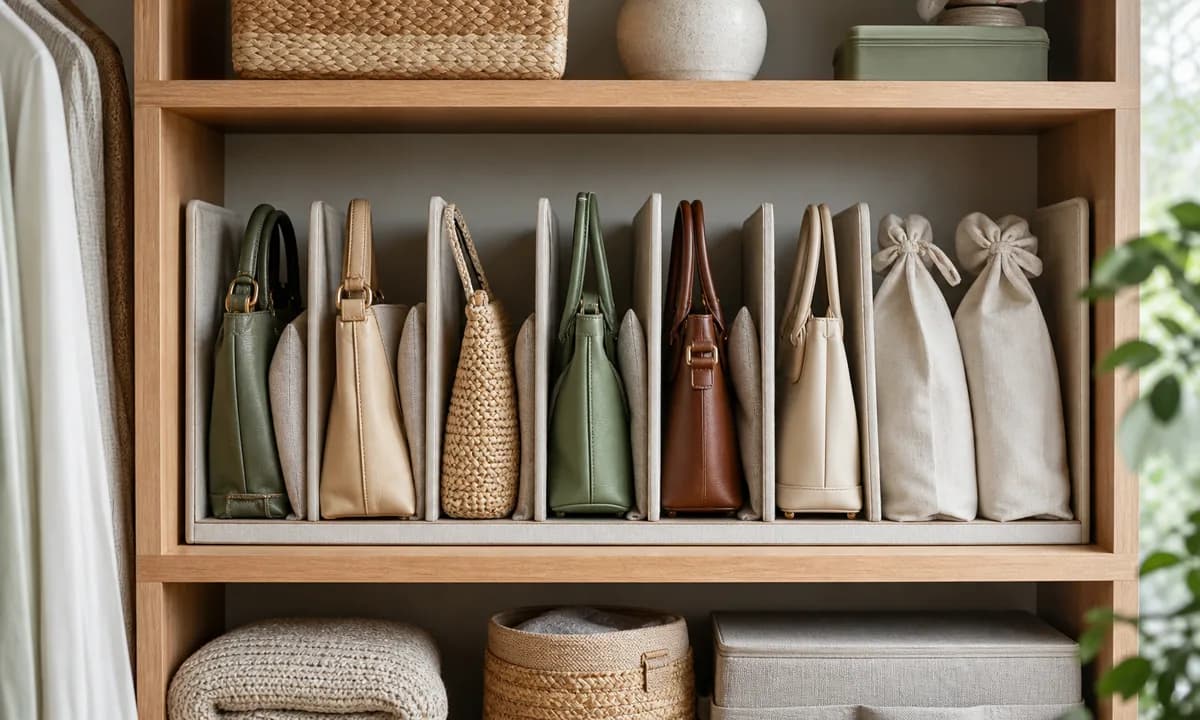
Table of Contents
- What Is Handbag and Purse Storage?
- Before You Buy an Organizer
- A Step-by-Step System That Holds Up
- 1. Edit by actual use
- 2. Support the body
- 3. Keep bags upright
- 4. Relax straps
- 5. Add breathable protection
- 6. Create a changeover tray
- Choose Storage by Behavior, Not Appearance
- Build a Reset Routine You Will Actually Do
- Common Mistakes to Avoid
- Connect This System to the Rest of Your Home
- Frequently Asked Questions
- The Bottom Line
What is the best way to store handbags in a closet? Clean and empty each bag, support its shape with acid-free tissue or a soft insert, and store it upright with breathing room in a dust bag when appropriate. Keep straps relaxed and avoid overcrowded hooks that distort handles.
Handbags create a strange closet problem: they are structured enough to need support, soft enough to collapse, and too irregular for one-size cubbies. Good organization is a small piece of household infrastructure, not a decorating project that has to be protected from real life.
This guide builds a practical system around purse storage ideas for closets without asking you to buy a matching set of bins or turn the room into a showroom. The aim is a calm, usable setup with clear limits, safe placement, and a reset routine that survives ordinary life.
What Is Handbag and Purse Storage?
Handbag storage is a shape-supporting closet system that manages weight, surface contact, straps, dust, and rotation frequency. In practice, it means deciding what belongs in the category, placing it near the point of use, and giving it a visible physical limit. A useful system also makes exceptions obvious: rarely used, seasonal, fragile, confidential, or hazardous items should not be stored exactly like everyday supplies.
A bag should come off the shelf ready to use, not folded under another bag with a stretched handle and forgotten contents. That distinction matters because most clutter is not caused by a lack of effort. It grows when the home asks someone to make the same small decision again and again.
Before You Buy an Organizer
Start with a no-shopping audit. Empty receipts, cosmetics, food, and loose objects. Wipe the exterior according to the maker's care instructions. Measure each bag at its natural supported height and width.
Measure the usable interior for handbag and purse storage—not merely the outside of the cabinet or closet—and note doors, hinges, pipes, outlets, vents, and walking clearance. Take one photo before moving anything. It becomes a useful reference when you decide whether the finished system is genuinely clearer or simply rearranged.
A Step-by-Step System That Holds Up
1. Edit by actual use
Separate daily, occasion, travel, and no-longer-used bags. Frequency determines the access level. Do this with the items already in the space before shopping for a container. That sequence exposes the true volume, prevents optimistic measuring, and makes the final setup easier to maintain.
For edit by actual use, set one visible boundary that suits handbag and purse storage: a shelf edge, drawer divider, basket, or labeled zone. If that boundary fills, edit the category instead of letting it spread into the next area.
2. Support the body
Use clean soft stuffing that holds shape without forcing seams. Overstuffing can be as damaging as collapse. Do this with the items already in the space before shopping for a container. That sequence exposes the true volume, prevents optimistic measuring, and makes the final setup easier to maintain.
For support the body, set one visible boundary that suits handbag and purse storage: a shelf edge, drawer divider, basket, or labeled zone. If that boundary fills, edit the category instead of letting it spread into the next area.
3. Keep bags upright
Use adjustable shelf dividers with a little space between pieces. Independent bays prevent a domino effect. Do this with the items already in the space before shopping for a container. That sequence exposes the true volume, prevents optimistic measuring, and makes the final setup easier to maintain.
For keep bags upright, set one visible boundary that suits handbag and purse storage: a shelf edge, drawer divider, basket, or labeled zone. If that boundary fills, edit the category instead of letting it spread into the next area.
4. Relax straps
Tuck detachable straps loosely inside or lay fixed straps without sharp bends. Constant tension can distort handles. Do this with the items already in the space before shopping for a container. That sequence exposes the true volume, prevents optimistic measuring, and makes the final setup easier to maintain.
For relax straps, set one visible boundary that suits handbag and purse storage: a shelf edge, drawer divider, basket, or labeled zone. If that boundary fills, edit the category instead of letting it spread into the next area.
5. Add breathable protection
Use suitable dust bags while keeping the item identifiable. Opaque protection needs a photo or simple index. Do this with the items already in the space before shopping for a container. That sequence exposes the true volume, prevents optimistic measuring, and makes the final setup easier to maintain.
For add breathable protection, set one visible boundary that suits handbag and purse storage: a shelf edge, drawer divider, basket, or labeled zone. If that boundary fills, edit the category instead of letting it spread into the next area.
6. Create a changeover tray
Give wallet, keys, and everyday essentials a temporary transfer zone. Bag changes stop producing dresser clutter. Do this with the items already in the space before shopping for a container. That sequence exposes the true volume, prevents optimistic measuring, and makes the final setup easier to maintain.
For create a changeover tray, set one visible boundary that suits handbag and purse storage: a shelf edge, drawer divider, basket, or labeled zone. If that boundary fills, edit the category instead of letting it spread into the next area.
Choose Storage by Behavior, Not Appearance
The right container for handbag and purse storage depends on how often the category is used and what could damage it. This quick comparison keeps the purchase tied to a real job:
| Storage choice | Best for | Watch for |
|---|---|---|
| Divided shelf bay | structured handbags and fast selection | shelf height and color transfer |
| Breathable dust bag | delicate or occasional bags | clear identification without opening |
| Wide padded hook | lightweight soft totes | handle strain and crowding |
For handbag and purse storage, buy only after measuring the edited category. Leave a little open capacity so putting an item away does not require perfect stacking. If a lid, latch, or nested box adds an extra step every time, reserve it for long-term or protective storage rather than daily use.
Build a Reset Routine You Will Actually Do
Daily: Empty the current bag before returning it. The reset should take less time than searching for one misplaced item.
Weekly: Dust the shelf and reshape soft inserts. Use this check to return strays, wipe the surface, and notice whether one category is repeatedly overflowing.
Seasonally: Rotate seasonal bags and inspect surfaces, straps, and hardware. This is the moment to adjust capacity, donate usable extras, replace damaged protection, and update labels that no longer match the household.
Treat recurring trouble with handbag and purse storage as evidence, not a personal failure. If the same pile returns every week, move the storage closer, broaden an overly narrow category, or remove a lid that adds friction. A system should adapt to behavior instead of demanding constant willpower.
Common Mistakes to Avoid
Hanging heavy bags from narrow hooks for months This usually creates a setup that looks finished but still requires too many decisions. Correct the category or location before adding another product.
Packing bags so tightly that hardware rubs adjacent surfaces When access is awkward, people create a more convenient unofficial drop zone. Put the most-used items between knee and shoulder height and reserve inconvenient space for low-frequency supplies.
Leaving cosmetics, food, or batteries inside stored bags Labels help only when they describe categories everyone understands. Use plain language, keep categories broad enough to scan quickly, and revise a label when the contents repeatedly disagree with it.
Connect This System to the Rest of Your Home
Your handbag and purse storage setup becomes easier when it supports the systems around it. Start with the bedroom and closet organization guide if the wider room still needs a full reset. Then use the small-closet organization system to solve the nearest related storage problem instead of forcing unrelated items into this zone. For a whole-home sequence, the room-by-room organization framework helps you choose what to tackle next.
For safety or preservation decisions involving handbag and purse storage, follow the item label and local rules first. The National Park Service collection-care handbook covers storage, handling, environment, textiles, leather, metal, paper, and other materials that need more protection than everyday objects. The National Park Service collection-care handbook is a reliable reference for the part of this project that goes beyond visual tidiness.
Frequently Asked Questions
Frequently Asked Questions
What is the best way to store handbags in a closet?
What should I do first when organizing handbag and purse storage?
What type of organizer works best for handbag and purse storage?
How often should I reset handbag and purse storage?
What is the most common handbag and purse storage mistake?
The Bottom Line
The goal is not a boutique display; it is enough support and breathing room that every bag keeps its shape and remains easy to choose. Keep the first version modest, live with it for a week, and change the part that creates friction. A slightly imperfect system that gets used is more valuable than a beautiful one that depends on everyone behaving perfectly.
Join Organized Haven
Get weekly home organization tips, DIY décor ideas, and exclusive printables delivered straight to your inbox. Join 10,000+ homeowners today!
We respect your privacy. Unsubscribe at any time.
Written by Danilo Souza
Danilo Souza is a Home Organization Expert and Interior Decor Specialist with over 8 years of experience in transforming cluttered, stressful rooms into functional, peaceful, and beautifully designed living spaces. His practical, step-by-step methodologies empower homeowners to create lasting organizational systems that fit their lifestyle and budget.