Nightstand Organization for a Calmer, Safer Bedside
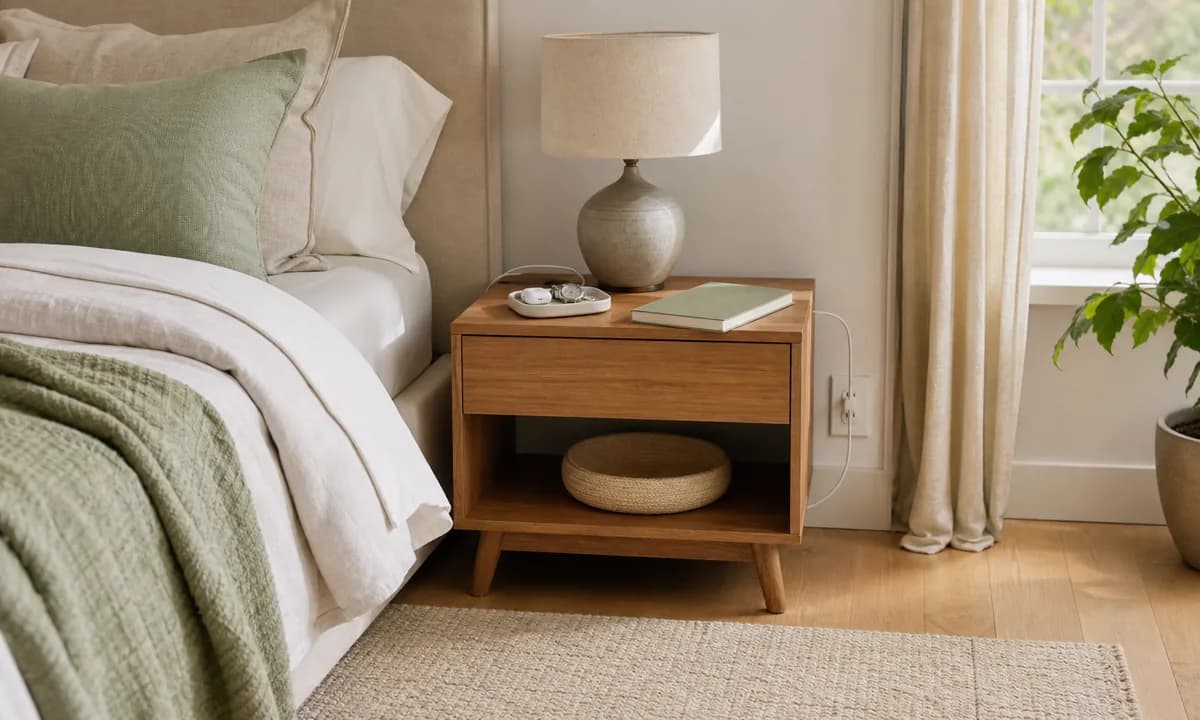
Table of Contents
- What Is Nightstand Organization?
- Before You Buy an Organizer
- A Step-by-Step System That Holds Up
- 1. Set a surface limit
- 2. Contain the tiny items
- 3. Assign the top drawer
- 4. Route charging safely
- 5. Protect nighttime access
- 6. Create a morning reset
- Choose Storage by Behavior, Not Appearance
- Build a Reset Routine You Will Actually Do
- Common Mistakes to Avoid
- Connect This System to the Rest of Your Home
- Frequently Asked Questions
- The Bottom Line
What should you keep on and inside a nightstand? Keep only immediate bedtime and waking essentials at the bedside: a light, current reading, water if appropriate, and necessary personal items stored safely. Route charging cables deliberately and move long-term storage, paperwork, and product backups elsewhere.
Nightstands attract everything because they sit beside a person during the least organized moments of the day—getting into bed and getting up. Good organization is a small piece of household infrastructure, not a decorating project that has to be protected from real life.
This guide builds a practical system around nightstand organization ideas without asking you to buy a matching set of bins or turn the room into a showroom. The aim is a calm, usable setup with clear limits, safe placement, and a reset routine that survives ordinary life.
What Is Nightstand Organization?
Nightstand organization is a tightly limited bedside system for immediate comfort, safe access, and a clear visual transition into rest. In practice, it means deciding what belongs in the category, placing it near the point of use, and giving it a visible physical limit. A useful system also makes exceptions obvious: rarely used, seasonal, fragile, confidential, or hazardous items should not be stored exactly like everyday supplies.
The surface should support sleep and emergency access, not act as the bedroom's final unsorted shelf. That distinction matters because most clutter is not caused by a lack of effort. It grows when the home asks someone to make the same small decision again and again.
Before You Buy an Organizer
Start with a no-shopping audit. Remove items unrelated to sleeping, waking, reading, or personal care. Check cable condition and outlet load. Choose secure storage for medicine, valuables, and sensitive devices when needed.
Measure the usable interior for nightstand organization—not merely the outside of the cabinet or closet—and note doors, hinges, pipes, outlets, vents, and walking clearance. Take one photo before moving anything. It becomes a useful reference when you decide whether the finished system is genuinely clearer or simply rearranged.
A Step-by-Step System That Holds Up
1. Set a surface limit
Keep the lamp and only a few active essentials visible. Visual quiet begins with intentional emptiness. Do this with the items already in the space before shopping for a container. That sequence exposes the true volume, prevents optimistic measuring, and makes the final setup easier to maintain.
For set a surface limit, set one visible boundary that suits nightstand organization: a shelf edge, drawer divider, basket, or labeled zone. If that boundary fills, edit the category instead of letting it spread into the next area.
2. Contain the tiny items
Use one shallow tray for glasses, lip care, or jewelry removed at night. Small objects stop migrating. Do this with the items already in the space before shopping for a container. That sequence exposes the true volume, prevents optimistic measuring, and makes the final setup easier to maintain.
For contain the tiny items, set one visible boundary that suits nightstand organization: a shelf edge, drawer divider, basket, or labeled zone. If that boundary fills, edit the category instead of letting it spread into the next area.
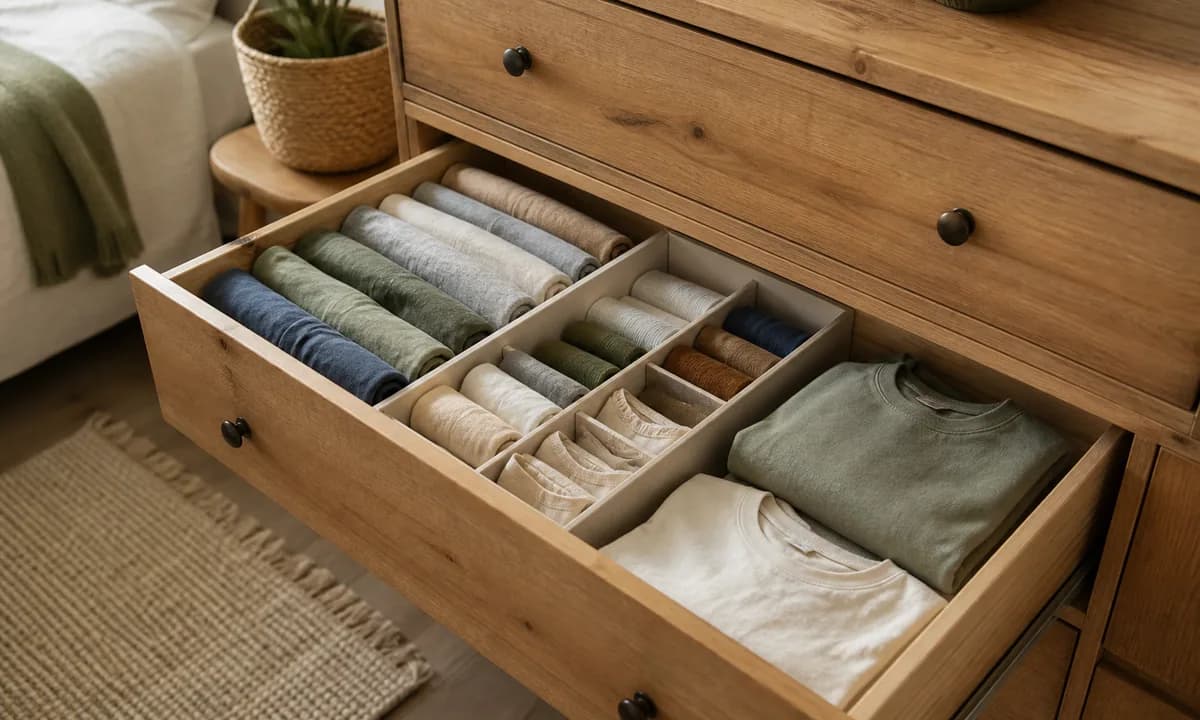
3. Assign the top drawer
Store only current bedside supplies with simple dividers. Backups belong outside the sleep zone. Do this with the items already in the space before shopping for a container. That sequence exposes the true volume, prevents optimistic measuring, and makes the final setup easier to maintain.
For assign the top drawer, set one visible boundary that suits nightstand organization: a shelf edge, drawer divider, basket, or labeled zone. If that boundary fills, edit the category instead of letting it spread into the next area.
4. Route charging safely
Use intact cables with a stable path that does not cross walking space. Convenience should not create a trip or tangle hazard. Do this with the items already in the space before shopping for a container. That sequence exposes the true volume, prevents optimistic measuring, and makes the final setup easier to maintain.
For route charging safely, set one visible boundary that suits nightstand organization: a shelf edge, drawer divider, basket, or labeled zone. If that boundary fills, edit the category instead of letting it spread into the next area.
5. Protect nighttime access
Keep pathways, light control, and needed aids reachable. The system must work in low light. Do this with the items already in the space before shopping for a container. That sequence exposes the true volume, prevents optimistic measuring, and makes the final setup easier to maintain.
For protect nighttime access, set one visible boundary that suits nightstand organization: a shelf edge, drawer divider, basket, or labeled zone. If that boundary fills, edit the category instead of letting it spread into the next area.
6. Create a morning reset
Remove cups, trash, and yesterday's objects after getting up. One short cue prevents accumulation. Do this with the items already in the space before shopping for a container. That sequence exposes the true volume, prevents optimistic measuring, and makes the final setup easier to maintain.
For create a morning reset, set one visible boundary that suits nightstand organization: a shelf edge, drawer divider, basket, or labeled zone. If that boundary fills, edit the category instead of letting it spread into the next area.
Choose Storage by Behavior, Not Appearance
The right container for nightstand organization depends on how often the category is used and what could damage it. This quick comparison keeps the purchase tied to a real job:
| Storage choice | Best for | Watch for |
|---|---|---|
| Shallow catchall tray | glasses and a few nightly essentials | becoming a general junk bowl |
| Drawer dividers | small current bedside supplies | stockpiling backups |
| Cable clip or channel | one or two charging cords | damaged cables and overloaded outlets |
For nightstand organization, buy only after measuring the edited category. Leave a little open capacity so putting an item away does not require perfect stacking. If a lid, latch, or nested box adds an extra step every time, reserve it for long-term or protective storage rather than daily use.
Build a Reset Routine You Will Actually Do
Daily: Remove the previous night's cup and return stray items. The reset should take less time than searching for one misplaced item.
Weekly: Wipe the surface and empty the catchall of unrelated objects. Use this check to return strays, wipe the surface, and notice whether one category is repeatedly overflowing.
Seasonally: Review cables, backup products, and what is genuinely used at bedside. This is the moment to adjust capacity, donate usable extras, replace damaged protection, and update labels that no longer match the household.
Treat recurring trouble with nightstand organization as evidence, not a personal failure. If the same pile returns every week, move the storage closer, broaden an overly narrow category, or remove a lid that adds friction. A system should adapt to behavior instead of demanding constant willpower.
Common Mistakes to Avoid
Treating the surface as overflow from the whole bedroom This usually creates a setup that looks finished but still requires too many decisions. Correct the category or location before adding another product.
Keeping medicine or valuables accessible when they require security When access is awkward, people create a more convenient unofficial drop zone. Put the most-used items between knee and shoulder height and reserve inconvenient space for low-frequency supplies.
Running loose cords across a walking path Labels help only when they describe categories everyone understands. Use plain language, keep categories broad enough to scan quickly, and revise a label when the contents repeatedly disagree with it.
Connect This System to the Rest of Your Home
Your nightstand organization setup becomes easier when it supports the systems around it. Start with the bedroom and closet organization guide if the wider room still needs a full reset. Then use the small-closet organization system to solve the nearest related storage problem instead of forcing unrelated items into this zone. For a whole-home sequence, the room-by-room organization framework helps you choose what to tackle next.
For safety or preservation decisions involving nightstand organization, follow the item label and local rules first. The National Institute on Aging recommends reviewing the home room by room, correcting immediate hazards, and revisiting safety as a person's needs change. The National Institute on Aging home-safety guidance is a reliable reference for the part of this project that goes beyond visual tidiness.
Frequently Asked Questions
Frequently Asked Questions
What should you keep on and inside a nightstand?
What should I do first when organizing nightstand organization?
What type of organizer works best for nightstand organization?
How often should I reset nightstand organization?
What is the most common nightstand organization mistake?
The Bottom Line
A useful nightstand is less about matching containers and more about protecting a quiet surface and a safe route in the dark. Keep the first version modest, live with it for a week, and change the part that creates friction. A slightly imperfect system that gets used is more valuable than a beautiful one that depends on everyone behaving perfectly.
Join Organized Haven
Get weekly home organization tips, DIY décor ideas, and exclusive printables delivered straight to your inbox. Join 10,000+ homeowners today!
We respect your privacy. Unsubscribe at any time.
Written by Danilo Souza
Danilo Souza is a Home Organization Expert and Interior Decor Specialist with over 8 years of experience in transforming cluttered, stressful rooms into functional, peaceful, and beautifully designed living spaces. His practical, step-by-step methodologies empower homeowners to create lasting organizational systems that fit their lifestyle and budget.