Capsule Wardrobe Tips: Build a Minimal Closet
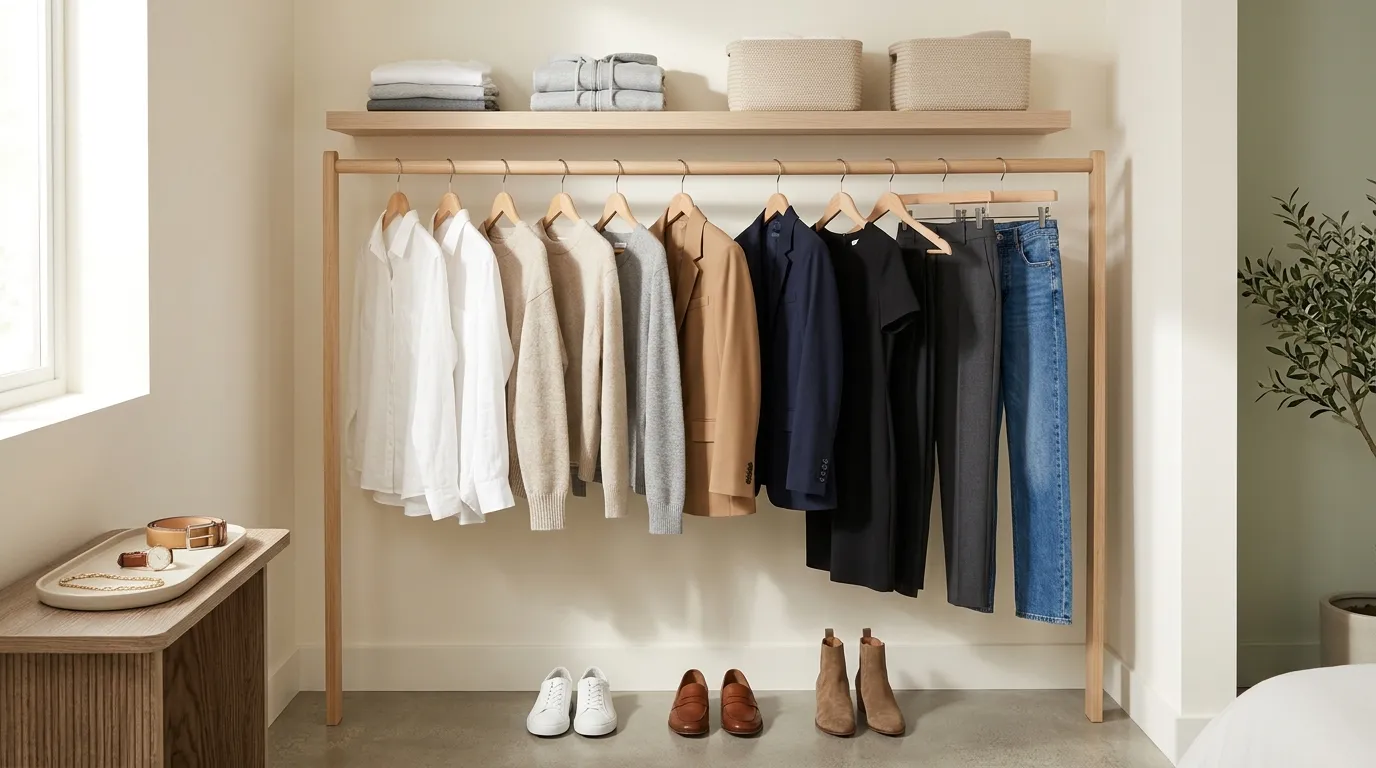
Table of Contents
What exactly is a capsule wardrobe? A curated collection of 30 to 40 versatile, high-quality pieces you genuinely wear, built around a neutral color base so everything mixes together. The goal is not minimalism for its own sake—it is a closet where every item earns its place, getting dressed takes under 5 minutes, and the "full closet but nothing to wear" problem disappears permanently.
A capsule wardrobe is not a uniform. It is not a specific aesthetic. It does not require buying expensive basics. It means being intentional about what you own and why you own it—and culling the items that take up space without being worn.
The most common result people report after building a capsule: they wear more of their closet, more often, with less effort.
Step 1: Define Your Actual Lifestyle
Your capsule wardrobe should reflect how you genuinely live right now—not how you imagine you might live, and not how you lived five years ago.
Audit a typical week:
- How many days involve a workplace with a dress code?
- How many days are genuinely casual (home, errands, weekends)?
- How often do you exercise and need athletic wear?
- How often do you dress formally?
Build your wardrobe ratios around these real numbers. If you work remotely and dress casually six days out of seven, your closet should be 70% casual. Don't dedicate half your space to blazers and dress shirts for the two formal occasions per year.
Step 2: Choose a Color Base
A capsule wardrobe works because everything mixes. This requires a cohesive color framework.
Neutral base (choose 2 to 3):
- Navy
- White or off-white
- Gray (light or charcoal)
- Beige, camel, or tan
- Black
Accent colors (choose 1 to 2): Any color you genuinely love that pairs naturally with your neutral base. Burgundy and sage green work well with navy. Mustard and terracotta pair with beige. The accent colors create visual interest without clashing.
Every item in your closet should work with at least five other items you already own. If it only pairs with one or two things, it does not belong in a capsule.
Step 3: The Core 30 to 40 Piece Framework
| Category | Count | Examples |
|---|---|---|
| Tops | 10–12 | 3–4 plain tees, 2–3 long-sleeve shirts, 2 button-downs, 1–2 elevated tops |
| Bottoms | 6–8 | 2 jeans (casual + dark/dressy), 2 trousers, 1 shorts, 1 skirt (if applicable) |
| Outerwear | 3–4 | Classic coat, casual jacket, lightweight layer |
| Shoes | 4–5 pairs | White sneaker, everyday shoe, dress shoe, athletic sneaker, sandal |
| Accessories | 5–8 items | Classic bag, work/school bag, watch, simple jewelry |
These numbers work for most lifestyles. Climate, profession, and personal style adjust the specific items—the framework stays the same.
Step 4: The Edit — Before Anything Comes In
Before adding to your wardrobe, remove what does not belong. This is the hardest step and the most necessary one.
Donate immediately:
- Anything not worn in the past year (excluding specific special-occasion pieces)
- Anything that does not fit your current body right now
- Anything that does not pair with at least three other items you own
- Anything worn out of obligation rather than genuine preference
Trash:
- Items with visible stains, pilling, or irreparable damage
For anything in the "maybe" category: place it in a sealed box with today's date. If you do not reach for it in 30 days, donate the box without reopening it. You have answered the question by not using it.
For the complete closet editing method, read our Bedroom & Closet Organization Guide.
Step 5: Fill Gaps Slowly and Deliberately
After the edit, you will have categories that need reinforcement. Fill them with intention—one item at a time—checking each purchase against four criteria:
- Does it work with my color base?
- Does it fill a genuine gap, or is it a duplicate of something I already have?
- Will I reach for it regularly?
- Is the quality good enough that it will last two to three seasons?
Three Mistakes to Avoid
Copying someone else's list. A fashion blogger in sunny California needs different pieces than someone living in a cold climate. Adapt every capsule template to your actual weather and daily life.
Buying everything at once. Replacing an entire wardrobe in one weekend leads to rushed decisions and items that do not fit perfectly. Building a capsule over three to six months produces a much better result.
Assuming it must be boring. A capsule wardrobe can absolutely include prints, bold colors, and pieces with personality—as long as they coordinate with the neutral base. Intentional is not the same as bland.
Frequently Asked Questions
How many pieces should a capsule wardrobe have?
How do I start a capsule wardrobe on a very tight budget?
Do I have to wear neutral colors to have a capsule wardrobe?
Join Organized Haven
Get weekly home organization tips, DIY décor ideas, and exclusive printables delivered straight to your inbox. Join 10,000+ homeowners today!
We respect your privacy. Unsubscribe at any time.
Written by Danilo Souza
Danilo Souza is a Home Organization Expert and Interior Decor Specialist with over 8 years of experience in transforming cluttered, stressful rooms into functional, peaceful, and beautifully designed living spaces. His practical, step-by-step methodologies empower homeowners to create lasting organizational systems that fit their lifestyle and budget.