Morning Routine Organization: Save 20 Minutes
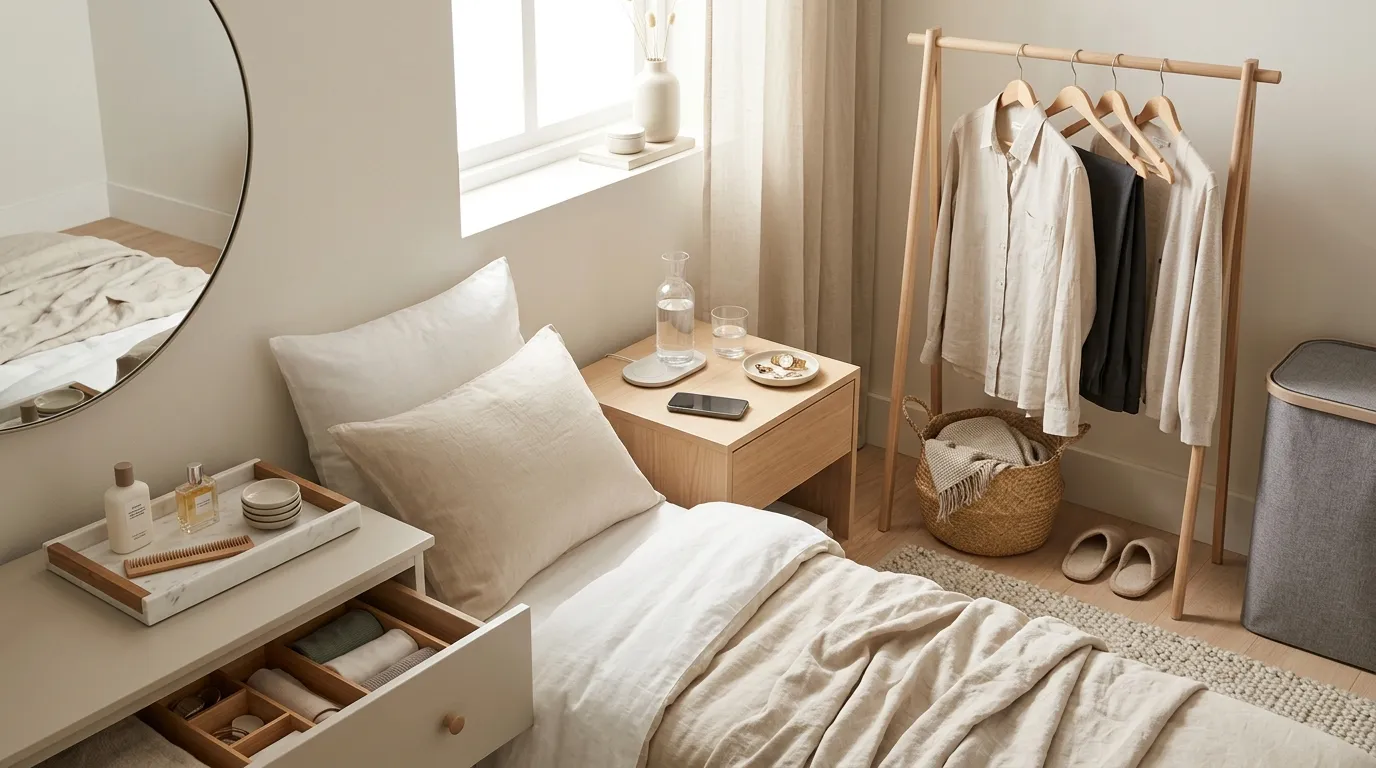
Table of Contents
Why do mornings feel rushed? Almost never because of slow tasks—mornings feel rushed because of searching and deciding. Finding keys. Picking an outfit from a full but disorganized closet. Realizing the bag isn't packed. These are not time problems; they are organization problems. The fix is moving every morning decision to the night before, when the stakes are lower and the mental clarity is higher.
When you wake up, your brain is still operating at reduced capacity. Asking it to locate keys, decide on an outfit, pack a bag, and make breakfast simultaneously is a reliable recipe for starting every day with cortisol rather than clarity.
The system below takes about 10 minutes each evening and eliminates the three most common sources of morning friction.
The Three Evening Habits That Change Mornings
1. Choose Tomorrow's Outfit Tonight
This is the single highest-leverage morning habit you can build. Choosing what to wear takes 5 minutes the night before with zero stakes. It takes 15 to 20 minutes and real frustration in the morning when you are already running late.
The setup: A hook, a valet rod, or a dedicated chair near the closet where tomorrow's complete outfit lives each evening. Shoes included if they are coming out of the closet. Socks and underwear too—everything needed to dress completely without opening a single drawer.
If you use a valet stand, the nighttime routine is: choose, hang, walk away. If you use a hook or the back of a door, the result is identical.
2. Pack the Bag Tonight
Whether it is a work bag, a gym bag, or a school backpack, pack it completely the night before. Put it in the same spot by the front door every single evening.
In the morning, you pick it up on the way out. No searching, no packing, no standing at the door trying to remember what you forgot.
For anything that cannot go in the bag until morning (lunch from the fridge, a medication you need to take with breakfast): leave a sticky note on the bag handle that says exactly what is missing. You will see it the moment you pick up the bag.
3. Set Up the Morning Basket or Tray
A small tray, bowl, or dedicated spot on the dresser holds every daily-carry essential: wallet, keys, transit card, work badge, watch, earbuds. Everything that needs to leave the house with you lives here when it is not in use.
The rule: these items return to the tray the moment you walk through the door. Every time, without exception. The "where are my keys" problem disappears permanently once this habit is consistent for about two weeks.
The Physical Setup: Where Things Live
In the bedroom:
- Valet spot for tomorrow's outfit: near the closet, visible, at standing height
- Morning basket: on the dresser, always visible
- Phone charger: across the room from the bed (not on the nightstand—charging next to the bed encourages phone use before sleep and makes getting up easier to avoid when the alarm goes off)
In the bathroom:
- Only morning products on the counter: toothbrush, toothpaste, face wash, daily moisturizer. Everything else lives under the sink or in a drawer
- Same routine, same order, every morning—a fixed sequence eliminates micro-decisions before you are fully awake
Near the front door:
- The packed bag goes here every night
- One coat or jacket on a hook—so you never search for it on the way out
How Long a Prepared Morning Actually Takes
With a pre-selected outfit, a pre-packed bag, and organized bathroom:
| Scenario | Time |
|---|---|
| Shower, dress, and out the door | 25–35 minutes |
| With a sit-down breakfast | 40–55 minutes |
| With exercise included | 60–90 minutes |
These numbers assume a fully prepared evening the night before. Without it, add 20 to 30 minutes of searching, deciding, and backtracking to every scenario.
The 10-Minute Evening Reset
Set an alarm for 30 minutes before you plan to sleep. Use 10 of those minutes for:
- Check the morning basket—are keys, wallet, and daily items there?
- Select tomorrow's outfit and place it on the designated spot
- Confirm the bag is packed and placed at the door
- Clear the bathroom counter of anything not needed tomorrow morning
- Plug devices into the charging station
This 10-minute investment buys back 20 to 30 minutes of morning stress without adding any real effort to the evening.
Frequently Asked Questions
What if my schedule changes every day and I can't prep a fixed routine?
How do I actually build the habit of preparing the night before?
How do I handle kids' morning routines using this approach?
Join Organized Haven
Get weekly home organization tips, DIY décor ideas, and exclusive printables delivered straight to your inbox. Join 10,000+ homeowners today!
We respect your privacy. Unsubscribe at any time.
Written by Danilo Souza
Danilo Souza is a Home Organization Expert and Interior Decor Specialist with over 8 years of experience in transforming cluttered, stressful rooms into functional, peaceful, and beautifully designed living spaces. His practical, step-by-step methodologies empower homeowners to create lasting organizational systems that fit their lifestyle and budget.