How to Organize a Small Closet: 12 Ideas
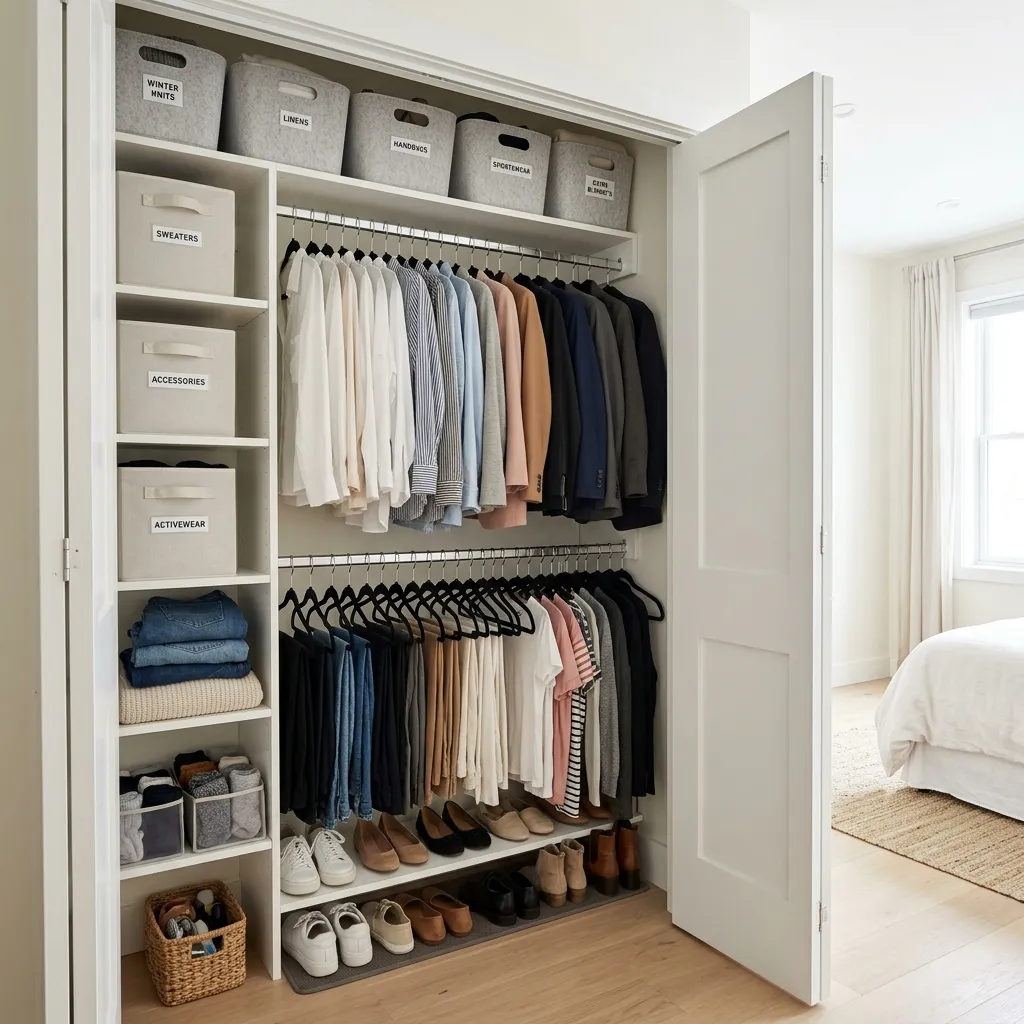
Table of Contents
- 1. Install a Double Hang Rod
- 2. Switch to Slim Velvet Hangers Across the Board
- Hanger Comparison
- 3. Add a Shelf Riser for Extra Layers
- 4. Use the Back of the Door
- 5. Clear Bins for All Folded Items
- 6. Install Floating Shelves Above the Rod
- 7. Add Hooks on the Inside Walls
- 8. Vacuum Storage Bags for Off-Season Clothing
- 9. Label Every Bin and Section
- 10. Use Shelf Dividers for Stacked Items
- 11. A Retractable Valet Rod for Next-Day Outfits
- 12. The 10-Minute Monthly Reset
How do you maximize a small closet? The most impactful changes are: install a double hang rod beneath the existing one (doubles hanging space instantly), switch all hangers to slim velvet (saves 30% of rod width), and use the back of the closet door for shoes and accessories. These three changes alone can functionally double the capacity of a small closet without any structural changes.
No organization system can compensate for simply having too many clothes in too small a space. Before implementing any of the ideas below, pull everything out of the closet and edit aggressively.
Apply the 12-month rule without compromise: if you haven't worn it in a full year and it is not a specific special-occasion piece, donate it. For items you are unsure about, put them in a sealed box with today's date. If you haven't opened it in 60 days, donate the whole box without looking inside.
A smaller inventory is the single easiest way to make a small closet feel large.
1. Install a Double Hang Rod
Most closets have one rod set at a single height, which leaves the entire bottom half of the space empty beneath short-hanging items like shirts, blazers, and jackets. A second tension rod installed directly below the existing one fills that wasted space completely.
Install the lower rod at approximately 40 inches from the floor. Use the top rod for shirts, blouses, and jackets. Use the bottom rod for more of the same—effectively doubling your hanging capacity in one afternoon with a $15 to $25 purchase.
2. Switch to Slim Velvet Hangers Across the Board
Thick plastic or wooden hangers are approximately 0.5 to 0.75 inches wide. Slim velvet hangers are under 0.2 inches. Replacing all 20 standard hangers with velvet gives you rod space for 40 to 50 garments.
Velvet is also genuinely non-slip—delicate blouses and silky fabrics stay on the hanger instead of sliding off onto the floor. Buy a bulk pack of 50 and re-hang everything in one focused session.
Hanger Comparison
| Hanger Type | Best For | Pros | Cons |
|---|---|---|---|
| Slim Velvet | T-shirts, dresses, blouses | Saves up to 30% rod space, non-slip | Can snap if bent too aggressively |
| Wooden | Heavy winter coats, structured suits | Durable, maintains shoulder shape | Very bulky, expensive per unit |
| Standard Plastic | Temporary storage | Cheap, widely available | Wastes significant rod space |
3. Add a Shelf Riser for Extra Layers
If you have a single shelf above the hanging rod, a freestanding shelf riser creates a second elevated tier on that shelf—without adding any new shelving hardware. Use the base level for everyday folded items like knitwear. Use the riser level for off-season clothing or rarely-used bags.
4. Use the Back of the Door
The back of the closet door is completely unused storage in most homes. Over-door organizers hang from the top of the door with no installation required. Use them for:
- Shoes (a 24-pocket clear organizer holds 12 pairs)
- Rolled belts, scarves, and small accessories
- Tomorrow's pre-selected outfit on a hook
5. Clear Bins for All Folded Items
Folded sweaters and athletic wear stacked directly on a shelf will inevitably topple. Clear labeled bins keep each category contained and visible. You can see what is inside each bin without pulling it down from the shelf.
One bin per category: knitwear, athletic wear, folded denim, seasonal accessories.
6. Install Floating Shelves Above the Rod
If your closet has ceiling height that is not being used, install one or two floating shelves near the top. This zone is ideal for items you access only a few times a year: luggage, vacuum-compressed off-season bags, or bulky items like a camping sleeping bag.
7. Add Hooks on the Inside Walls
A few command hooks on the side wall or back wall of the closet provide a home for the "worn-but-not-dirty" category of clothing that currently lands on the bedroom chair. This is the single habit that prevents the most common source of bedroom clutter.
8. Vacuum Storage Bags for Off-Season Clothing
Bulky winter coats and thick sweaters consume a disproportionate amount of closet space during the months you cannot wear them. Compressing them into vacuum storage bags at the end of winter reduces their volume by 75%. Store the flat bags on the highest shelf or flat under the bed.
9. Label Every Bin and Section
Even in a small closet, labels prevent categories from drifting. When someone else puts laundry away, a labeled bin tells them exactly where the athletic wear goes. The system only degrades when the rules aren't visible.
10. Use Shelf Dividers for Stacked Items
Vertical shelf dividers clip onto the edge of a shelf and create separate standing sections that prevent folded stacks from toppling into each other. Particularly useful on sweater shelves and for keeping individual handbags standing upright instead of flopping over.
11. A Retractable Valet Rod for Next-Day Outfits
A retractable valet rod installed on the closet's side wall takes up zero space when pushed in, and pulls out to hold tomorrow's complete outfit the night before. Choosing your outfit in advance is one of the highest-impact morning routine improvements you can make—it eliminates decision fatigue at the exact moment when cognitive load is highest.
12. The 10-Minute Monthly Reset
A small closet gets disorganized faster than a large walk-in. A 10-minute reset once a month—returning items to their zones, re-hanging fallen items, checking that bins haven't overflowed—prevents problems from compounding. This is the same maintenance discipline you would apply in any room you organize: consistency beats deep cleaning.
Frequently Asked Questions
How do I organize a small closet with a large amount of clothes?
What should be stored on the top shelf of a closet?
Are velvet hangers really worth it for a small closet?
How do you store shoes in a very small closet?
Should I fold or hang my jeans to save space?
Join Organized Haven
Get weekly home organization tips, DIY décor ideas, and exclusive printables delivered straight to your inbox. Join 10,000+ homeowners today!
We respect your privacy. Unsubscribe at any time.
Written by Danilo Souza
Danilo Souza is a Home Organization Expert and Interior Decor Specialist with over 8 years of experience in transforming cluttered, stressful rooms into functional, peaceful, and beautifully designed living spaces. His practical, step-by-step methodologies empower homeowners to create lasting organizational systems that fit their lifestyle and budget.