Apartment Organization: Maximize Space
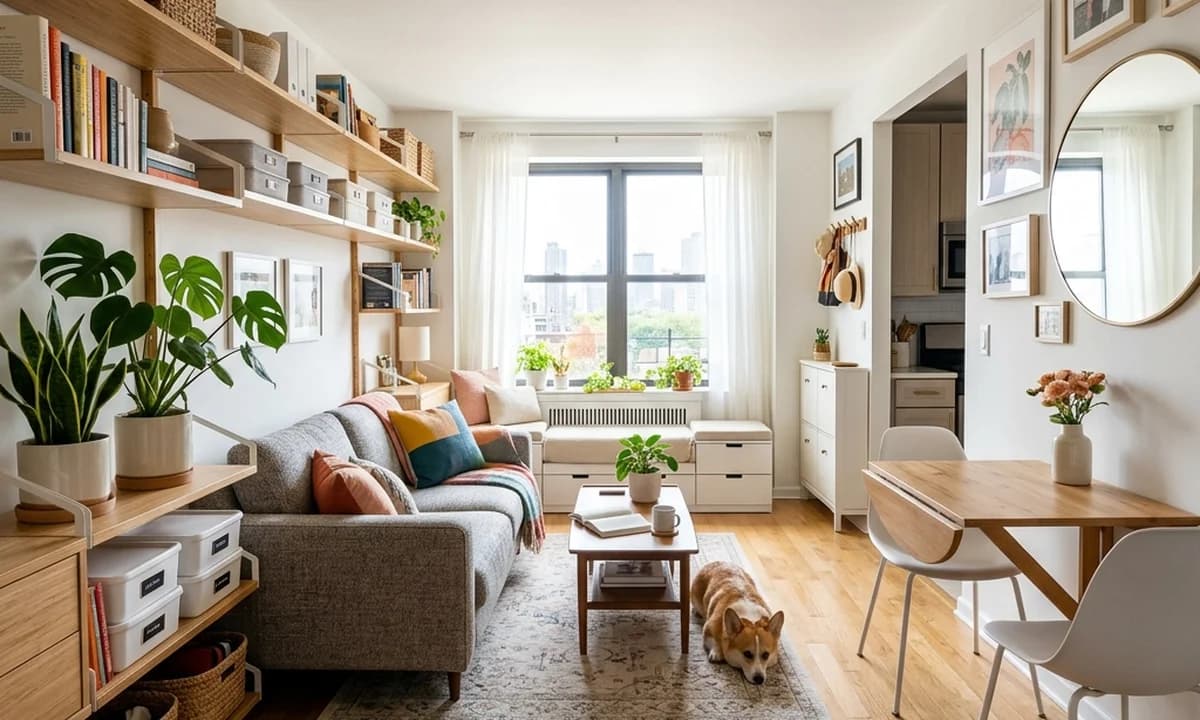
Table of Contents
What is the most important principle of apartment organization? Every item must earn its place. Without a garage, basement, or attic to absorb overflow, there is no "temporarily" anywhere—if something comes in, something else must go out. The second principle is to build storage vertically: the walls of a small apartment contain more usable storage surface area than the floor, and most of it goes completely unused.
A small apartment operates under a different logic than a large house. In a house, you can absorb clutter into extra rooms, a basement, an attic. In a 600-square-foot apartment, there is nowhere for excess to hide—it simply occupies living space.
The organizational approach that works in small apartments is not just "buy better storage containers." It is a combination of strict inventory discipline and aggressive use of vertical and unconventional storage surfaces.
Rule 1: One In, One Out—No Exceptions
In a small apartment, volume accumulates faster than you expect. A few extra pairs of shoes, a stack of new books, a set of kitchen gadgets—within months, closets overflow and surfaces disappear.
The rule: any time something new enters the apartment, something old leaves. New sweater in, old sweater out—donated or discarded. New coffee mug in, old mug out. The inventory stays flat. This prevents gradual creep better than any organizing system, because it addresses the root cause rather than the symptom.
Rule 2: Build Storage Vertically
The single biggest organizational mistake in a small apartment is using wide, short furniture that eats floor space without contributing proportional storage. A long, low credenza occupies 6 feet of floor but only 3 feet of height. A floor-to-ceiling bookshelf occupies 3 feet of floor and 8 feet of height.
Floor-to-ceiling shelving: IKEA Billy, Kallax, and similar systems create substantial storage with a relatively small floor footprint. Books, kitchen appliances not used daily, and boxed storage all go up, not out.
Floating shelves: Installed above the TV, above doorframes, and above the bed, they provide storage and display space at heights that leave walking areas completely free. This is where rarely used kitchen items (a stand mixer, a slow cooker) live, along with books and decorative objects.
Wall-mounted desk: A floating desk that folds flat against the wall when not in use eliminates the floor footprint of a traditional four-legged desk entirely while providing the same working surface.
Rule 3: Every Door Has a Back
Every door in the apartment is a large blank storage surface that is completely hidden when the door stands open.
- Bedroom closet doors: Over-the-door clear pocket organizers hold shoes, accessories, and seasonal items
- Pantry/coat closet doors: A tiered wire rack on the inside door holds spices, cleaning supplies, or winter accessories
- Bathroom door: Multiple-tier towel rack gets wet towels off the floor and away from the shower rod
- Kitchen cabinet doors: Adhesive hooks hold measuring spoons, oven mitts, and small tools
This storage adds zero floor footprint and zero visual clutter—the door closes and everything disappears.
Rule 4: Under the Bed Is a Full-Sized Closet
The space beneath a standard bed frame is the largest uninterrupted storage footprint in most apartments—often 40 to 50 cubic feet. If the bed sits low to the ground and this space is unused, that represents a significant wasted resource.
Bed risers: Adding 5 to 6 inches of height with heavy-duty bed risers creates room for flat rolling storage bins. Under the bed is the ideal location for off-season clothing (winter coats in summer, swimwear in winter), spare bedding, and luggage. A bed skirt makes all of it invisible.
For the complete guide to this space, read our Under-Bed Storage Ideas.
Rule 5: Micro-Zone Every Drawer
In a small apartment, a "junk drawer" is not a luxury—it is a waste of a drawer. Every drawer in the apartment must be divided into specific compartments.
Clear acrylic or bamboo drawer dividers, assembled edge-to-edge so there is no empty space between them, force items to stay in their assigned zones. A fully divided drawer holds 20 to 30% more items than a bare drawer because organized items nest efficiently instead of creating a chaotic pile.
Frequently Asked Questions
How do you organize an apartment with almost no storage?
How do I make a small apartment look less cluttered?
Where do you store a vacuum in a small apartment with no closet?
Join Organized Haven
Get weekly home organization tips, DIY décor ideas, and exclusive printables delivered straight to your inbox. Join 10,000+ homeowners today!
We respect your privacy. Unsubscribe at any time.
Written by Danilo Souza
Danilo Souza is a Home Organization Expert and Interior Decor Specialist with over 8 years of experience in transforming cluttered, stressful rooms into functional, peaceful, and beautifully designed living spaces. His practical, step-by-step methodologies empower homeowners to create lasting organizational systems that fit their lifestyle and budget.