Weekend Home Organization Plan: 48-Hour Guide
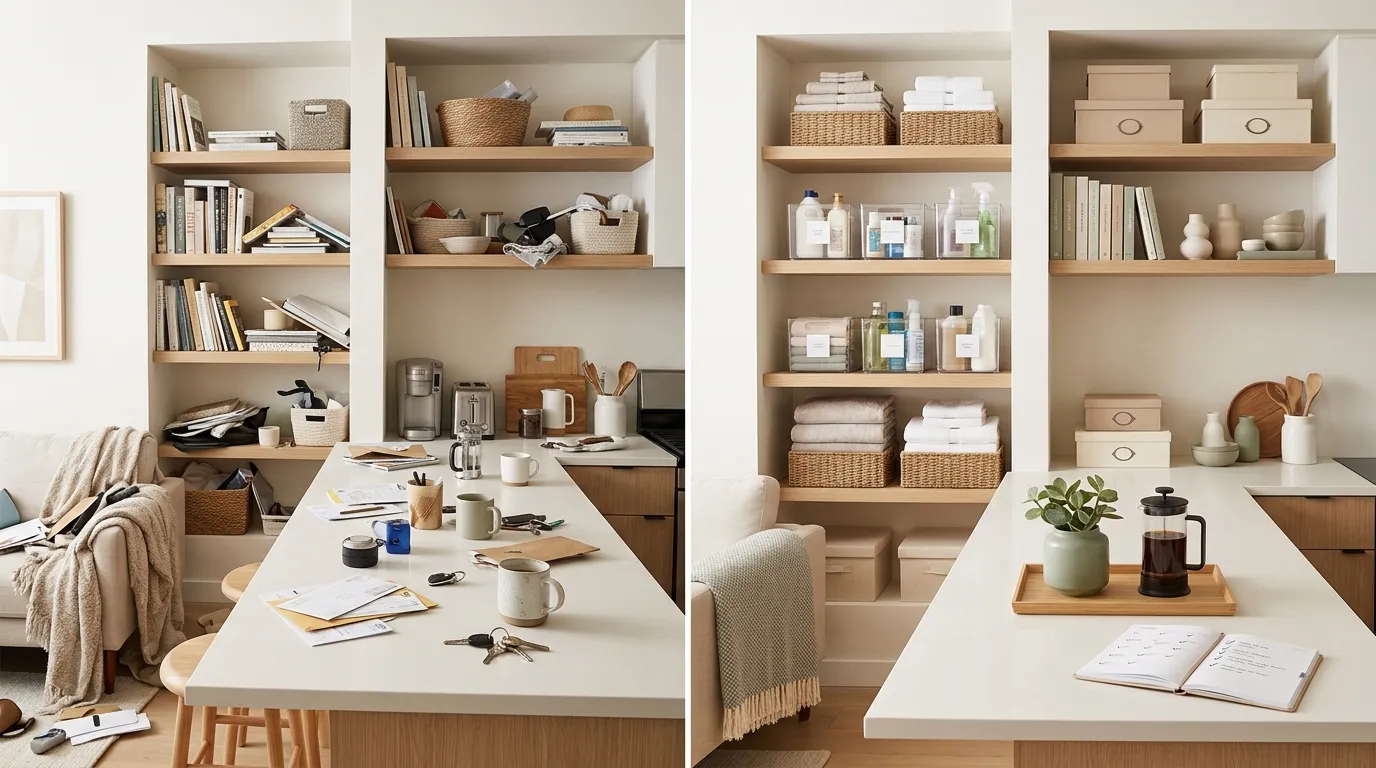
Table of Contents
- Friday Night Prep (30 Minutes)
- Saturday: High-Traffic Zones
- 8:00–9:30 AM — Entryway and Front Closet
- 9:45–11:15 AM — Kitchen Drawers and Cabinets
- 12:00–1:30 PM — Kitchen Pantry
- 1:45–3:15 PM — Living Room
- 4:15–5:15 PM — Laundry Room or Utility Closet
- Sunday: Personal Spaces
- 8:00–9:30 AM — Bedroom Surfaces and Under the Bed
- 9:45–11:45 AM — The Closet (Your Biggest Session)
- 12:30–1:30 PM — Bathroom
- 2:00–3:00 PM — Home Office or Desk Area
- The Rule That Makes It Last
Can you really organize a whole home in one weekend? You can accomplish a massive, visible transformation in two days if you work in focused 90-minute blocks with real breaks between them. Saturday covers your high-traffic rooms (kitchen, entryway, living room). Sunday covers your personal spaces (bedroom, closet, bathroom). The key is having supplies ready before you start Saturday morning.
A full home organization weekend is completely achievable—but only if you treat it like a project, not a cleaning frenzy. The biggest reason these weekends fail is that people start without a plan, run out of steam by noon, and abandon the whole effort halfway through the kitchen.
Here is a realistic, hour-by-hour schedule with hard stop times, proper breaks, and a specific focus for each session.
Friday Night Prep (30 Minutes)
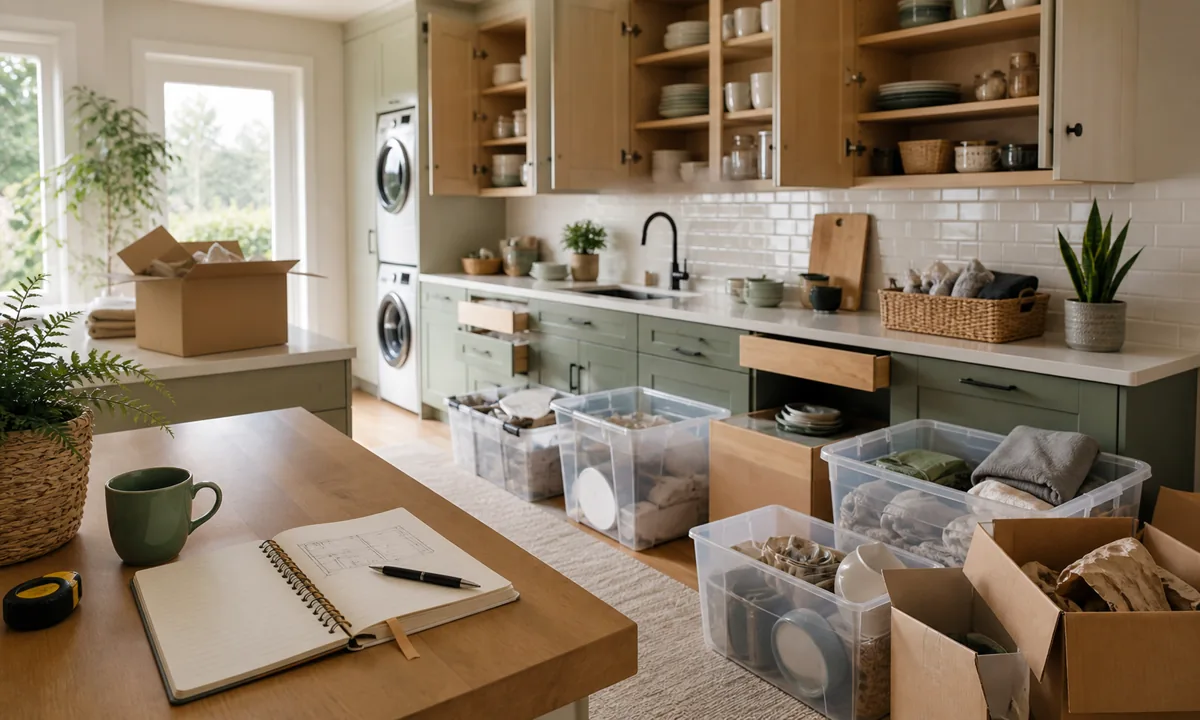
Gather everything you need so Saturday morning has zero friction:
- Two large trash bags — one for actual trash, one for donations
- A label maker or masking tape and a marker
- A few basic clear bins (start with what you have—buying after is always better than before)
- Cardboard donation boxes
- Snacks and a full water bottle — decision fatigue is real and it hits faster than you expect
Saturday: High-Traffic Zones
8:00–9:30 AM — Entryway and Front Closet
Clear every surface near the front door and completely empty the front closet. Trash what is broken or expired. Donate what is unused. Return displaced items to their correct rooms—do not just pile them in the hallway. Install hooks if you don't have them (3M Command hooks require zero drilling). Create a dedicated key station. Label the hooks.
Time limit: 90 minutes. Stop when the timer goes off.
Break: 15 minutes. Eat something, step outside briefly.
9:45–11:15 AM — Kitchen Drawers and Cabinets
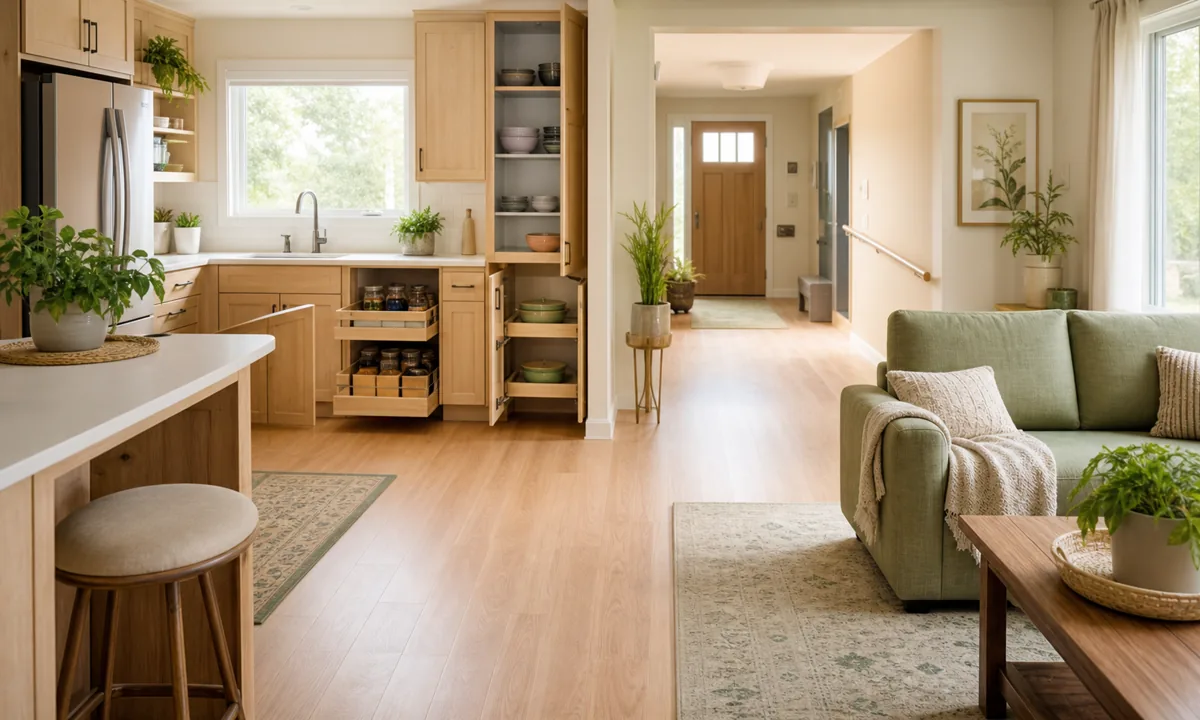
Clear every counter first by moving everything to the kitchen table. Then tackle drawers and cabinets one at a time: empty, sort, return only what earns its space. For a specific drawer method, read our Kitchen Drawer Organizers Guide.
Break: 45 minutes. Eat lunch. Do not work through this break.
12:00–1:30 PM — Kitchen Pantry
If you have a separate pantry, it gets its own dedicated block—it is the single highest-impact kitchen organization session you will do all weekend. Empty all shelves completely, discard anything expired, group what remains by strict category, and assign each category a dedicated shelf. For the exact method, follow our 15 Pantry Organization Ideas.
Break: 15 minutes.
1:45–3:15 PM — Living Room
Clear all flat surfaces. Return every displaced item to its correct room. Address cord management behind the TV (cable ties make an instant difference). Organize media (remotes, game controllers) into a single dedicated drawer or basket. Physically remove any décor that collects dust without adding genuine value to the room.
Break: 60 minutes. Rest. You've earned it.
4:15–5:15 PM — Laundry Room or Utility Closet
Organize cleaning supplies. Discard every empty bottle and anything expired. Group items by task: laundry, bathroom cleaning, floor cleaning. Install an over-door organizer if the back of the door is bare. One hour is enough for most utility spaces.
Sunday: Personal Spaces
8:00–9:30 AM — Bedroom Surfaces and Under the Bed
Clear both nightstands completely, the tops of all dressers, and whatever is under the bed. A bedroom surface should hold only what you use every single day. Everything else needs to find a real home—not just another flat surface. For under-bed storage ideas that actually work, see our Under-Bed Storage Guide.
Break: 15 minutes.
9:45–11:45 AM — The Closet (Your Biggest Session)
This is the most demanding session of the entire weekend because closets require the most individual decisions. Remove all clothing from the closet completely. Sort strictly into Keep / Donate / Off-Season. Return only what fits and has been worn in the past year. While you are at it, switch to slim velvet hangers—this alone can double your hanging capacity and is worth every minute of effort.
Break: 45 minutes.
12:30–1:30 PM — Bathroom
Start with the medicine cabinet: discard every expired medication and toiletry with zero hesitation. Move under the sink: use a two-tier turntable (lazy Susan) or stackable clear drawers to make every inch accessible. Add drawer organizers to the vanity.
Break: 30 minutes.
2:00–3:00 PM — Home Office or Desk Area
Paper is the hardest part of any home organization project. Shred or recycle anything older than 12 months unless it is a tax document, legal document, warranty, or insurance policy. Create a single physical in-box for incoming paper and one hanging file for documents worth keeping.
The Rule That Makes It Last
The entire weekend sticks or falls based on one thing: a 10-minute reset every evening. Walk through each room, return items to their assigned homes, and clear flat surfaces. This takes less time than it sounds after the systems are in place—and it prevents a single weekend of effort from unraveling within a month.
Frequently Asked Questions
Can I do this in one day instead of two?
What if I have kids and can't get uninterrupted time?
What if I don't finish everything on the schedule?
Join Organized Haven
Get weekly home organization tips, DIY décor ideas, and exclusive printables delivered straight to your inbox. Join 10,000+ homeowners today!
We respect your privacy. Unsubscribe at any time.
Written by Danilo Souza
Danilo Souza is a Home Organization Expert and Interior Decor Specialist with over 8 years of experience in transforming cluttered, stressful rooms into functional, peaceful, and beautifully designed living spaces. His practical, step-by-step methodologies empower homeowners to create lasting organizational systems that fit their lifestyle and budget.