Desk Drawer Organization for Productivity
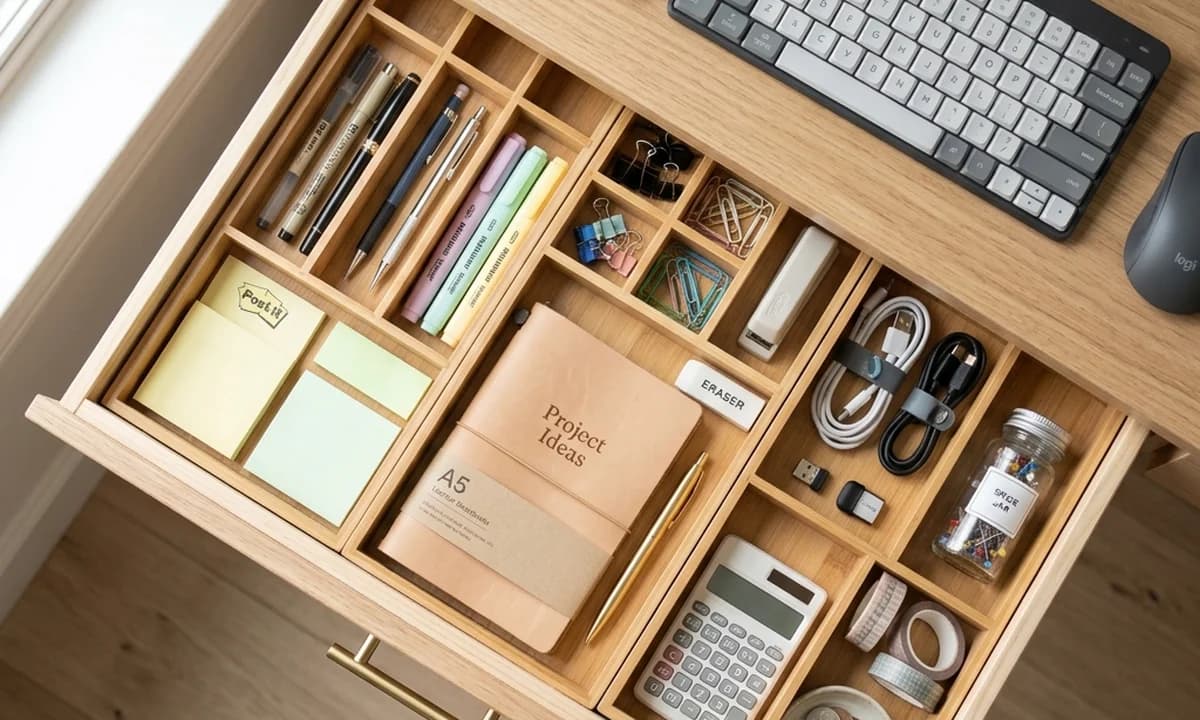
Table of Contents
What is the most important rule for organizing desk drawers? The top drawer belongs exclusively to items you use every day. If you have to dig, open multiple drawers, or search for anything you need more than three times a week, it belongs in the top drawer with a dedicated compartment. Everything accessed less frequently gets a lower drawer. This single principle, applied strictly, eliminates 80% of desk-related friction.
When working from home, the desk is the most-used workspace in the house. Every time you dig through a junk drawer to find a working pen while on a call, or hunt for scissors during a focused work session, you lose concentration and time.
The goal of a well-organized desk is not visual tidiness—it is operational efficiency. The right item in the right place means you never break concentration to search.
Phase 1: The Purge
Before organizing anything, empty all desk drawers completely onto the desk surface and do a ruthless audit.
The Pen Test: Every pen, marker, and highlighter gets tested on a scrap paper. Dead pens go immediately in the trash—not "maybe they'll work later," not "I'll check again." Three to five good-quality pens replace a drawer of twenty that half-don't-work.
Remove everything non-office: The desk is not a general-purpose storage unit. Phone chargers that belong in the living room, loose batteries, takeout menus, spare buttons—none of these earn a spot in a work desk. Relocate them to their actual homes.
The rule: if you have not touched it in the past 90 days and it is not seasonal (like a tax folder), it does not belong in the desk.
Phase 2: The Top Drawer (Daily Items Only)
The top desk drawer is premium real estate. It should hold only items used every working day and nothing else. When it holds everything that "might be needed sometime," it becomes the functional equivalent of a junk drawer, which means finding anything requires searching.
Compartment layout for the top drawer:
- Pens and pencils (3-5 maximum) in a single narrow compartment
- Sticky notes, one pad
- Small scissors, one pair
- Phone stand or screen cleaning cloth if used daily
- Any personal item accessed daily (glasses, lip balm, headache medicine)
Use shallow bamboo or acrylic dividers that fill the drawer completely edge to edge. No empty space between compartments means items cannot migrate. When you open the drawer and grab the pen without looking, the system is working.
Phase 3: The Middle Drawer (Weekly Items)
Items used a few times a week but not daily go here. Examples:
The Supply Drawer: Stapler, tape dispenser, correction fluid, extra staples, hole punch. These are tools—they need to be accessible, but they do not need to be in the top drawer competing for prime position with daily items.
The Cord Drawer: Dedicate one drawer section to technology cables and accessories—phone charger backup, USB hub, external drive, extra headphones. Use velcro cable ties to prevent tangles. When everything electronic lives in one drawer, you never search the whole desk for a cable.
Phase 4: The Deep/Bottom Drawer (Active Projects)
The bottom or deepest drawer is for files and paper materials in active use—not archival storage.
Active project files only: Use hanging file folders labeled by project name. The moment a project closes, the file moves to long-term storage elsewhere. The drawer should contain only what you are currently working on—ideally five to ten folders at most.
The Tickler system: A set of labeled folders by date (1-31 for days of the month, or January-December for monthly) holds action items for their due dates. A bill due on the 15th sits in the "15" folder. This system eliminates sticky note chaos and calendar-chasing for physical action items.
Preventing Drawer Creep
A perfectly organized desk drawer drifts toward disorder over time. The maintenance is easier than the initial setup:
- 15-minute weekly reset: Every Friday before closing the computer, spend 15 minutes returning misplaced items, discarding anything that accumulated but does not belong, and emptying the "pending" folder of completed items
- Non-slip liner: Cut a sheet of non-slip shelf liner to exact drawer dimensions and place it under all organizers—this prevents dividers from migrating toward the back when the drawer is opened forcefully
For the full home office setup—desk organization, cable management, and storage—see our Home Office Organization Guide.
Frequently Asked Questions
What should go in each desk drawer?
How do I keep drawer organizers from sliding around?
What should stay on top of the desk versus inside the drawers?
Join Organized Haven
Get weekly home organization tips, DIY décor ideas, and exclusive printables delivered straight to your inbox. Join 10,000+ homeowners today!
We respect your privacy. Unsubscribe at any time.
Written by Danilo Souza
Danilo Souza is a Home Organization Expert and Interior Decor Specialist with over 8 years of experience in transforming cluttered, stressful rooms into functional, peaceful, and beautifully designed living spaces. His practical, step-by-step methodologies empower homeowners to create lasting organizational systems that fit their lifestyle and budget.