Living Room Toy Storage Without a Playroom: A Reset System for Families
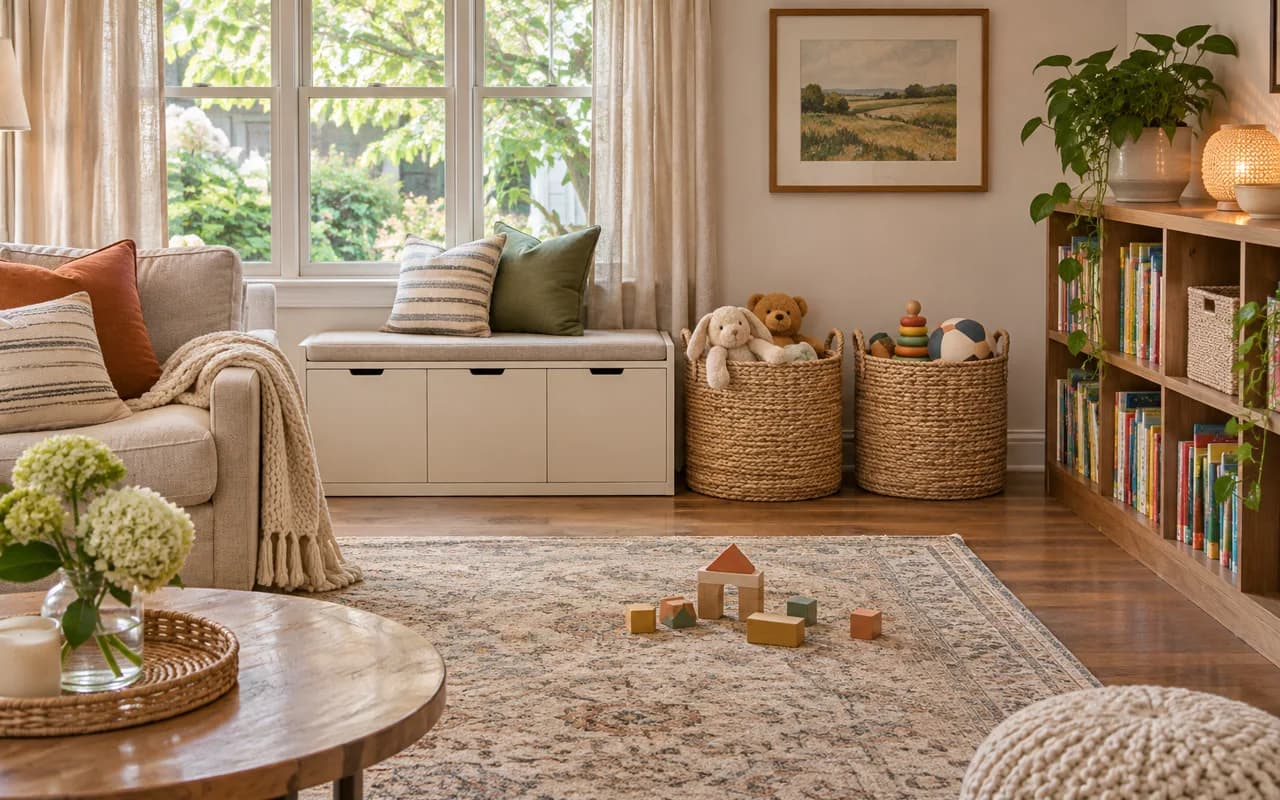
Table of Contents
What is the best way to store toys in a living room without a playroom? Limit the room to a small active toy collection, assign each category to an open basket or closed bench, keep the reset surface at child height, and rotate the rest elsewhere. The system should allow a five-minute evening reset without requiring children or adults to sort tiny pieces perfectly.
When the living room is also the playroom, office, movie room, and place where guests sit, toy storage has to do more than hide things. It has to protect the way the room changes throughout the day. The wrong system creates a familiar cycle: toys spill from many containers, adults clean after bedtime, and the room feels unavailable to everyone in between.
This article serves the long-tail search living room toy storage without a playroom. It complements our playroom toy rotation guide rather than duplicating it. The key difference is that a shared family room needs a fast transition between play mode and adult use.
Decide What the Living Room Is Allowed to Hold
Start by setting a capacity, not by shopping for more baskets. Pick three to five broad categories that earn permanent room in the living area: building toys, picture books, pretend-play pieces, a simple puzzle tray, or one family game. Everything else belongs in a rotating reserve, bedroom, or closet.
That limit is kind to everyone. Children can see what is available. Adults can restore the room without deciphering a detailed filing system. A small collection also makes it easier to notice damaged toys, missing parts, and items that no longer match a child's interests.
Choose Furniture That Supports a Fast Reset
| Storage option | Best use | Avoid when |
|---|---|---|
| Closed storage bench | Large categories and an instant visual reset | The lid is too heavy for a child or blocks a walkway when open |
| Two open baskets | Daily blocks, dolls, or vehicles | Every toy type has its own basket |
| Low book ledge or forward-facing shelf | Books children choose independently | It becomes a second display surface for décor |
| Rolling tray | One in-progress puzzle or art activity | It turns into permanent overflow |
The best storage is usually furniture already suited to the room: a bench, sideboard, or lower cabinet. Add containers only after you know how much fits. For a family in a compact home, living room organization for small spaces can help you reserve floor area before assigning toy zones.
Put Play Where Play Actually Happens
Store toys near the rug, coffee table, or corner where children already settle—not across the room in a stylish but inconvenient cabinet. A bin that requires several steps and an adult to open will not be used at cleanup time.
Use one open “current play” basket for the toys most likely to travel across the room. This gives drifting pieces a temporary home before the full reset. The basket is not a junk drawer: if it is full, it signals that the active collection is too large or a category needs a clearer home.
Make the System Safe Before It Looks Finished
Shared rooms often contain televisions, bookcases, and storage furniture that children can climb. The U.S. Consumer Product Safety Commission's Anchor It! guidance recommends securing appropriate furniture and televisions to reduce tip-over risk. Keep heavier items low, do not place tempting toys on top of furniture, and follow the manufacturer's instructions for anchoring.
Safety also shapes toy choices in the living room. Avoid heavy lidded trunks that can pinch small fingers, tall narrow shelving used as a climbing target, and baskets with sharp broken handles. Leave a walking lane between seating and the door; that route should stay clear even on a busy afternoon.
Build a Rotation That Feels Like a Benefit, Not a Restriction
Toy rotation does not mean hiding every favorite toy. It means keeping enough choice visible without turning every play session into a floor-wide search. Try this rhythm:
- Keep the current three to five categories in the living room for two to four weeks.
- Watch what children actually return to, rather than what adults expected them to enjoy.
- Swap one category at a time from a closed reserve bin.
- Remove broken, outgrown, or never-chosen items before adding another category.
Store the reserve away from the living room when possible. The toy rotation system for a playroom has useful label ideas, but a shared room needs fewer visible options and a faster close-down routine.
Try a Five-Minute Closing Routine
The reset should happen before everyone is exhausted. Set a short timer before dinner, a bath, or the evening show. Give each person one repeatable job: books to the shelf, large toys to the basket, small pieces to the tray, and cushions back to the sofa.
Avoid demanding that every item be sorted with museum-level precision. If a system only works when an adult performs the final 20 minutes of sorting, it is not a family system. Broad categories are more resilient: “building,” “pretend,” and “books” survive real life much better than bins divided by brand or set.
What Usually Goes Wrong
Too many containers. More containers often create more decisions. Begin with fewer, larger categories.
A storage bench becomes a dumping ground. Add a single divider or two baskets inside so the contents do not become one deep pile.
The room has no adult surface left. Reserve one coffee-table section, side table, or sofa corner for the non-toy life of the room.
The rotation bin is inaccessible. If a child sees and negotiates for every stored toy each day, the reserve needs a less prominent home.
Living room toy storage succeeds when play is welcome and the room can still change gears. A modest active collection, child-readable containers, safe furniture, and a short reset turn a shared room into a flexible family space—not a playroom adults merely borrow at night.
Frequently Asked Questions
How many toys should stay in the living room?
What furniture works best for living room toy storage?
How do I make a living room safe when toys are stored there?
Join Organized Haven
Get weekly home organization tips, DIY décor ideas, and exclusive printables delivered straight to your inbox. Join 10,000+ homeowners today!
We respect your privacy. Unsubscribe at any time.
Written by Danilo Souza
Danilo Souza is the publisher and editor of Organized Haven. Articles are written to be useful in real homes, updated when guidance changes, and linked to primary sources when a topic involves safety, health, or regulations.