Ultimate Bathroom Organization Guide

Table of Contents
What is the right sequence for organizing a bathroom? Always start by decluttering—no exceptions. Discard expired medications, finished products, and anything unused in the last 6 months before buying a single bin. Then assign categories by routine (morning, evening, weekly), install modular dividers, and lastly organize by access frequency: daily items at eye level and arm's reach, weekly items lower, backstock under the sink.
The bathroom is one of the most used rooms in any home and one of the fastest to become disorganized. Tiny items accumulate relentlessly, surfaces fill up without warning, and the under-sink cabinet becomes a dark corner where products go to expire unnoticed.
The system below addresses every zone—and more importantly, it builds in the maintenance habits that prevent it from reverting to chaos within a month.
Step 1: The Purge — Before You Organize Anything
Empty every cabinet, drawer, and shelf completely onto a towel on the floor. This is non-negotiable. You cannot effectively organize items while they are still in their current locations.
Now remove:
- Expired medications: Check every pill, ointment, and supplement. Take expired medications to a pharmacy take-back program—do not flush them, as they contaminate water supplies
- Makeup past its prime: Mascara after 3 months (bacterial contamination risk). Liquid foundation after 6 to 12 months. Powders and eyeshadow palettes after 1 to 2 years
- Products you haven't used in 6 months: If it has been sitting untouched for half a year, it will not be used. Donate or discard
- Empties and near-empties: Consolidate duplicate bottles. Throw out anything that is less than one use away from empty
A thorough purge typically eliminates 30 to 50% of bathroom contents. Everything that follows becomes significantly easier when you are working with only what you actually use.
Step 2: Organize Drawers by Routine, Not by Size
The most common drawer organization mistake is grouping items by their physical characteristics (all the small things together, all the tall things together). The correct approach is grouping by when you use them.
Top drawer — Daily Routine: Everything you touch every single morning and every single night. Toothbrush, toothpaste, deodorant, daily moisturizer, and your primary hairbrush. The goal: open one drawer to complete your full morning routine.
Second drawer — Makeup: Full makeup setup, brushes, palettes, mascara. One defined section per category within the drawer.
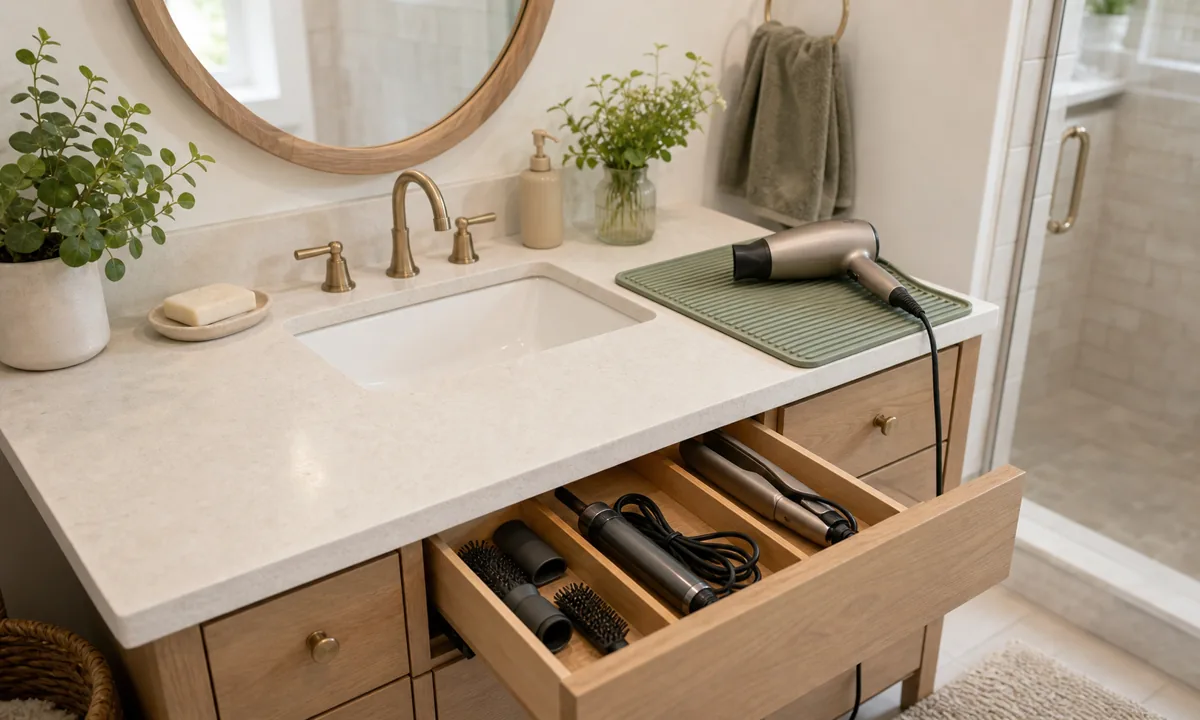
Third drawer — Hair: Styling products, dry shampoo, hair ties, clips. Every hair tool or accessory lives here when not in active use.
Lower drawers — Weekly/Occasional: Face masks, specialty treatments, grooming tools used less frequently. Out of the prime real estate because you only reach for them weekly.
The golden rule for drawers: Never put items back into a bare drawer without modular dividers. Loose items slide and mix every time the drawer opens, and the system collapses within days. Clear acrylic organizers in varying compartment sizes—assembled like a puzzle to fill the drawer completely—are the correct tool.
Step 3: Under-Sink Cabinet
The under-sink area is the most challenging bathroom storage zone because of the plumbing pipes blocking the center of the cabinet. Work around them:
Lazy Susans for tall bottles. Hairspray, mouthwash, and cleaning products placed on a rotating turntable give you access to everything without knocking over the front row to reach the back.
Stackable clear drawers on the sides. The spaces on either side of the pipes are the highest-value real estate under the sink. Stackable acrylic drawer sets turn those dead corners into organized vertical storage for backstock soap, toiletries, and feminine hygiene products.
Tension rod for spray bottles. Install a single tension rod across the upper interior of the cabinet and hang cleaning spray bottles from their triggers. This puts them at eye level when you open the door and frees the entire floor of the cabinet for other storage.
Over-door hooks for hair tools. A wire hook rack on the inside of the cabinet door holds a hairdryer, straightener, and curling iron with their cords contained. This removes bulky heat tools from the drawer entirely.
For a complete under-sink system, read our Under-Sink Bathroom Organization Guide.
Step 4: Medicine Cabinet
The medicine cabinet should contain only items needed for quick access: daily medications, bandages, thermometer, and basic first-aid supplies. If your medicine cabinet currently holds makeup, sunscreen, and hair accessories, those items have found their way there out of convenience, not logic.
Reassign every non-medical item to its correct zone (makeup drawer, hair drawer). What remains should fit neatly in the cabinet with visible categories and no stacking.
Step 5: Shower and Tub
A shower ledge cluttered with 12 half-empty bottles breeds mold, leaves soap scum rings, and makes cleaning significantly harder.
The rule: Only products in active use belong in the shower. Current-cycle shampoo, conditioner, and body wash. Everything else—backstock, body scrubs you use weekly, deep conditioners—lives under the sink and rotates in when needed.
Caddy choice: A rust-resistant stainless steel or aluminum shower caddy (not chrome-plated, which rusts within months) installed over the showerhead provides a permanent, elevated home for shower products off the floor and ledge. A corner tension pole caddy is the best option for households with many products.
Frequently Asked Questions
How do you organize a bathroom with almost no storage?
What is the best way to organize a shared bathroom?
How do I prevent mold from growing in bathroom storage?
Join Organized Haven
Get weekly home organization tips, DIY décor ideas, and exclusive printables delivered straight to your inbox. Join 10,000+ homeowners today!
We respect your privacy. Unsubscribe at any time.
Written by Danilo Souza
Danilo Souza is a Home Organization Expert and Interior Decor Specialist with over 8 years of experience in transforming cluttered, stressful rooms into functional, peaceful, and beautifully designed living spaces. His practical, step-by-step methodologies empower homeowners to create lasting organizational systems that fit their lifestyle and budget.