Kids' Bedroom Organization Systems That Last
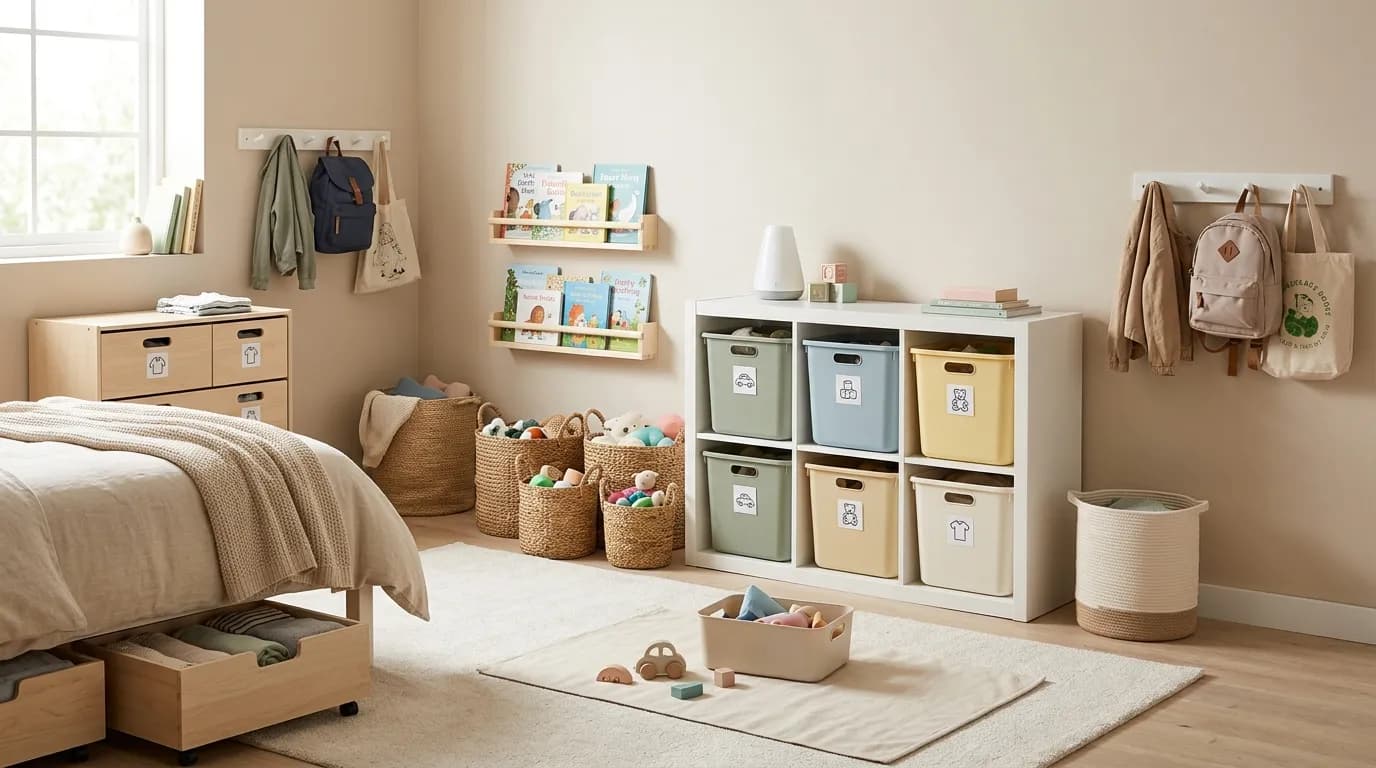
Table of Contents
How do you get kids to maintain their own room? Make the right behavior require the least possible effort. Storage must be at their physical height, categories must be simple and visual (one type of toy per bin), and the daily cleanup must be as easy as tossing everything into a single large basket. A system that requires sorting, folding, and reaching up high will always need adult intervention.
Adult organization systems consistently fail in kids' rooms for one specific reason: they require too many decisions and too much physical effort for a child to maintain independently.
A system that requires folding, choosing between 10 categories, and placing things on high shelves will be completely ignored within a week. The right children's room organization has completely different rules than the rest of the house.
The Four Rules for Kids' Organization
Before choosing any bins, shelves, or storage furniture, internalize these four rules. Every organizational choice you make in a child's room should pass through this filter.
- Storage at their height: Children use what they can access independently. If a bin requires climbing or adult help to reach, it will not be used.
- One category per bin: A bin that holds "everything" holds nothing. When Legos, blocks, play food, and crayons all go in the same container, the bin becomes a chaotic mess that children ignore in favor of dumping everything on the floor.
- Open bins or easy-open lids: Complex latches, heavy lids, or tight-fitting tops create friction that makes cleanup feel hard. Wide, open-top fabric bins are ideal.
- Visual labels: For children under 5, add a photograph or drawn image on the label alongside the text. They cannot read "Action Figures" but they know exactly what a picture of a superhero means.
Toy Storage: One Category Per Bin, Every Time
A low shelving unit with individual fabric or plastic bins is the most universally functional kids' room storage system. The IKEA KALLAX 2x4 with fabric basket inserts is the most widely recommended because it is low to the ground, customizable, and the fabric bins are easy for small hands to pull out and push back.
Common toy categories that work:
- Building sets (keep different brands separate if they don't mix well)
- Vehicles: cars, trucks, trains
- Stuffed animals
- Play kitchen and food items
- Dress-up and costumes
- Action figures or dolls
- Art supplies (pencils, crayons, stickers)
- Board games and puzzles (stored flat in separate bags inside one bin)
The Daily Basket Strategy
Instead of asking kids to sort toys into their correct category bins at the end of every day—which requires sustained effort and decision-making—introduce a single "daily basket." This is one large, easy-to-access bin where everything gets tossed at cleanup time.
Once a week, not daily, you sort the basket back into the category bins together. This separates the low-effort daily cleanup from the higher-effort organizing task, making the daily reset fast enough that a child will actually complete it without a battle.
Clothing for Kids
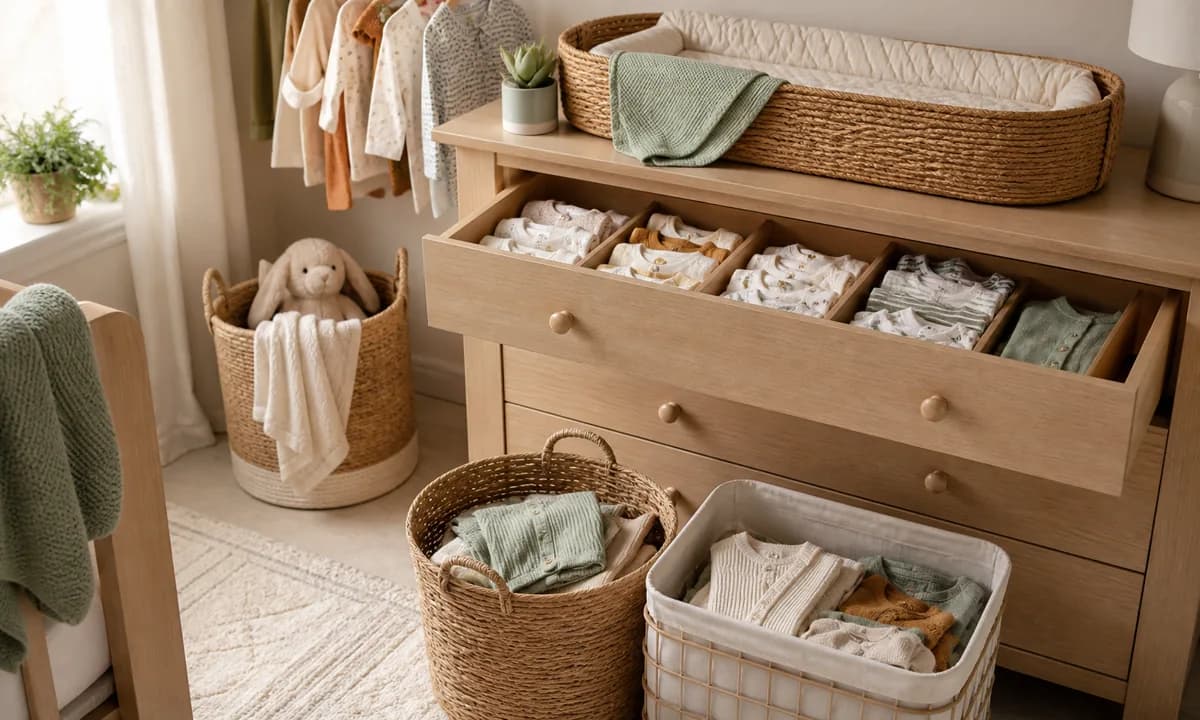
For children under 6: Organize clothing by complete outfit rather than by type. Fold shorts and the T-shirt that pairs with them together as one unit, and store them in the drawer as a set. Getting dressed becomes one grab instead of five separate decisions. This eliminates the 8am "which pants go with this?" conversation entirely.
For older children: A drawer system by category (tops, bottoms, pajamas) works well. The key is that the drawers must be low enough for the child to open independently.
Hooks instead of hangers for daily use: A row of low hooks on the bedroom wall or the back of the door—reachable by the child—is far more realistic than expecting a young child to hang their jacket and backpack in a closet. Hooks require one motion; a closet requires three.
The Homework and Reading Zone
A designated study spot—even a very small desk in a corner—signals to a child that this specific place is where focused work happens. The desk should have:
- Only school supplies on the surface, never toys
- A pencil holder with exactly what they need (two pencils, an eraser, a ruler, scissors)
- A task light that illuminates the desk evenly
- A small folder or file holder for current school papers
The Toy Rotation System
Research consistently shows that children engage more creatively and for longer periods of time with fewer toys available simultaneously. A toy rotation system keeps things feeling fresh without purchasing anything new.
Pack half the toys into labeled bins and store them in a closet. Every 4 to 6 weeks, swap the visible toys with the stored ones. The "returning" toys feel genuinely new because the child hasn't interacted with them in weeks. This is also an excellent strategy for managing toy accumulation from holidays and birthdays.
Frequently Asked Questions
How do I get my kids to keep their room organized?
What is the best toy storage solution for a small kids' room?
How do you handle too many stuffed animals?
Join Organized Haven
Get weekly home organization tips, DIY décor ideas, and exclusive printables delivered straight to your inbox. Join 10,000+ homeowners today!
We respect your privacy. Unsubscribe at any time.
Written by Danilo Souza
Danilo Souza is a Home Organization Expert and Interior Decor Specialist with over 8 years of experience in transforming cluttered, stressful rooms into functional, peaceful, and beautifully designed living spaces. His practical, step-by-step methodologies empower homeowners to create lasting organizational systems that fit their lifestyle and budget.